

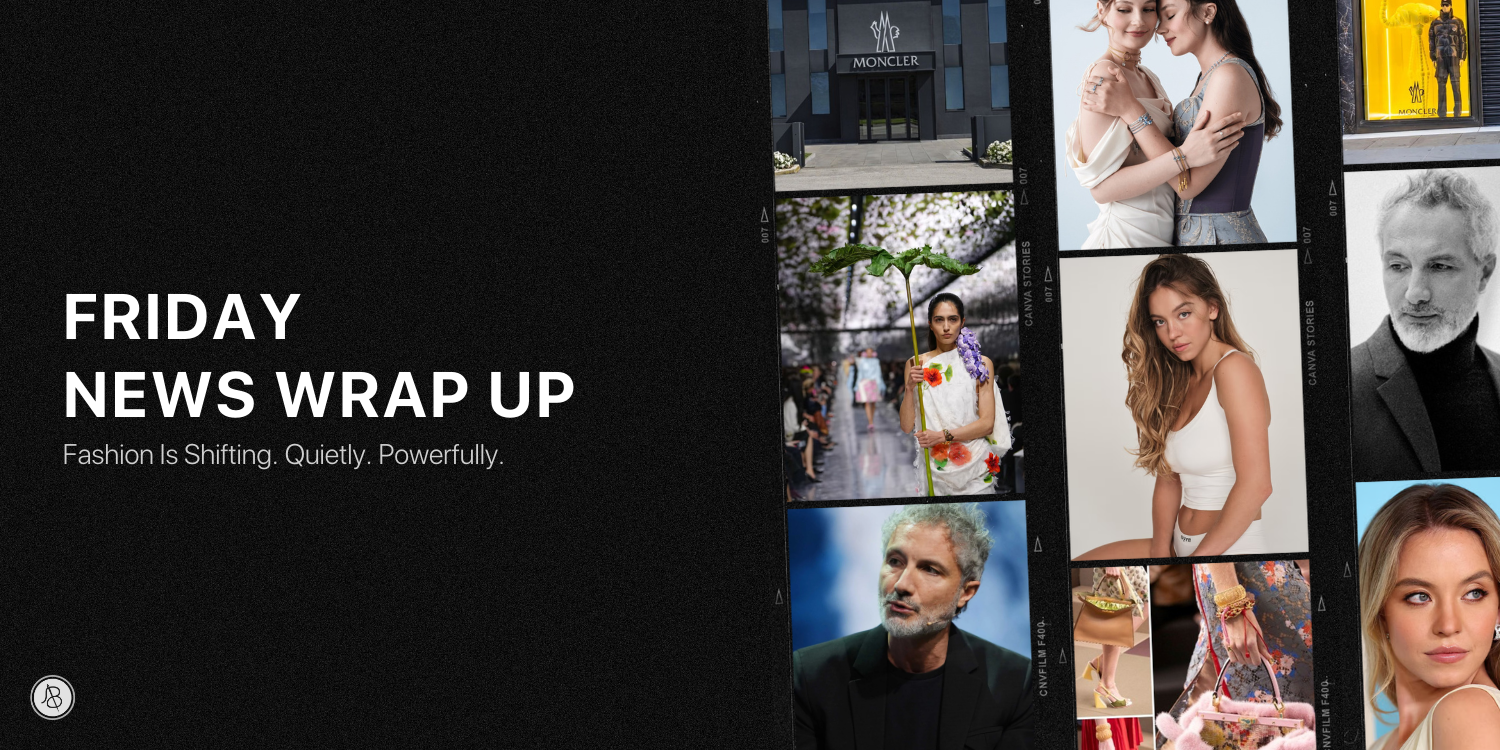
Something is happening in the atmosphere of the fashion world right now. Can you feel it? It isn’t hitting you in the face. It isn’t screaming from a billboard in Times Square. It isn’t flooding your TikTok feed with neon colors or chaotic micro-trends that burn out in three days.
It is quiet.
For the last decade, fashion has been defined by noise. We lived through the era of logomania, where your chest had to announce your bank account balance. We survived the "clout era," where clothes were designed solely for how they would render on a smartphone screen. We navigated the chaos of "core" culture—Barbiecore, Gorpcore, Cottagecore—jumping from one costume to the next in a desperate attempt to stay relevant.
But the pendulum is swinging back. And it is swinging hard.
We are entering an era of quiet power. No screaming trends. No aesthetic overload. No chaos. Just calculated, intentional moves that signal long-term thinking and a return to depth. If you have been feeling like the vibe has shifted lately, you are not imagining it. The industry is pivoting from performative chaos to precise control.
This isn’t about "Quiet Luxury" or boring beige sweaters. It is deeper than that. It is about brands and creators choosing meaning over metrics. It is about longevity over virality.
To understand where we are going, we have to look at the signals. They are subtle, but they are telling us everything we need to know. Let’s decode the five pivotal moments that explain this new era of fashion.
Leadership changes usually feel like dry, corporate housekeeping. A press release goes out, stocks wobble, and the world moves on. But Moncler appointing Bartolomeo Rongone as Group CEO hits differently.
For years, Moncler has been the king of the "drop." Their Moncler Genius project reinvented how luxury brands collaborate, turning puffy jackets into high-art installations and streetwear grails. They mastered the hype cycle. They knew how to make noise.
So, bringing in Rongone isn’t about disruption. It’s about stabilization. It feels like a move toward absolute precision.
This signals a massive shift in luxury strategy. We are moving away from the "growth at all costs" mindset driven by hype, and toward a model of refinement and control. Rongone represents the steady hand. He represents the idea that a brand shouldn’t just be a series of viral moments; it should be a legacy.
Why This Resonates Now
For the fashion enthusiast, this matters because it changes the product. When a brand stops chasing the next viral hit, the clothes get better. The focus returns to the materials, the silhouette, and the functionality.
We are tired of "merch." We want clothes.
Moncler’s move suggests they are done playing the short game. They are preparing for a new era where quality is the only currency that doesn't inflate. It’s a calculated, sophisticated step back from the edge of chaos, grounding the brand in something real.
Sometimes the biggest shifts don't happen on the runway under strobe lights. They happen in quiet rooms where decisions are made about the soul of a company. This is fashion growing up.
If the last era was about being seen, this era is about being felt.
Luxury has spent a long time obsessing over the exterior. Bags became billboards. Shoes became sculptures meant to be photographed, not walked in. But Fendi’s latest move with the Peekaboo Inner Beauty collection flips that narrative entirely on its head.
The concept is radically simple: The focus is not on the outside of the bag. It is on the inside.
Fendi has reworked the interior of their iconic Peekaboo, turning the lining and the hidden compartments into the main event. It is exquisite craftsmanship that is largely invisible to the passerby. It is a secret shared only between the bag and the person carrying it.
The Psychology of "Inner Beauty"
This idea feels deeply current. We are living in a time of extreme performativity. We curate our lives for Instagram stories; we edit our thoughts for tweets. We are constantly projecting an image outward.
For a major luxury house to say, "This is for you, not for the camera," is powerful. It prioritizes intimacy. It suggests that true luxury is a feeling of personal satisfaction, not public validation.
It connects to the broader cultural shift toward mental health and self-care. We are starting to value how things make us feel over how they make us look. A bag with a chaotic, unlined interior feels messy, no matter how expensive the leather on the outside is. A bag that is organized, beautiful, and soft on the inside brings a sense of calm to the wearer.
This is fashion acting as a grounding force. It is intimate. It is quiet. It is the sartorial equivalent of deleting social media for the weekend to reconnect with yourself. Fendi is betting that the modern consumer wants to buy things that serve them, not just their audience.
History in fashion is a double-edged sword. Use it well, and it grounds you. Use it too much, and you become a museum exhibit.
Jonathan Anderson’s couture debut for Dior was a masterclass in how to handle history without getting suffocated by it. This was not heritage replayed. This was heritage questioned.
Usually, when a designer takes over a house with the weight of Dior, they spend the first few seasons paying polite homage to the founder. They remix the Bar Jacket. They do a generic floral print. They play it safe.
Anderson did not play it safe.
He treated couture like an evolving experiment. The collection felt alive, curious, and open-ended. He didn't just look at the archives; he seemed to ask, "Why does this exist?" and "What can it become next?"
The Shift from Nostalgia to Evolution
This distinction is crucial. Nostalgia is passive; it looks back and sighs. Evolution is active; it looks back, grabs what is useful, and sprints forward.
Anderson’s approach signals a move away from the "Reboot Culture" that has plagued fashion (and film) for years. We are tired of seeing the same things remade with slightly different lighting. We want new ideas. We want risk.
The collection felt less like a respectful nod to the past and more like a conversation with the future. It utilized the incredible technical skills of the Dior ateliers—the embroidery, the draping, the structure—but applied them to silhouettes that felt strange and new.
This changes how we read Dior moving forward. It is no longer just a heritage brand protecting its legacy; it is a laboratory. It creates a space for intellectual fashion—clothes that make you think, clothes that challenge your eye.
In a world of fast fashion dupes and algorithm-driven design, true creativity is the ultimate luxury. Anderson proves that you can respect the past while ruthlessly innovating for the present.
Let’s talk about the celebrity brand pivot. Usually, it goes like this: Celebrity gets famous. Celebrity licenses name to a conglomerate. Conglomerate produces mediocre skincare or fast fashion. Celebrity cashes check.
It is a tired model. Consumers see right through it.
But Sydney Sweeney launching her lingerie brand, Syrn, feels different. This isn't just a licensing deal. This feels like narrative control.
Sweeney has been cast, styled, and perceived in a very specific way by Hollywood. She occupies the lane of the "bombshell"—a trope that has historically stripped women of their agency, reducing them to objects of the male gaze. By launching a lingerie brand, she isn't running away from that perception; she is taking the wheel of it.
Softness Paired with Authority
This move makes sense instantly. It is softness paired with authority. It is femininity paired with ownership.
By creating Syrn, she is defining what sexy looks like on her terms. She is capitalizing on her own image, yes, but she is doing it as the CEO, not just the face. It shifts the power dynamic. She is no longer just the muse; she is the maker.
This reflects a massive shift in how Gen Z and Millennials view career and identity. We don't want to just be "picked" by the industry. We want to build our own platforms. We respect the hustle of ownership.
It is not about being an "It Girl" anymore. Being an It Girl is fleeting. It relies on other people thinking you are cool. Being a founder? That is tangible. That has longevity.
Syrn represents the new wave of celebrity interaction with fashion. It isn't about slapping a logo on a hoodie. It is about extending a personal brand into a tangible product that feels authentic to who they are. It is narrative reclamation. And in an industry that loves to use women up and spit them out, seeing a young woman build her own equity is the ultimate power move.
Romance is not outdated. It is just evolving.
For a long time, "cool" fashion had to be edgy. It had to be dark, deconstructed, irony-poisoned, and maybe a little bit ugly. To be sentimental was to be cringe.
But look at the obsession with Bridgerton. Look at the rise of the "coquette" aesthetic. There is a massive hunger for softness, for fantasy, for sparkle.
Pandora’s collaboration with Bridgerton is genius because it takes that Regency-era fantasy and translates it into modern, wearable reality. It manages to be nostalgic without feeling costume-y.
This collaboration proves that storytelling is still the most powerful tool in fashion. People aren't just buying a ring or a necklace. They are buying a piece of the story. They are buying into the idea of grand romances, ballroom dances, and the drama of the "ton."
But Pandora didn’t just replicate vintage jewelry. They modernized it. They took the visual cues of the 1800s—the cameos, the pearls, the intricate floral motifs—and cleaned them up for 2024.
This is "Old-world romance, new-world relevance."
It signals a shift in mass-market jewelry. It is moving away from generic, meaningless designs toward hyper-specific cultural moments. It acknowledges that we are all fans of something. Fandom is no longer a niche subculture; it is pop culture.
Wearing a Bridgerton charm is a quiet signal. It says, "I believe in romance." In a cynical world, wearing your heart on your sleeve (or your wrist) is a brave, stylish choice. It validates the emotional connection we have with the media we consume. It merges our Netflix queue with our jewelry box in a way that feels organic, not forced.
So, what do a CEO change, a lined handbag, a couture debut, a lingerie launch, and a TV show collaboration have in common?
They all point to the same truth: Fashion is not trying to impress you anymore. It is trying to mean something.
For the last decade, the industry was trapped in a "Look at Me" loop. Brands were screaming for attention. Designers were designing for the infinite scroll. Celebrities were launching brands just to stay in the headlines.
But we, the audience, got tired. We got bored of the noise. We started craving substance.
This shift—this quiet, powerful pivot—is the industry’s response to our burnout.
Depth Over Drama
We are seeing a move toward depth. Moncler and Dior are digging into their roots and their craft, prioritizing the integrity of the product over the marketing stunt. They are betting that we are smart enough to appreciate good design without the gimmicks.
Control Over Chaos
We are seeing a move toward control. Sydney Sweeney and Fendi are taking control of the narrative. Sweeney is owning her image; Fendi is focusing on the user experience. They are cutting out the noise to create a direct connection with the consumer.
Longevity Over Virality
Most importantly, we are seeing a move toward longevity. Pandora’s collaboration taps into a story that feels timeless. Moncler’s leadership change ensures the brand will be here for decades. These aren't cash grabs. They are investments.
The "Quiet" Revolution in Your Wardrobe
This shift doesn't just affect the billionaires in Paris and Milan. It affects how you get dressed tomorrow morning.
If fashion is shifting toward intention, your wardrobe should too. This is permission to stop chasing every micro-trend that pops up on your feed. It is permission to stop dressing for the algorithm.
It invites you to ask different questions when you shop:
You might find yourself drawn to simpler silhouettes, better fabrics, and pieces that have a story. You might find yourself caring more about the lining of your bag than the logo on the front. You might find yourself investing in brands that align with your values, rather than just your aesthetic.
This is the era of the Curator, not the Consumer.
The Consumer devours everything in sight, driven by fear of missing out. The Curator selects carefully, driven by a sense of self. The Curator understands that style is a long game.
Conclusion: The New Cool
Fashion is often dismissed as frivolous. People think it’s just clothes. But fashion is always a mirror of the moment.
Right now, the moment is heavy. The world is loud, chaotic, and uncertain. It makes perfect sense that fashion is responding with quietness, stability, and intimacy. We don't need our clothes to add to the chaos. We need them to anchor us.
The moves made by Moncler, Fendi, Dior, Sydney Sweeney, and Pandora are not coincidences. They are synchronized swimming in the waters of cultural change. They are reading the room perfectly.
They know that the flex has changed.
The flex used to be "I have the most."
Now, the flex is "I chose the best."
It is a subtle difference, but it changes everything. It changes how we design, how we shop, and how we live.
So, if you have been feeling a pull toward the quiet, the well-made, and the meaningful—lean into it. You aren't falling behind the trends. You are actually miles ahead of them.
Fashion is shifting. It’s getting quieter. But if you listen closely, that silence sounds a lot like power.
And if this kind of fashion news lives rent-free in your head? If you find yourself analyzing the strategy behind a CEO appointment or the stitching inside a handbag? Then welcome home. You are exactly where you need to be.
This is the new era. Dress accordingly.