

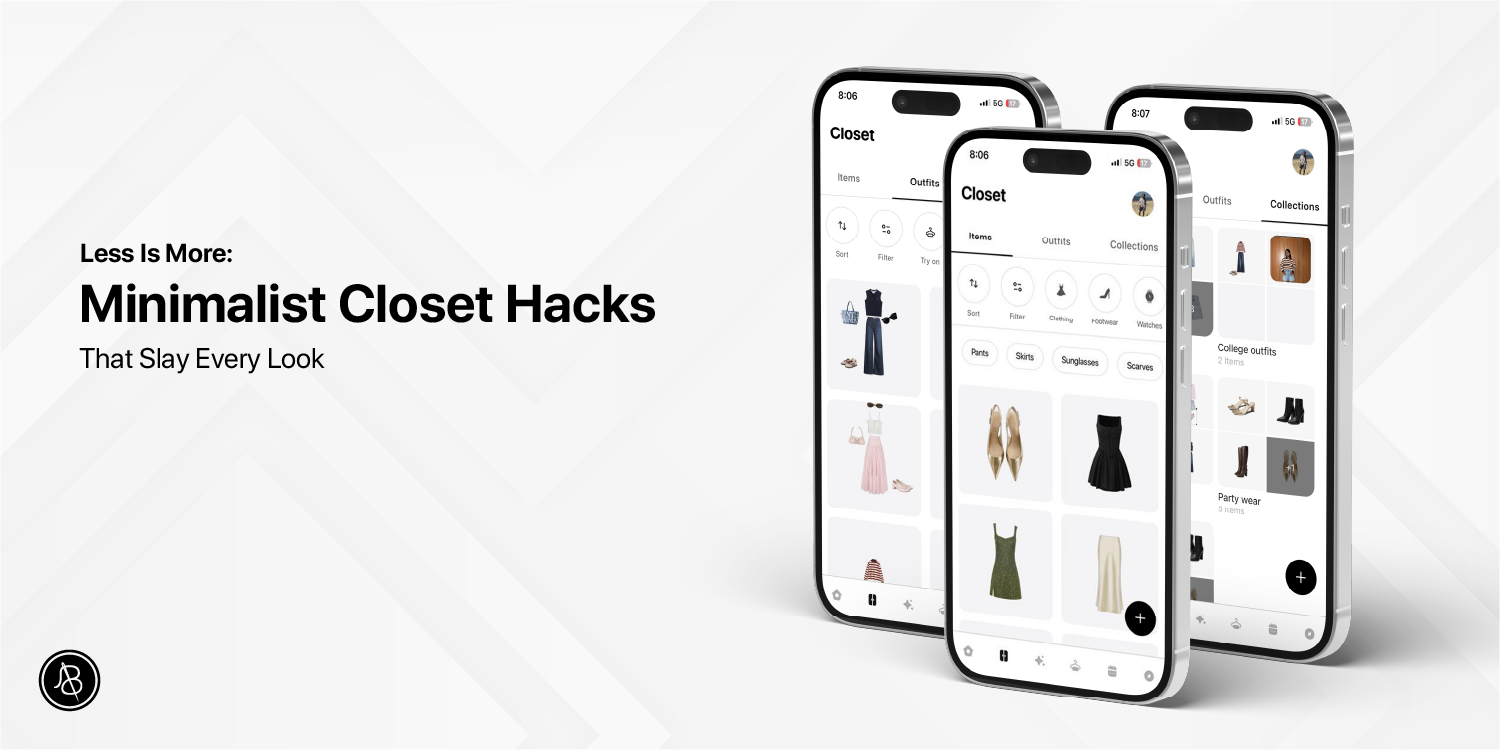
The modern wardrobe often suffers from a paradox of choice. We own more clothing than at any point in history, yet the daily experience of getting dressed is frequently characterized by decision fatigue and a sense of dissatisfaction. You stand before a full closet and feel you have "nothing to wear." This phenomenon is not a result of insufficient inventory but rather a lack of cohesive structure. The solution lies not in acquisition but in curation. Minimalism in fashion is frequently misunderstood as a purely aesthetic choice defined by stark monochromatic palettes and severe silhouettes. However, a functional minimalist approach is actually a management strategy. It is about prioritizing intentional choices, versatile assets, and effortless styling to maximize the utility of every item you own.
When you adopt a minimalist framework, you transform your wardrobe from a disorganized storage unit into a streamlined system. This shift reduces the friction of daily dressing and ensures that your visual presentation is consistently polished. By applying specific structural hacks, from the "rule of three" to strategic layering, you can optimize your personal style without the clutter. This article provides a detailed analysis of minimalist principles and actionable strategies to refine your wardrobe. We will explore how to select basics with high visual impact, establish a cohesive color data set, and implement maintenance protocols that keep your closet efficient.
Before implementing specific tactics, it is essential to understand the underlying logic of minimalism. The goal is to separate signal from noise. In a cluttered wardrobe, the "noise" consists of ill-fitting items, impulse purchases, and garments that only serve a single, narrow function. These items obscure the "signal", the high-quality, versatile pieces that actually make you feel confident and professional.
Minimalism is not about deprivation. It is about the rigorous elimination of the unnecessary to allow the necessary to speak. It operates on the economic principle of utility. Every item in your closet occupies physical space and mental bandwidth. If an item does not provide a return on that investment, through frequent wear, versatility, or significant joy, it is a net loss. By curating a wardrobe where every piece has a defined role, you reclaim time and mental energy. You stop managing clutter and start managing a high-performance collection.
The foundation of any functional wardrobe is the "basic." These are the core components, the white shirt, the black trouser, the denim jean, that serve as the canvas for your style. However, a common pitfall in minimalism is constructing a wardrobe that feels sterile or overly uniform. The solution is to invest in basics that possess a distinct design element or structural "twist."
Elevating the Standard
Standard basics are functional but often forgettable. To maintain visual interest without adding clutter, look for foundational pieces that feature subtle architectural details. A white shirt is a standard basic. A white shirt with an asymmetrical hemline or exaggerated cuffs is a statement basic. A black blazer is standard. A black blazer with a collarless neckline or distinct hardware is a statement.
These subtle deviations from the norm provide visual data that elevates the outfit. They signal intentionality. When you wear a t-shirt with subtle embroidery or high-quality texture, you are demonstrating that even your simplest choices are considered. This approach allows you to maintain a lean closet while ensuring your daily uniform never feels repetitive or dull. The garment remains versatile enough to pair with anything but stands on its own as a design object.
The Quality Metric
Because these items form the bedrock of your daily rotation, their quality is non-negotiable. In a minimalist system, you cannot hide poor construction behind loud prints or excessive layering. The fabric, the cut, and the stitching are fully visible. Investing in superior materials, pima cotton, merino wool, high-grade silk, ensures that your basics drape correctly and withstand frequent wear. A well-made basic does not just last longer; it looks better every time you wear it, reinforcing the polished aesthetic that minimalism demands.
A rigorously curated wardrobe relies on the versatility of its components. In a maximalist wardrobe, you might own specific outfits for specific occasions, a distinct set of clothes for the office, another for the weekend, and a third for evening events. This compartmentalization leads to bloated inventory. The minimalist approach dissolves these boundaries through the "Rule of Three."
The Rule of Three Protocol
When considering a new acquisition or auditing a current possession, apply the Rule of Three. Ask yourself: Can this item be styled in at least three distinct ways? Can it function in three different environments?
For example, a pair of tailored wool trousers should be able to anchor a corporate look when paired with a blazer and loafers. That same pair of trousers should work for a casual weekend brunch when styled with a white sneaker and a cropped knit. Finally, it should transition to an evening dinner when paired with a silk camisole and a heel. If a garment can only perform one of these functions, it lacks the versatility required for a high-efficiency wardrobe. By strictly adhering to this rule, you ensure that your closet works harder than you do. You exponentially increase the number of potential outfits without increasing the number of physical items.
Contextual Fluidity
This principle requires you to view your clothes as neutral assets rather than categorized uniforms. A slip dress is often categorized as evening wear or summer wear. However, viewed through a minimalist lens, it is simply a base layer. It can be worn over a t-shirt for a 90s-inspired casual look, under a chunky sweater to mimic the function of a midi skirt, or alone for a formal event. Developing this contextual fluidity allows you to extract maximum value from your investments.
Layering is often viewed as a practical necessity for weather management, but in a minimalist wardrobe, it is a primary styling tool. It allows you to create complexity and depth using simple components. By mastering layering, you can alter the silhouette and mood of an outfit without changing the core pieces.
Texture and Geometry
Effective layering relies on the contrast of textures and shapes. A monochromatic outfit, often a staple of minimalism, risks looking flat if all fabrics have the same weight and finish. To prevent this, mix materials with intention. Pair the roughness of denim with the smoothness of silk. Contrast the heavy structure of leather with the softness of cashmere.
Consider the geometry of your layers. A long, fluid trench coat worn over a structured, cropped jacket creates an interesting interplay of lengths. A sleeveless vest worn over a voluminous blouse controls the volume while adding visual structure. These combinations transform familiar items. A summer dress becomes appropriate for autumn when layered over a turtleneck. A blazer becomes outerwear when layered over a hoodie. This strategy extends the lifecycle of your garments across seasons, further reducing the need for specialized seasonal storage.
One of the most effective ways to streamline your wardrobe is to establish a cohesive color data set. A scattered color palette creates friction; items clash, requiring you to own specific "bridge" pieces just to make an outfit work. A cohesive palette ensures that every item in your closet is compatible with every other item.
The 4-6 Color Framework
You do not need to restrict yourself to black, white, and beige, although these are excellent anchors. The goal is harmony, not monotony. Select a palette of four to six colors that naturally integrate. Start with three neutral base tones, such as charcoal, navy, and cream. These will comprise the majority of your investment pieces, like coats, trousers, and blazers.
Then, introduce one to two signature accent colors. These should be hues that complement your skin tone and bring you joy, perhaps a deep forest green, a burnt orange, or a muted teal. Because these accents are chosen to coordinate with your base neutrals, you can grab any top and any bottom in the dark and be confident they will match. This eliminates the "does this go with that?" decision loop that consumes time in the morning.
The Impact of Tonal Dressing
A cohesive palette also unlocks the power of tonal dressing, wearing multiple shades of the same color family. An outfit composed of oatmeal, camel, and espresso tones looks sophisticated and intentional. It creates a vertical line that elongates the silhouette. This styling hack is incredibly simple to execute if your wardrobe is built on a structured color logic.
In a minimalist system, accessories are not afterthoughts; they are force multipliers. They are the variables that change the equation of an outfit. A simple base look, jeans and a white tee, reads as "casual" with sneakers and a canvas tote. The same base reads as "polished" with a leather belt, gold hoop earrings, and a structured handbag.
Strategic Adornment
The minimalist approach to accessories prioritizes quality and impact over volume. Instead of a jewelry box overflowing with trendy, tarnished costume pieces, focus on a curated selection of metals and leathers that you wear daily. A classic leather belt, a silk scarf, and a high-quality watch are tools that refine a silhouette.
Think of accessories as the finishing code in a program. They define the final output. If your wardrobe is simple, your accessories have the space to shine. You do not need many; you need the right ones. A bold architectural necklace can replace the need for a printed top. A colorful bag can serve as the focal point of a neutral outfit. By treating accessories as strategic adornments, you enhance your look without compromising the clean lines of your style.
Minimalism is inherently opposed to the fast fashion model. Fast fashion relies on rapid obsolescence and perceived obsolescence. It encourages you to view clothing as disposable. Functional minimalism views clothing as a durable asset.
The Cost Per Wear Metric
When evaluating a purchase, move beyond the sticker price and calculate the "Cost Per Wear" (CPW). A $300 blazer worn 100 times has a CPW of $3. A $50 trendy top worn twice has a CPW of $25. The expensive blazer is the smarter financial decision.
Investing in timeless, quality pieces creates a positive feedback loop. High-quality items fit better, feel better, and hold their shape longer. This increases your confidence, which increases the frequency with which you wear the item. Over time, a wardrobe built on quality develops a patina of personal style that cheap fabrics cannot replicate. Look for natural fibers, robust stitching, and classic cuts that transcend seasonal trends. Trends can be fun, but they should be the garnish, not the main course.
A minimalist wardrobe is not a static museum exhibit; it is a living system that requires maintenance. Without regular auditing, entropy sets in, and clutter returns.
The Six-Month Audit
Implement a standard operating procedure for wardrobe maintenance. Every six months, conduct an audit. Review every item in your closet. If a garment has not been worn in the last six months (seasonal exceptions aside), it is a candidate for removal. Ask yourself why it was not worn. Does it fit poorly? Is it damaged? Does it no longer align with your lifestyle?
If an item does not spark joy or serve a function, it is dead weight. Donate it, sell it, or recycle it. This regular purging keeps your inventory lean and functional. It ensures that when you open your closet, you are looking at 100% usable options.
Styling Over Shopping
When you feel the urge to refresh your look, try to solve the problem with styling before solving it with shopping. This is the ultimate minimalist hack. Experiment with the variables you already control. Try cuffing your jeans to change the break line. Knot a button-down shirt at the waist to alter the proportions. Wear a cardigan backward.
These small adjustments force you to be creative. They recontextualize the items you already own, often revealing new potential. Creativity flourishes within constraints. By limiting your inventory, you force yourself to become a better stylist.
Ultimately, minimalism is a software update for your mind. It is a shift from a scarcity mindset (I need more to be happy) to an abundance mindset (I have everything I need to be stylish). It is about finding satisfaction in the precision of your choices rather than the volume of your possessions.
When you stop chasing the dopamine hit of the new purchase and start finding satisfaction in the cohesion of your system, you achieve true style autonomy. You are no longer reacting to the market; you are curating your identity.
Building a minimalist wardrobe is a strategic process that pays dividends in time, money, and confidence. By focusing on basics with structural interest, demanding versatility from every item, and mastering the art of layering, you create a wardrobe that serves you. Establishing a cohesive color palette and investing in quality ensures that your style is sustainable and polished.
Remember that this is a journey of refinement. It is about making intentional decisions that align with your lifestyle and goals. The result is not just a cleaner closet, but a clearer mind. When you strip away the excess, you are left with a wardrobe that is functional, beautiful, and distinctively yours. Less really is more