

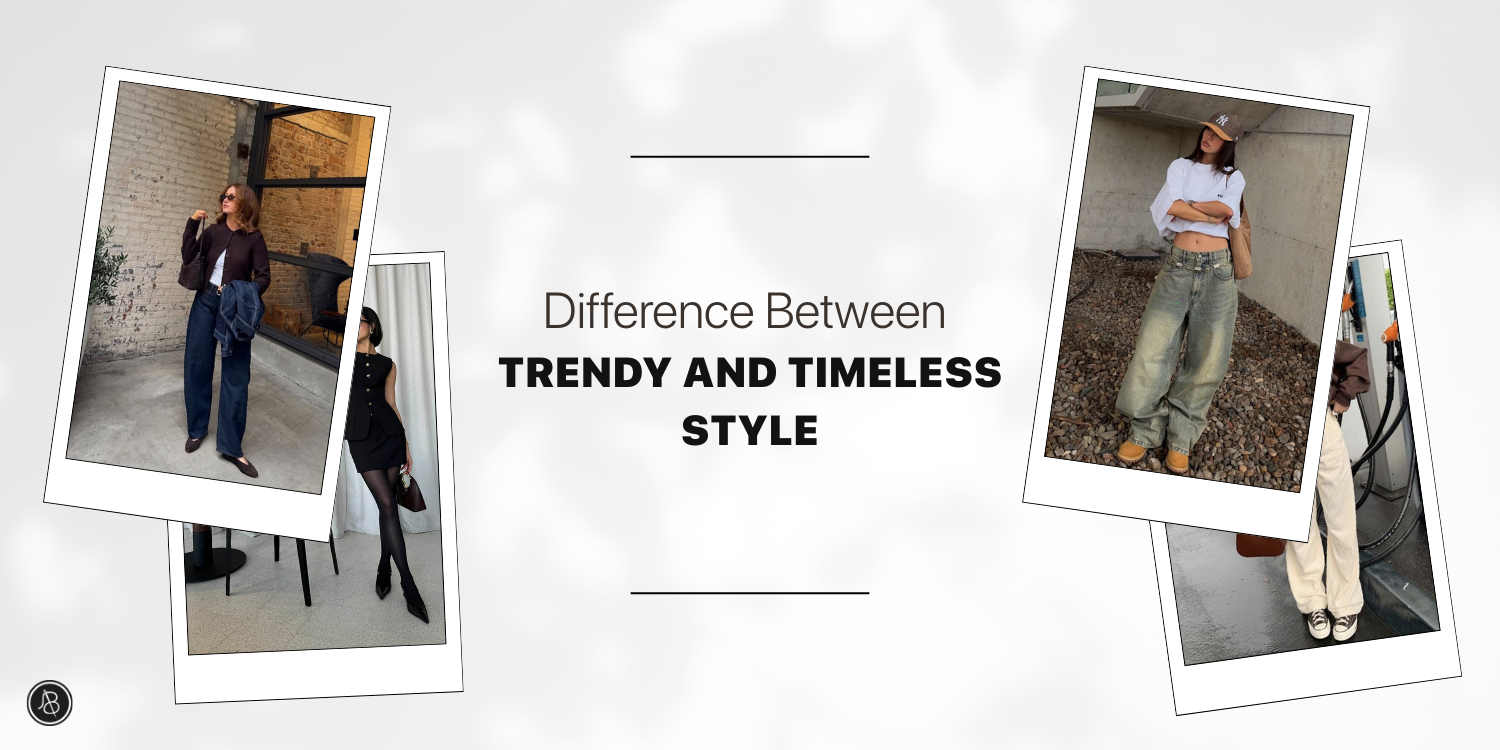
If you have ever looked back at an old photo of yourself and had a visceral, full-body cringe while thinking, why on earth was I wearing that?, you have already met the difference between trendy and timeless style. One made you feel amazing for a season; the other would still look good today.
Both exist. Both have value. But confusing one for the other is how closets get full of clothes while outfits still feel completely, inexplicably wrong. It’s the paradox of the modern wardrobe: a closet bursting at the seams, yet the overwhelming feeling of having absolutely nothing to wear.
Let’s break down the real difference between these two powerful forces in fashion, without the usual jargon or gatekeeping. Understanding this distinction is the key to building a wardrobe that not only works, but works for you, season after season.
Trendy style is, at its core, reactive. It is a conversation with the present moment. It moves at the speed of a viral TikTok sound, looks incredibly exciting, and almost always comes with an expiration date. Trends are the shooting stars of the fashion world—brilliant, captivating, and gone in a flash.
They are born from a whirlwind of sources: runway shows that push boundaries, social media aesthetics that capture the collective imagination, pop culture moments that define an era, and celebrity outfits that go viral. They feel fresh and new precisely because they are new, not because they are designed to last. Their newness is their power.
Trendy pieces often share a few key characteristics:
There is absolutely nothing wrong with participating in trends. They are fun, expressive, and a fantastic way to experiment with your personal style without a long-term commitment. They let you play dress-up in your own life. The problem arises when your entire wardrobe becomes dependent on them. When trends are the foundation of your closet, your entire style identity is built on shifting sand. When the trend fades, the outfit—and your sense of style—fades right along with it.
Timeless style is often misunderstood. The word itself can conjure images of plain, boring, or overly conservative clothing. But that’s a mischaracterization. Timeless style is not boring; it is intentional. It is the quiet confidence of knowing what works, independent of the fashion world’s chaotic cycle.
It is a style built on silhouettes, colors, and combinations that have proven their ability to survive and transcend changing trends. These are the outfits that still look good five, ten, or even twenty years later, without needing an explanation. They possess a kind of sartorial staying power that is rooted in balance, proportion, and quality.
Timeless pieces usually have these qualities in common:
Timeless does not mean plain. It means reliable. These are the clothes you instinctively reach for when you want to look and feel put together without having to think too hard. They are the anchors of your wardrobe: the perfectly cut blazer, the straight-leg jeans that fit just right, the classic white t-shirt, the elegant trench coat. They are the pieces that do the heavy lifting so you don’t have to.
The allure of trendy style is powerful, and it’s rooted in psychology. Trends trigger the novelty-seeking part of our brains. Our minds are wired to respond to newness, and wearing a new trend can feel like a shot of adrenaline. The outfit feels potent, exciting, and full of possibility. For a moment, you feel like you are at the cutting edge of culture.
But this is a double-edged sword. Once that initial rush of novelty wears off—usually when the trend becomes so ubiquitous that it’s no longer special—the outfit’s power dissipates. It starts to feel less like a personal style choice and more like a costume. The piece that once felt so exciting now feels like a cliché. You stop reaching for it. It gets pushed to the back of your closet, untouched, waiting for a comeback that may never happen.
This is the cycle that leads to the classic modern dilemma: “I have so many clothes, but absolutely nothing to wear.”
This statement isn't a reflection of a lack of clothing. It's a reflection of a lack of longevity. When a closet is filled with the ghosts of trends past, it becomes a museum of expired moments rather than a functional, living wardrobe. Each piece is a reminder of a fleeting identity, but none of them feel right for who you are today. The excitement was temporary, but the closet clutter is permanent.
In contrast, timeless outfits don’t need any context to work. You don’t have to explain why you’re wearing them or worry if they are still relevant. A great pair of jeans and a crisp white shirt looked good in the 1970s, the 1990s, and they look good today. Their power isn’t derived from their newness, but from their inherent rightness. They work because they are rooted in fundamental principles of good design: proportion, balance, and, most importantly, personal comfort.
Timeless style feels effortless for a few key reasons:
This is where true, lasting confidence quietly builds. It’s a confidence that comes from within, born from the comfort and ease of knowing you look good without having to follow a script written by someone else. You are in control of your style, not the other way around.
The difference between these two approaches can be boiled down to the questions you ask yourself when getting dressed or shopping for new clothes.
Trendy style asks:
Timeless style asks:
The motivation behind the outfit is also different. Trendy outfits are often styled for external validation and attention. They are designed to be seen, photographed, and approved of by others. Timeless outfits are styled for internal satisfaction and repeat wear. They are designed to make the wearer feel good, comfortable, and confident, day in and day out.
One looks good once. The other works again and again.
Here’s the thing: you don’t have to pick a side. The most dynamic, interesting, and truly personal wardrobes are not strictly trendy or strictly timeless. They are a thoughtful and strategic blend of both. They are layered. The key is understanding which role each type of style should play in your closet.
Think of it like building a house. Your timeless pieces are the foundation and the framework. They are the sturdy, reliable structure that holds everything together. These are your everyday staples, your comfort zone, your outfit anchors. This is where you should invest your money—in quality fabrics, excellent tailoring, and classic designs.
Then, you can add trends sparingly, like decorative elements. They are the paint color, the throw pillows, the art on the walls. They add personality, fun, and a touch of the current moment. Let them live on top of your timeless base, not underneath it. This way, when the trend inevitably fades, your entire outfit doesn't collapse. You can simply swap out the trendy element for a new one without having to rebuild your entire wardrobe from scratch.
A good rule of thumb to follow is this:
This approach allows your style to evolve and stay current without forcing you to restart from zero every season. It gives you the best of both worlds: the stability of a timeless foundation and the excitement of a trendy update.
Ultimately, the goal isn't to achieve a purely "timeless" wardrobe. That can feel just as restrictive as chasing every trend. The true goal is to cultivate something much more valuable: repeatable confidence.
It's about creating a collection of clothes that consistently makes you feel like the best version of yourself. It’s about building outfits that feel like you. It’s about having clothes you don’t have to overthink. It’s about developing a personal style that can survive your changing moods, the changing seasons, and the changing years.
When your wardrobe achieves that, you stop being a passive consumer of trends and start becoming an active user of them. You can pick and choose which trends to incorporate on your own terms, using them to enhance your existing style rather than letting them define it.
That is the real difference between trendy and timeless style. One is a fleeting identity you borrow from the culture. The other is a lasting identity you build for yourself. One is about what’s happening on the outside. The other is about how you feel on the inside. And once you master that distinction, getting dressed becomes less of a chore and more of a quiet, confident joy.