2025 in Fashion: The Full Year Recap and What It Means for 2026
Published · Updated
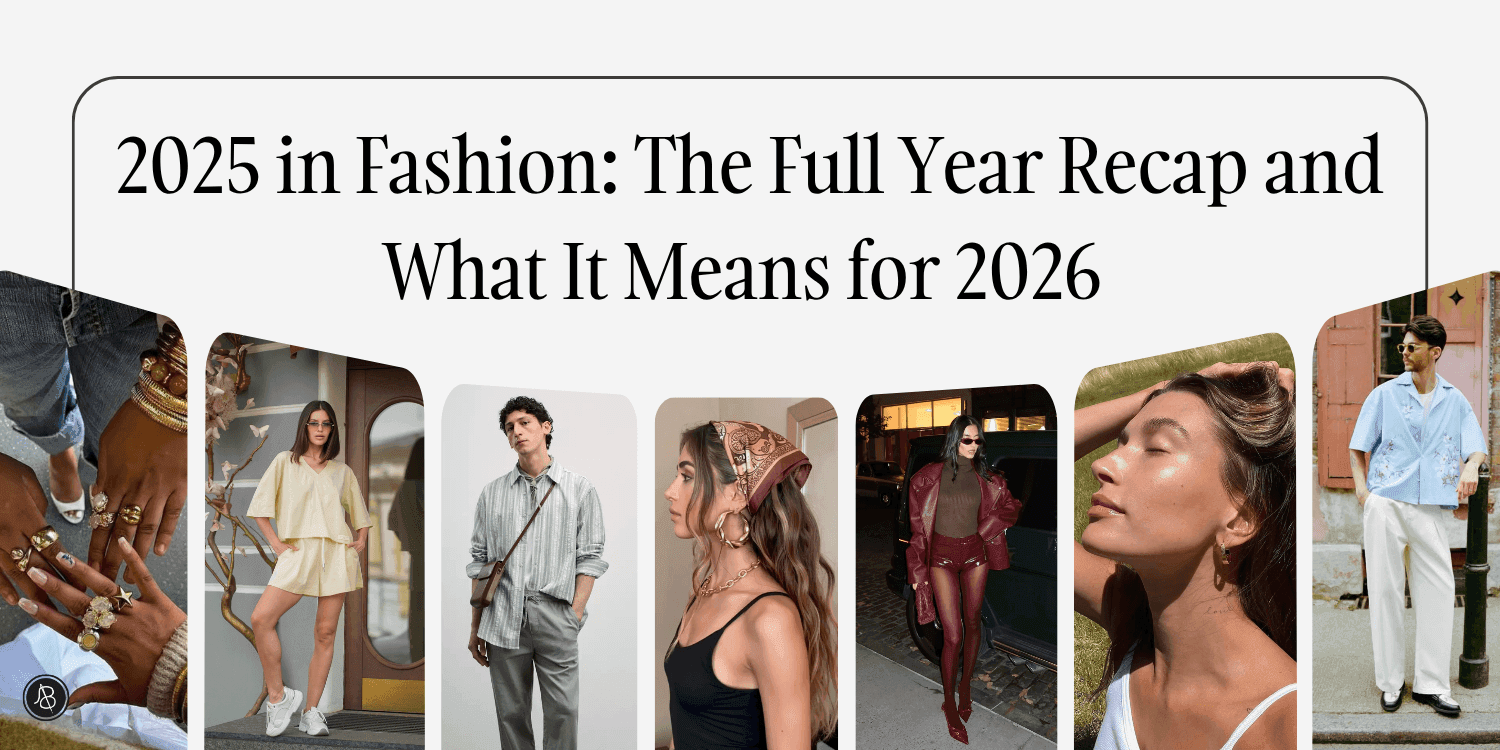
Fashion didn't evolve quietly in 2025, it fractured, then rebuilt itself around a different set of priorities. Instead of a single dominant trend, the year was defined by a shift in mindset: away from performance and impulse, toward intention, personalization, and getting more use out of what people already own.
Here's the complete picture: the shifts that defined the year, the people who drove the conversation, and the technology that quietly changed how people shopped and dressed, without most of them noticing it happening.
The Mindset Shift: From Noise to Intention
For most of the previous decade, fashion moved to the rhythm of viral moments, logo-driven status pieces, aesthetic "core" trends that burned out in weeks, and a constant pressure to keep up. 2025 was the year that rhythm broke.
The shift wasn't about a specific silhouette or color. It was a change in what people were optimizing for. Comfort stopped being treated as a compromise and became a real prerequisite. Longevity mattered more than novelty. Getting dressed became less about performing for an audience and more about actually fitting the life someone was living day to day.
If 2025 had a single throughline, it was this: style stopped being something people performed and became something people used.
The 10 Shifts That Defined the Year
Comfort became non-negotiable, not a fallback, but a genuine design priority across categories, from tailoring to everyday basics.
Elevated basics replaced statement pieces as the anchor of most wardrobes.
Styling became the skill that mattered, more than what you bought. The same handful of pieces, worn with more intention, started outperforming closets full of trend purchases.
Repeat-wearing lost its stigma. Cost-per-wear thinking moved from a niche sustainability talking point into mainstream shopping behavior.
A new neutral palette took hold, softer, warmer tones replacing the stark minimalism of previous years.
Leadership shake-ups reshaped legacy houses, with several major brands changing creative direction mid-year.
Cultural credibility outweighed hype drops. Brands leaned on real storytelling and heritage rather than manufactured scarcity.
Personalization tools moved from novelty to expectation. Shoppers started expecting recommendations built around what they actually owned, not generic trend pushes.
Sustainability arguments got more specific, less about vague "eco-friendly" branding, more about measurable things like cost-per-wear and closet utilization.
The line between digital and physical wardrobes blurred, as more people began managing their closets the way they manage their photos or their calendar, digitally, and by choice.
The Faces That Set the Tone
The year's most influential style moments didn't come from a single runway show, they came from individuals who treated getting dressed as a form of instinct and personal storytelling rather than formula-following. Across red carpets, everyday street style, and off-duty appearances, a handful of figures consistently drove the conversation by wearing clothes that felt like an extension of who they were, not a costume assembled to chase a trend cycle. The through-line across all of them: confidence read louder than logos.
The Technology That Changed Daily Habits
2025 wasn't a year of flashy tech launches, it was the year personalization tools quietly became part of daily routines without much fanfare. The friction that used to define online shopping, uncertainty about fit, disconnected recommendations, a gap between what you saw on screen and what showed up at your door, started dissolving.
The common thread: less guessing, more knowing. Tools that could see a person's actual wardrobe and actual preferences, rather than broadcasting generic trends at everyone, started to feel less like novelty and more like a baseline expectation.
What This Sets Up for 2026
Every one of these threads points in the same direction heading into 2026: wardrobes built around what people actually wear and actually own, rather than what's simply new. Expect the personalization tools that quietly took hold in 2025 to become the default way people shop and style themselves, not the exception.
Frequently Asked Questions
What was the single biggest fashion shift of 2025?
The move from performance-driven dressing to intention-driven dressing, prioritizing comfort, repeat-wear, and personal fit over chasing trend cycles.
Did any single trend dominate 2025 the way past years had one big "it" item?
No, and that was itself part of the shift. The year was defined by a mindset change rather than one dominant silhouette or color.
How did technology change fashion shopping in 2025?
Personalization moved from a nice-to-have into an expectation, with more tools connecting recommendations directly to a person's actual wardrobe rather than generic trend feeds.
Want your wardrobe built around what 2026 actually calls for, not just what's trending? Build your digital closet with BeSpoke AI Stylist. Download on the App Store or Play Store
Ready to upgrade your style game? Download BeSpoke AI Stylist and let your AI stylist take it from here.

Author
Neeraj Bansal