5 Fashion Aesthetics Explained: Classic to Streetwear
Published · Updated
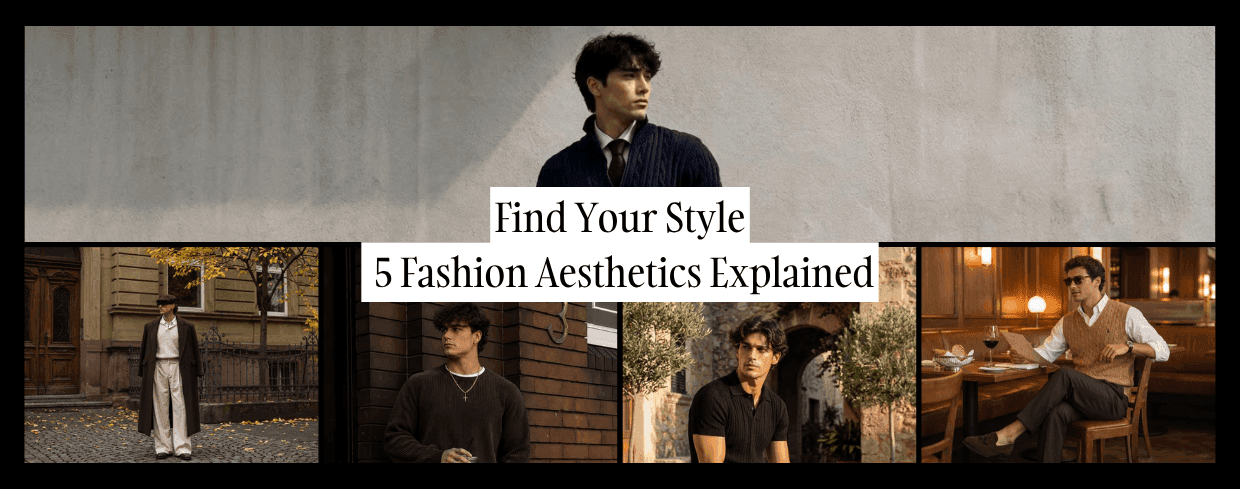
Every wardrobe tells a story, whether that story is intentional or accidental. Most people get dressed each morning without asking a basic question: what does my style actually say about me? Fashion trends move fast, but personal style is slower and more permanent. It is built on preference, lifestyle, and comfort, not on what is trending this week.
Understanding your style is not about picking a label and forcing yourself into it. It is about recognizing patterns in what you already gravitate toward and giving that pattern a name. Once you know your aesthetic, shopping becomes easier, outfit planning takes less time, and getting dressed stops feeling like guesswork.
This guide breaks down five of the most recognizable fashion aesthetics, Classic, Old Money, Street Wear, Smart Casual, and Preppy, and explains how each one can be identified, worn, and adapted to different lifestyles.
Style is a form of communication before a single word is spoken. Clothing choices signal confidence, profession, mood, and personality to anyone who sees you. When your wardrobe does not match your identity, it creates a subtle disconnect, the outfit is technically correct but something feels off.
Discovering a personal style aesthetic solves several practical problems. It reduces decision fatigue because fewer choices need to be made each morning. It improves shopping efficiency since purchases align with a clear direction instead of scattered impulse buys. It also builds a more cohesive wardrobe where pieces work together rather than sitting unused in a closet.
Style discovery is not a one-time decision either. Most people find that their aesthetic shifts with age, career changes, and life stages, but having a foundational understanding of the major style categories makes those transitions smoother.
Fashion Aesthetics at a Glance
- Classic – Timeless, structured, and polished. Think tailored blazers, crisp shirts, straight-leg trousers, and refined accessories.
- Old Money – Heritage-inspired and understated, with cable knits, pleated trousers, loafers, and muted earthy tones.
- Streetwear – Relaxed, expressive, and culture-driven, featuring oversized silhouettes, sneakers, hoodies, graphic pieces, and layered accessories.
- Smart Casual – A balance between polished and relaxed, combining tailored separates with comfortable everyday essentials.
- Preppy – Collegiate-inspired and playful, built around polo shirts, Oxford shirts, sweater vests, loafers, stripes, and plaid patterns
Classic Style: Timeless and Refined
Man wearing a navy cable-knit sweater, tie and grey pleated trousers in a classic outfit
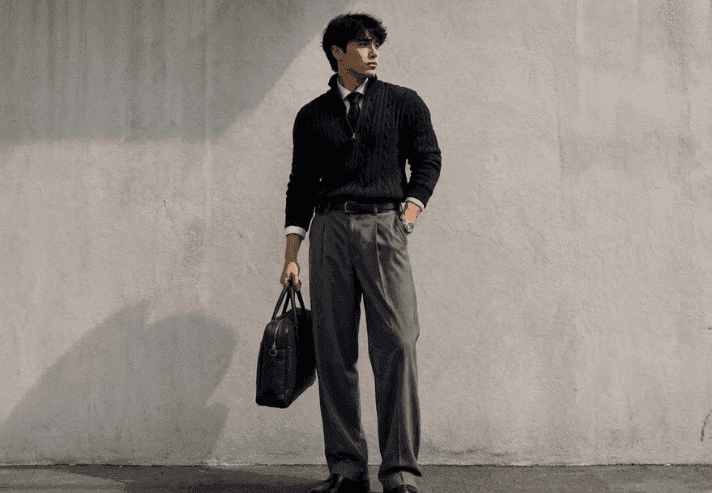
Classic style is built on longevity rather than trend cycles. It favors clean lines, neutral colors, and well-tailored silhouettes that remain relevant regardless of the season. Think tailored blazers, crisp button-down shirts, straight-leg trousers, and structured coats.
The defining feature of classic dressing is restraint. Prints are minimal, colors stay in a controlled palette of navy, black, camel, white, and grey, and accessories are simple rather than statement-making. This style works particularly well for professional environments and anyone who prefers a wardrobe that does not require constant updating.
Classic style rewards investment pieces. A well-made blazer or a good pair of leather shoes will outlast several seasons of trend-driven purchases, making this aesthetic one of the more cost-effective long-term choices.
Old Money Style: Quiet Luxury
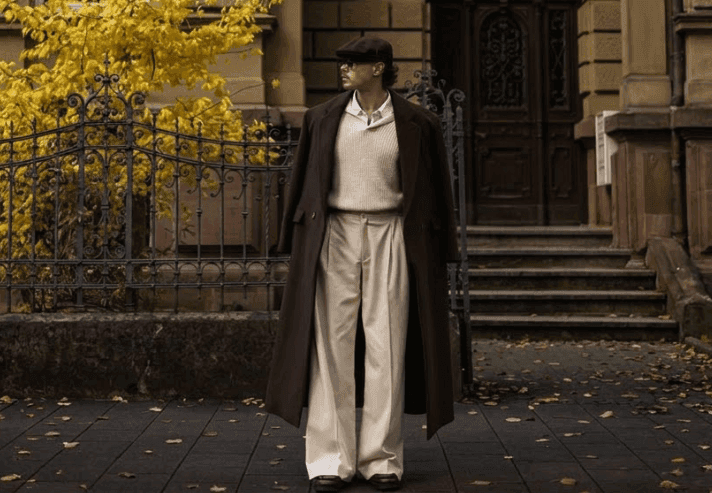
Man wearing a brown overcoat, cream knit and pleated trousers in an old money-inspired outfit
Old Money style, often called quiet luxury, draws from heritage fashion associated with generational wealth, but its appeal has expanded far beyond that origin. The aesthetic prioritizes quality fabrics, understated branding, and a muted color palette over anything flashy or logo-heavy.
Key pieces include cable-knit sweaters, pleated trousers, polo shirts, loafers, and tweed or wool blazers. Colors lean toward earth tones, cream, beige, forest green, burgundy, and navy. The goal is to look effortlessly put together without appearing to try too hard.
What separates Old Money from Classic is texture and detail. Old Money style leans into fabric richness, think cashmere, tweed, and corduroy, along with subtle details like crested buttons or contrast piping. It photographs well, which is part of why it has found renewed popularity across social media style content.
Street Wear: Urban and Expressive

Man wearing a dark knit top, baggy light-wash jeans, layered necklaces and tan boots in a streetwear outfit
Street Wear is the most fluid and expressive of the five aesthetics, drawing influence from skate culture, hip hop, and sportswear. It centers on graphic tees, oversized silhouettes, sneakers, hoodies, and layered pieces that mix casual and statement elements.
Unlike Classic or Old Money, street wear thrives on bold self-expression. Logos, graphics, and unexpected color combinations are welcomed rather than avoided. Sneaker culture plays a central role, with limited releases and collaborations often functioning as style statements on their own.
This aesthetic tends to attract people who want their clothing to reflect individuality and cultural affiliation. It also moves faster than other styles, with trends shifting seasonally based on collaborations, drops, and cultural moments, making it one of the more dynamic categories to follow.
Smart Casual: Versatile and Polished
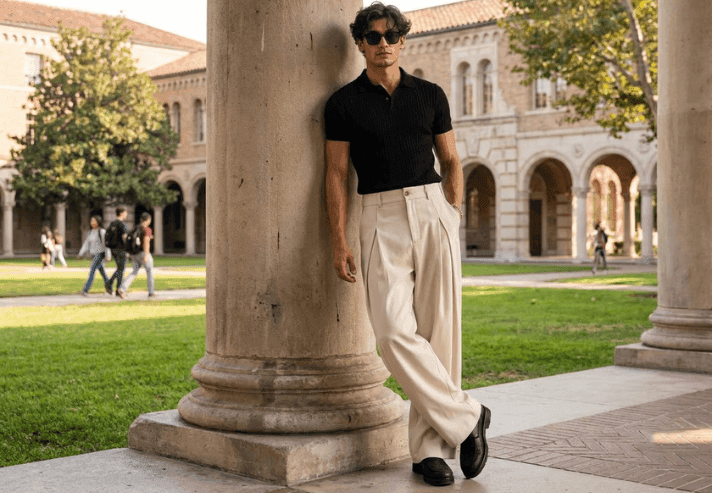
Man wearing a black polo shirt, cream pleated trousers and black loafers in a smart casual outfit
Smart Casual sits in the middle ground between formal and relaxed dressing, making it one of the most practical aesthetics for everyday life. It combines structured pieces with casual elements, a blazer worn with dark jeans, a button-down paired with clean sneakers, or tailored trousers styled with a simple knit top.
The strength of smart casual lies in its adaptability. It works for client meetings, casual dinners, weekend errands, and semi-formal events without requiring a full wardrobe change. Fabrics stay polished but not stiff, and the overall look avoids both extremes of overly formal and overly relaxed.
For anyone whose schedule involves moving between different environments in a single day, smart casual offers the most functional starting point.
Preppy Style: Collegiate and Fresh
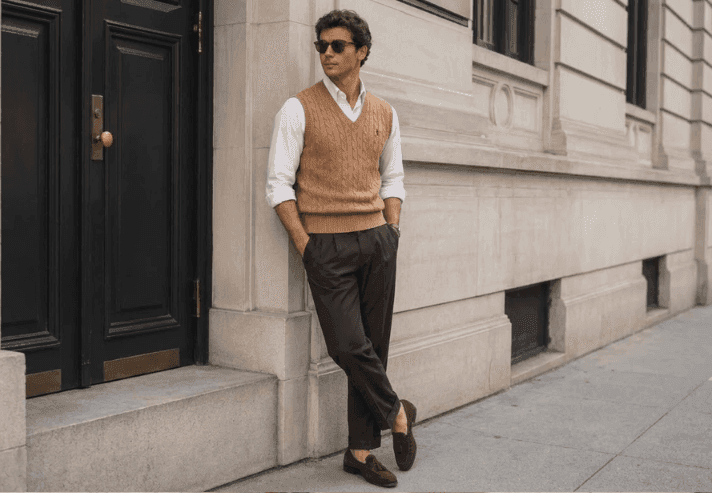
Man wearing a tan sweater vest, white shirt, dark trousers and loafers in a preppy outfit
Preppy style draws from East Coast collegiate fashion, characterized by polo shirts, pleated skirts, cardigans, plaid patterns, and boat shoes. It shares some overlap with Old Money but leans brighter and more playful, incorporating color and print more freely.
Common elements include striped or plaid patterns, varsity-inspired pieces, and a general sense of youthful polish. Layering is a key technique in preppy dressing, a sweater tied over the shoulders or a cardigan layered over a collared shirt are signature moves within this aesthetic.
Preppy style tends to suit people who want a polished look without the more subdued tones of Old Money or the strict formality of Classic dressing.
Identifying a personal style aesthetic starts with observation rather than decision. A few practical steps make the process easier.
Review your current wardrobe. Look at what gets worn repeatedly versus what sits unused. Patterns often reveal preferences that have not been consciously named yet.
Consider your lifestyle demands. A style that looks appealing on a mood board is not useful if it does not match daily routines, work requirements, or climate.
Notice color and fabric preferences. Some people naturally gravitate toward muted, neutral palettes, others prefer bold color or pattern. This instinct is often a stronger indicator of style than trend cycles.
Look at reference points. Public figures, films, or even specific decades often serve as unconscious style influences. Naming that reference can clarify which aesthetic actually resonates.
Most people find that they do not fit neatly into a single category. A wardrobe might combine Smart Casual structure with Old Money color choices, or Street Wear sneakers with Classic tailoring. Hybrid styles are common and valid.
Manually working through wardrobe patterns takes time, and most people do not have the bandwidth to analyze their own closet with objectivity. This is where a structured, data-informed approach becomes useful.
BeSpoke AI Stylist offers tools designed specifically for this kind of style discovery process. The Digital Closet feature organizes existing wardrobe pieces in one place, making it easier to see patterns across colors, categories, and frequency of wear. The Virtual Try-On tool allows new pieces to be tested against a personal silhouette before purchase, reducing wasted spending on items that do not suit an existing wardrobe direction.
For those still narrowing down an aesthetic, the Stylist feature provides outfit suggestions based on existing pieces and stated preferences, while the Outfit Planner helps translate a chosen style direction into practical, repeatable looks for the week ahead. The Discover feed also surfaces style inspiration across categories like the five outlined above, offering a low-pressure way to explore aesthetics before committing to one.
Can a person have more than one style aesthetic? Yes. Most wardrobes reflect a blend of two or more aesthetics depending on context, such as work, weekends, or specific occasions.
How is Old Money style different from Classic style? Classic style focuses on timeless simplicity, while Old Money style adds richer textures, muted earth tones, and subtle heritage-inspired details.
Is Street Wear only for younger audiences? No. While Street Wear has strong ties to youth culture, its emphasis on comfort and self-expression appeals across age groups.
What is the easiest style to start with? Smart Casual is often the most practical starting point because of its versatility across professional and personal settings.
Can AI tools accurately identify personal style? AI stylist tools work best when paired with existing wardrobe data and stated preferences, helping surface patterns that might otherwise go unnoticed.
Style is not a fixed identity, it is a reflection of preference, lifestyle, and confidence at a given point in time. Whether the pull is toward the understated tailoring of Classic, the quiet richness of Old Money, the bold expression of Street Wear, the practical polish of Smart Casual, or the fresh energy of Preppy, the goal remains the same: dressing in a way that feels authentic rather than performative.
Your style, your way.
Discover it with BeSpoke AI Stylist.
Sources and Further Reading
Research on dress and person perception- https://pmc.ncbi.nlm.nih.gov/articles/PMC10559650/
Fresh, Fly, and Fabulous: Fifty Years of Hip Hop Style- https://www.fitnyc.edu/museum/exhibitions/hip-hop-style/index.php
Ivy Style exhibition- https://exhibitions.fitnyc.edu/exhibitions-timeline/ivy-style/
smart casual dress code- https://capd.mit.edu/resources/what-is-a-smart-casual-dress-code/
By the BeSpoke AI Stylist Editorial Team
Published: 18/08/2026
Last updated: 18/08/2026
Ready to upgrade your style game? Download BeSpoke AI Stylist and let your AI stylist take it from here.

Author
Neeraj Bansal