5 Fashion Personality Types: How to Find Your Personal Style
Published · Updated
Most people own a closet full of clothes and still feel like they have nothing to wear. The problem usually is not quantity. It is clarity. Without a clear sense of personal style, shopping becomes guesswork and getting dressed becomes a daily negotiation with a mirror that never quite agrees with you.
This is where personality styling comes in.
Fashion Personality Types at a Glance
- Minimalist: Clean lines, simple silhouettes and restrained details
- Classic: Tailoring, structure and polished wardrobe staples
- Trendy: Current silhouettes, emerging colours and experimentation
- Bohemian: Texture, movement, print and expressive layering
- Vintage: Era-inspired clothing, retro references and reworked pieces
What Is Personality Styling?
Personality styling is the practice of dressing in a way that reflects who you are, not just what is trending or what happens to fit. It treats clothing as an extension of identity rather than a rotating set of purchases. Instead of asking "what is everyone wearing right now," personality styling asks "what does this outfit say about me."
Every person has a natural styling instinct, even if they have never named it. Some people gravitate toward clean, uncluttered outfits. Others feel most like themselves in structured blazers. Some chase the newest silhouette the moment it appears on their feed, while others would rather rework a thrifted jacket from decades ago. None of these instincts are random. They form patterns, and those patterns are what personality styling identifies and builds around.
Understanding your styling personality does three things. It reduces decision fatigue because you stop second-guessing every purchase. It improves wardrobe efficiency because you buy pieces that actually work together. And it increases confidence, because clothing finally matches the person wearing it.
Fashion personalities are not infinite, but they are not rigid boxes either. Most people lean strongly toward one type and borrow elements from another. Here are the five foundational styling personalities.
Minimalist Styling
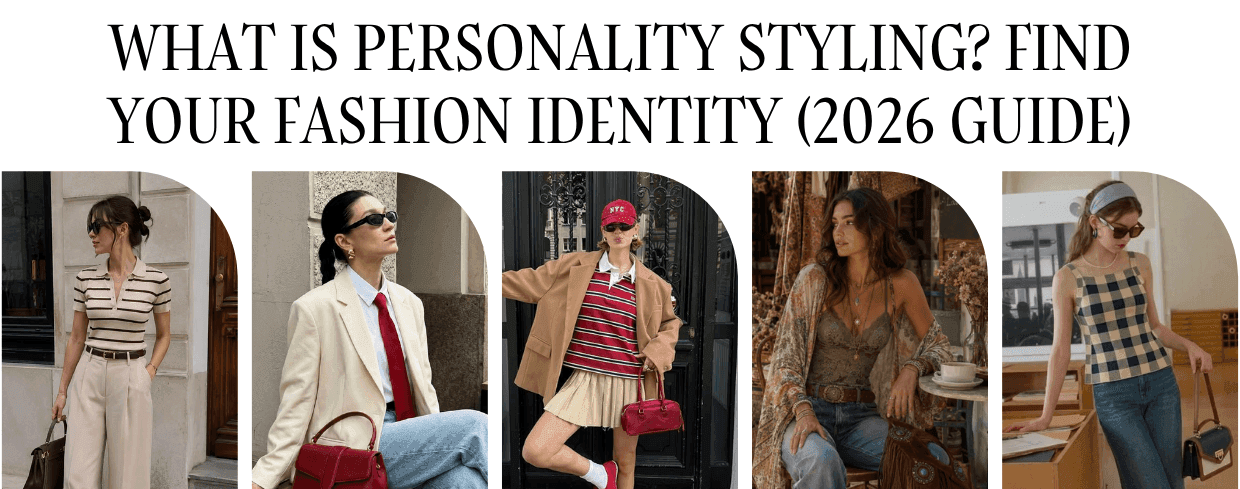
Woman wearing a striped polo shirt with cream wide-leg trousers in a minimalist outfit
Minimalist dressers believe in restraint. Their wardrobes are built on clean lines, neutral palettes, and nothing extra. There is no clutter, no unnecessary embellishment, and no impulse buying just because something looked good on someone else.
A minimalist's closet is small but mighty. Every piece is chosen for versatility, meaning a single blazer, a well-cut trouser, or a simple white shirt can be restyled a dozen different ways. The philosophy here is fewer, better pieces that mix and match effortlessly rather than a large collection that rarely gets worn in full.
This style personality suits people who value efficiency and who find visual noise exhausting. It is often mistaken for being "boring," but a well-executed minimalist wardrobe is one of the hardest looks to get right, because there is nowhere for a bad fit or wrong proportion to hide.
Classic Styling
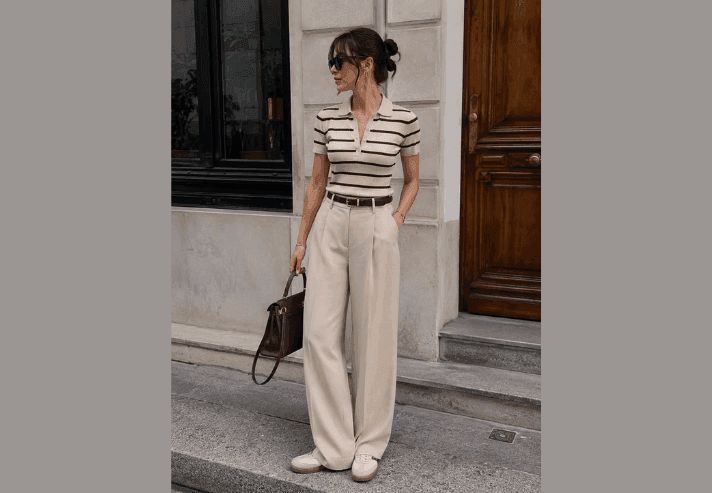
Woman wearing a cream blazer, white shirt, red tie and blue jeans in a classic outfit
Classic dressers invest in tailoring, structure, and pieces that look as good in ten years as they do today. This is the personality type that prioritizes longevity over novelty. A tailored coat, a well-fitted blazer, or a quality leather bag are treated as long-term investments rather than seasonal purchases.
The guiding principle of classic styling is simple: timeless over trendy. Classic dressers are not opposed to trends entirely, but they filter every trend through the question of whether it will still feel relevant years from now. This makes classic styling one of the most sustainable personality types, since pieces are rarely discarded after a single season.
People drawn to classic styling often value reliability and polish. Their wardrobe choices tend to photograph well across contexts, from professional settings to formal events, because structure and fit rarely go out of style.
Trendy Styling
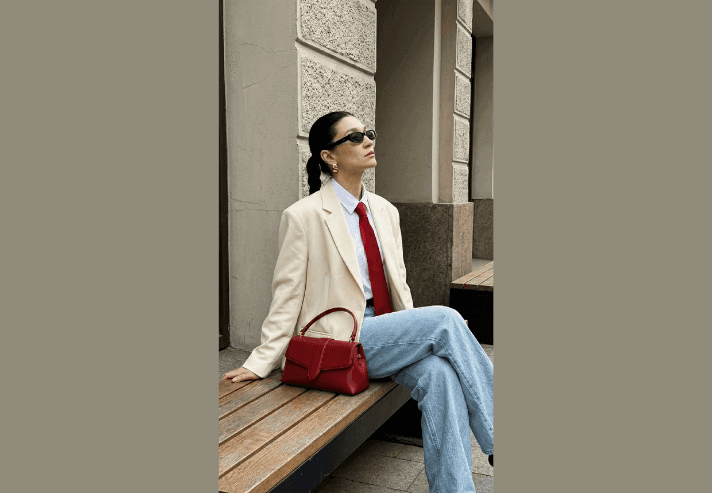
Woman wearing a camel blazer, striped polo shirt, pleated skirt and bold red accessories in a trendy outfit
Trendy dressers are first to try, first to wear. This personality type keeps a constant pulse on what is emerging, whether it comes from runway shows, street style, or social media. The goal is not to follow trends months after they peak, but to catch them early and make them wearable in everyday life.
What separates a skilled trendy dresser from someone who simply buys whatever is popular is the ability to translate runway cues into everyday wearability. A trend straight off the runway rarely works in real life without adjustment. The trendy personality type knows how to take an emerging silhouette, color, or detail and adapt it into something practical.
This style personality suits people who enjoy experimentation and who see getting dressed as a form of ongoing creative expression rather than a fixed formula.
Bohemian Styling
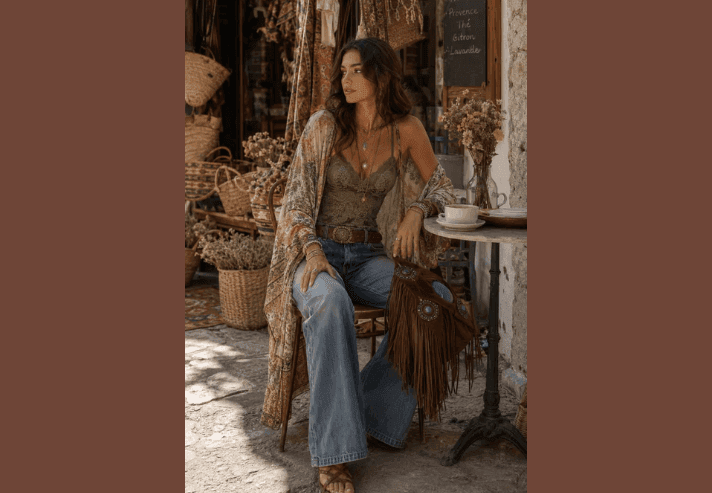
Woman wearing a layered bohemian outfit with a printed kimono, flared jeans and a fringed brown bag
Boho dressers build outfits by layering prints, fabrics, and accessories into looks that feel personal and lived-in. This is the most texture-driven of all the styling personalities. Where minimalists remove, bohemians add, and the result is a wardrobe that feels expressive rather than restrained.
The defining trait of bohemian styling is that it is free-flowing, textured, and largely unbothered by conventional rules. Mixing patterns that "shouldn't" go together, layering fabrics from different textures, and combining accessories from different eras are all part of the aesthetic rather than mistakes to avoid.
This personality type tends to attract people who see fashion as storytelling. Every piece often carries meaning, whether it was collected while traveling, inherited, or chosen because of a specific print or fabric that felt personal.
Vintage Styling
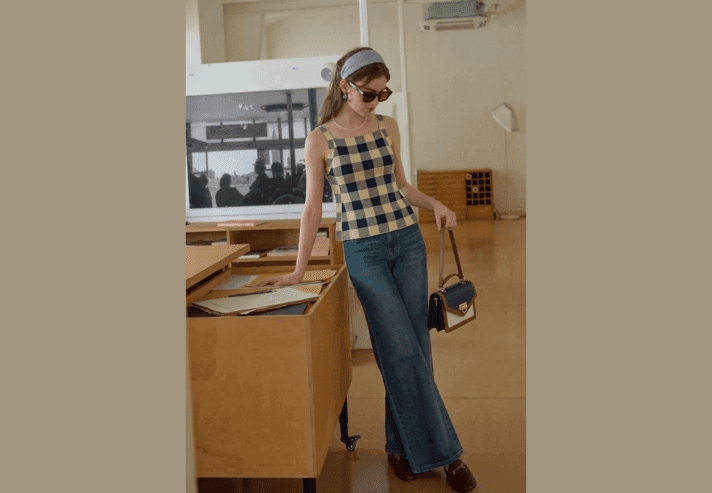
Woman wearing a checkered sleeveless top, flared jeans, headband and retro handbag in a vintage outfit
Vintage dressers thrift, rework, and remix eras, pulling pieces that feel like they carry a history. Unlike classic styling, which favors timeless neutrality, vintage styling deliberately borrows from specific decades, whether that means 70s silhouettes, 90s minimal slip dresses, or Y2K accessories.
The appeal here is captured well in one phrase: old souls, new outfits. Vintage dressers are not simply recreating the past. They are reinterpreting it, combining pieces from different eras with modern basics to create something that feels both nostalgic and current.
This personality type often overlaps with sustainability-minded shoppers, since thrifting and reworking existing garments naturally reduces reliance on newly manufactured clothing.
Most people are not purely one type. A classic dresser might have a bohemian streak for weekends. A minimalist might occasionally indulge in a trendy accessory. The goal of identifying your personality style is not to lock yourself into a single category, but to understand your dominant instinct so you can shop, plan, and dress with intention.
A few questions can help clarify this:
- Do you feel most confident in clean, simple outfits, or in ones with texture and layers?
- When you shop, are you drawn to longevity or novelty?
- Does your closet lean toward neutral tones, or do prints and color dominate?
- Do you prefer pieces with a history, like thrifted or vintage finds, or do you prefer new and current?
Answering honestly, rather than aspirationally, is what makes this exercise useful. Many people shop for the version of themselves they think they should be rather than the one they actually are, which is exactly why closets fill up with unworn clothing.
A wardrobe built without a clear personality style tends to accumulate inconsistency. Pieces are bought individually, often based on a single trend or a single outfit seen online, without consideration of how they fit into the bigger picture. The result is a closet full of items that do not talk to each other.
Personality styling solves this by giving every purchase a filter. Before buying, the question becomes whether a piece fits the wardrobe's overall identity, not just whether it looks good in isolation. This single shift dramatically reduces wasted spending and unworn clothing.
It also changes how outfits are put together day to day. Instead of starting from zero each morning, a person who understands their styling personality can build outfits faster, because they already know which combinations align with their identity.
How BeSpoke AI Stylist Identifies Your Personality Style
Figuring out a personality style manually takes time, trial, and a fair amount of closet frustration. BeSpoke AI Stylist was built to shortcut that process using your own wardrobe as the starting point rather than generic style archetypes pulled from the internet.
Through the app's Digital Closet and Stylist features, BeSpoke analyzes the pieces you already own, how you wear them, and what you gravitate toward, then maps that data to a personality styling profile. From there, outfit suggestions come directly from your own wardrobe, styled in a way that matches your identified personality type, whether that is minimalist, classic, trendy, bohemian, or vintage.
This approach differs from generic styling advice because it does not ask you to buy into someone else's aesthetic. It works with what is already in your closet and helps you style it more intentionally.
Can I have more than one personality styling type? Yes. Most people have a dominant style with secondary influences. The goal is to identify your primary instinct, not to eliminate variety entirely.
Does personality styling change over time? It can. Life stages, careers, and personal growth often shift styling preferences. Revisiting your style identity periodically is normal and healthy.
Is personality styling the same as a "style aesthetic" trend? Not exactly. Aesthetic trends are often temporary and externally driven. Personality styling is meant to be a more stable reflection of individual identity, even as specific pieces or trends come and go.
How do I start applying personality styling to my existing wardrobe? Begin by sorting your closet based on which pieces feel most "you." Patterns will emerge quickly, and those patterns point directly to your dominant styling personality.
Minimalist, classic, trendy, bohemian, or vintage, each styling personality reflects a different relationship with clothing and identity. None is superior to another. The goal is not to fit into a category perfectly, but to understand your instincts well enough to dress with intention rather than guesswork.
Which one are you?
Sources and Further Reading
Dress Is a Fundamental Component of Person Perception, reference for how clothing choices shape how personality and identity are perceived by others.
Styling the Self: Clothing Practices, Personality Traits, and Body Image, reference for the link between personality traits and everyday clothing choices.
Psychology of Fashion, American Psychological Association discussion on why what people wear reflects identity and mood.
Durability Is Fashion’s Next Competitive Advantage, reference for the sustainability angle behind vintage and rework-based styling.
By the BeSpoke AI Stylist Editorial Team
Published: 17/08/2026
Last updated: 17/08/2026
Ready to upgrade your style game? Download BeSpoke AI Stylist and let your AI stylist take it from here.

Author
Neeraj Bansal