Linen vs Cotton vs Silk vs Satin: How to Choose the Right Fabric
Published · Updated

Most style advice begins with silhouette, color, or trend. Fabric rarely gets the same attention, yet it decides how a garment moves, how it feels against skin, and how long it lasts. Two dresses can share an identical cut and still behave completely differently once you factor in what they're made of.
Understanding fabric is not a technical detour from styling. It is the foundation of it. In hot weather, a lightweight linen shirt will often feel more comfortable than a tightly woven synthetic shirt, although fabric weight, weave, lining and finish matter as much as fibre content.
This guide walks through four fabrics that show up constantly in everyday wardrobes, linen, cotton, silk, and satin, and explains where each one earns its place.
Why Fabric Choice Comes Before Style Choice
Before a single styling decision gets made, fabric has already set the terms. It determines breathability, drape, texture, and how a garment ages with wear and washing. A cotton kurta and a satin one might look similar in a photograph, but one will keep you cool through a humid afternoon and the other is built for a different kind of evening altogether.
Climate plays a large role here, especially in a country with as much seasonal and regional variation as India. What works in Bengaluru's mild stretch of the year is not what works in Delhi's peak summer or Mumbai's monsoon humidity. Fabric knowledge lets you shop and dress with that context built in, instead of relying on trend alone.
There is also a practical dimension. Fabric affects how a piece fits into daily life: how often it needs ironing, how it holds up to repeated wear, and whether it is suited to a desk job, a wedding, or a weekend outdoors. Building a wardrobe around fabric logic, not just aesthetic preference, tends to hold up better over time.
Man wearing an olive green linen shirt with wide white linen trousers

What Makes Linen Different
Linen is woven from the fibers of the flax plant, which gives it a distinctive, slightly irregular texture. That texture is not a flaw; it is what makes linen one of the most breathable fabrics available. Lightweight, unlined linen allows substantial airflow and conducts heat effectively, which is why it has a long history of use in summer clothing and hot climates. Breathability still depends on the garment’s weight, weave, fit and lining.
How Linen Feels and Behaves
Linen has a crisp, textured hand that softens with each wash. It wrinkles easily, and this is often treated as a downside, but in practice it reads as a natural, unfussy texture rather than a mistake. The fabric absorbs moisture quickly and releases it just as fast, which is part of why it feels cool even in direct heat.
Where Linen Works Best
Linen is suited to daytime wear in warm weather: shirts, trousers, unstructured dresses, and relaxed separates. It is not the fabric for anything requiring sharp structure or a glossy finish, but for comfort in heat, few fabrics compete with it.
Man wearing a brown cotton shirt with relaxed white trousers

The Case for Cotton
Cotton is the most familiar fabric in most wardrobes, and for good reason. It offers a dependable combination of softness, breathability, and easy structure that works across seasons and occasions. Unlike linen, cotton holds its shape without wrinkling as aggressively, which makes it easier to maintain.
Texture and Everyday Function
Cotton's fiber structure allows it to absorb sweat and moisture while still feeling soft against skin. Cotton accepts a wide range of dyes and finishes, although colour retention varies according to the dyeing process, fabric construction and care method. The fabric also breathes reasonably well, though not to the same degree as linen, making it a middle ground between comfort and structure.
Where Cotton Fits In
Cotton works for nearly everything: shirts, kurtas, casual dresses, everyday trousers, and layering pieces. It is the fabric most people reach for without thinking twice, precisely because it rarely fails at the basics. For anyone building a wardrobe around versatility, cotton is usually the starting point.
Man wearing a gold silk kurta with white trousers
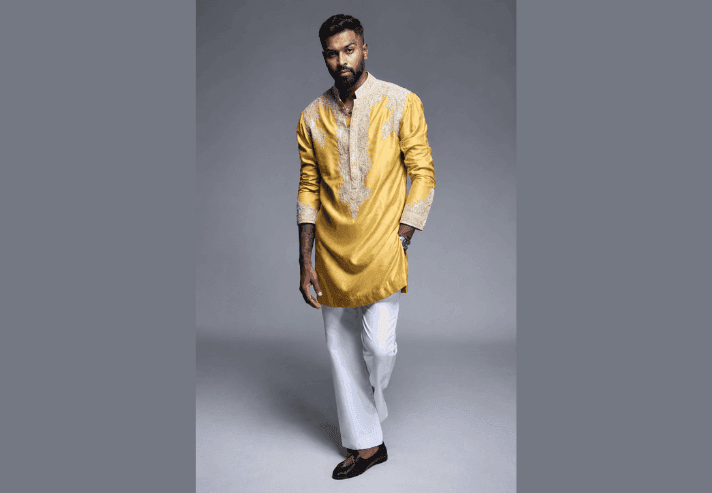
What Sets Silk Apart
Silk is a natural protein fiber, produced by silkworms, and it behaves differently from both linen and cotton. Its defining quality is drape: silk falls close to the body in soft, fluid lines rather than holding a rigid shape. This is what gives silk garments their characteristic movement.
The Feel of Silk
Silk has a smooth, almost weightless hand, along with a subtle, natural sheen that reads as understated rather than flashy. It regulates temperature well, feeling cool in warm weather and providing light warmth in cooler conditions. This dual quality is part of why silk has remained relevant across seasons and regions for so long.
Where Silk Belongs
Silk suits pieces meant to move: sarees, dupattas, blouses, and eveningwear where drape matters as much as color or print. It is not a fabric built for rough daily wear, but for occasions where quiet elegance is the goal, silk remains difficult to substitute.
Man wearing a cream satin shirt with wide-leg trousers
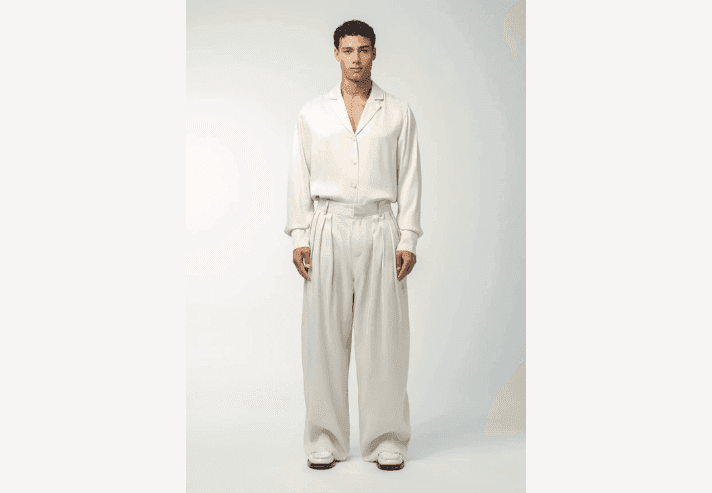
Understanding Satin
Satin is often confused with silk, but the two are not the same thing. Silk refers to a fiber, while satin refers to a weave, one that can be constructed from silk, polyester, or other fibers. What defines satin is its weave structure, which produces a glossy front and a duller back.
How Satin Reads on the Body
Satin's defining trait is its smooth, reflective surface. Light catches it in a way that reads as polished and occasion ready. It has less structure than cotton and less texture than linen, which gives it a fluid, almost liquid quality when it moves.
When Satin Makes Sense
Satin is built for evening wear: blouses, slip dresses, occasion sarees, and pieces designed to catch light under indoor settings. It is rarely the right choice for daytime or high heat, since the glossy finish and lack of breathability work against comfort in those conditions.
A Simple Way to Decide
Instead of asking "what looks good," a more useful starting question is "what does this occasion and climate actually require." Daytime heat calls for linen or cotton. Formal daywear that still needs structure often does well in cotton blends. Evening occasions, where drape and shine matter more than breathability, are where silk and satin take over.
Layering Fabric Logic Into a Wardrobe
A wardrobe built with fabric in mind tends to require less last-minute decision making. Knowing that linen is your go-to for a humid commute, cotton for a full workday, silk for a wedding lunch, and satin for a dinner later that evening removes a layer of guesswork from getting dressed. It also tends to extend the life of each garment, since fabrics perform best when worn in the conditions they were designed for.
Fabric as a Long-Term Wardrobe Strategy
Trends shift every season, but fabric behavior does not. A well-chosen linen shirt or silk saree will remain functional and relevant long after a specific print or silhouette has gone out of rotation. Building a wardrobe around fabric fundamentals, rather than chasing trend cycles, is one of the more durable style decisions available.
Is linen suitable for humid weather, not just dry heat? Yes. Linen's open weave allows moisture to evaporate quickly, which makes it effective in both dry and humid heat, though it will wrinkle more in humidity.
Can cotton be worn in winter? Cotton alone is not particularly warm, but it works well as a base layer under heavier fabrics during colder months.
Is silk high maintenance? Silk generally requires gentler washing, often dry cleaning or hand washing, but it is not fragile in daily wear when handled correctly.
What is the main difference between silk and satin? Silk is a natural fiber. Satin is a weave that can be made from silk or other materials like polyester. A garment can be satin without containing any actual silk.
Does satin work for daytime outfits? It can, but its glossy finish and lower breathability generally make it better suited to indoor or evening settings.
Once you know how each garment behaves, you can plan a full week of outfits in ten minutes using fabrics that match both your schedule and the forecast.
Ready to upgrade your style game? Download BeSpoke AI Stylist and let your AI stylist take it from here.

Author
Neeraj Bansal