How to Style Clothes You Already Own for 5 Real-Life Occasions
Published · Updated
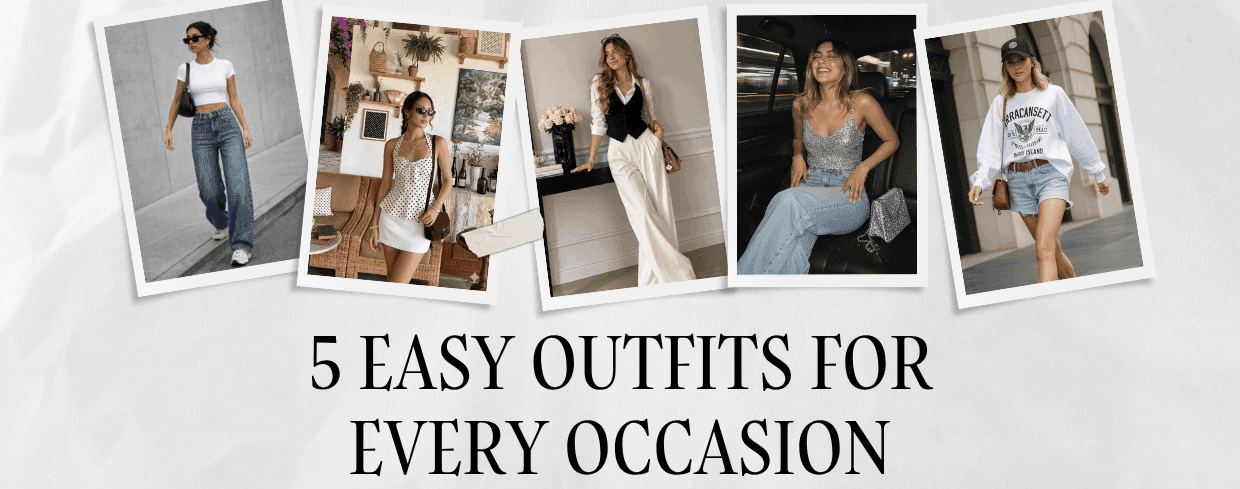
A full wardrobe can still feel surprisingly unhelpful when every piece is considered on its own. Learning how to style clothes you already own is less about finding one “perfect” item and more about recognising which shapes, textures and levels of formality work well together.
The five looks below are separate outfit ideas for a casual day, coffee date, office, Friday night and relaxed weekend. You do not need the exact garments in the photos. Use each look as a formula, then recreate the same relationship with pieces from your wardrobe, adjusting the result for your weather, comfort, preferred coverage and actual dress code.
The five outfit ideas at a glance
- Casual day: fitted white T-shirt + relaxed blue jeans + sneakers. The contrast between a close-fitting top and fuller denim creates the shape.
- Coffee date: polka-dot top + simple light-coloured bottom + compact brown bag. One playful print leads; the rest stays quiet.
- Office: white button-down + black waistcoat + light wide-leg trousers. A structured centre gives fluid separates more definition.
- Friday night: sparkly camisole + relaxed jeans + metallic bag. A party texture becomes easier to wear beside everyday denim.
- Weekend: oversized sweatshirt + denim shorts + sporty accessories. Repeating the same casual mood keeps the outfit cohesive.
Woman wearing a fitted white T-shirt with relaxed wide-leg blue jeans, white sneakers, a black shoulder bag and dark sunglasses.
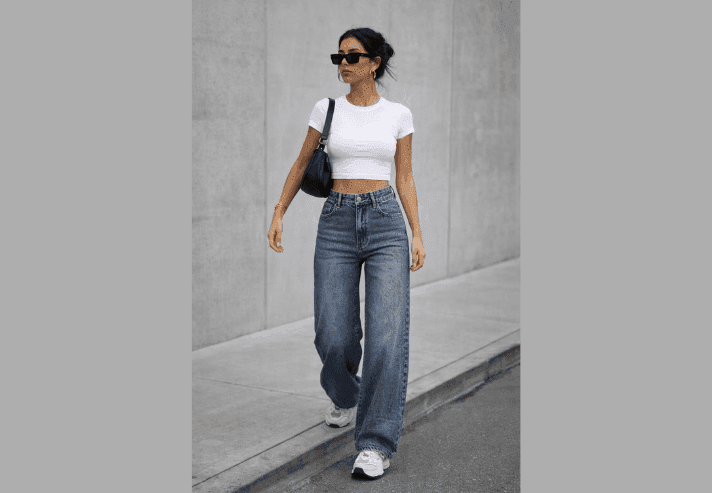
Outfit formula: fitted white tee + relaxed or wide-leg jeans + clean sneakers + a small dark bag.
The uploaded visual shows a fitted, cropped white crew-neck T-shirt with medium-wash, high-rise jeans that fall in a relaxed, wide silhouette. White-and-grey sneakers keep the outfit firmly casual, while a black shoulder bag and dark rectangular sunglasses add sharper, compact details.
The two main pieces do different visual jobs. The white tee is close-fitting and low in visual weight; the jeans provide most of the volume. That contrast gives a basic pairing a clear shape.
You can recreate it with a full-length white tee tucked or half-tucked into straight or relaxed jeans. A ribbed tank, fitted long-sleeve top or plain baby tee can perform the same “quiet base” role. It is one example of a broader 5-minute outfit formula: simple pieces look more considered when the proportions are clear.
For more coverage, choose a longer tee or add an open shirt. In cooler weather, layer a cardigan, bomber or relaxed blazer; in heat, keep the silhouette but remove the layer.
Styling mistake to avoid: if both the tee and jeans are very oversized, the fitted-versus-relaxed contrast visible in the reference look disappears. That can still be a valid silhouette, but it creates a different effect. To retain this formula, define one area through fit, a tuck or a shorter hem.
Principle to reuse: when one garment carries most of the volume, let another part of the outfit stay visually simple or more defined.
Woman in a cream polka-dot sleeveless top and white mini skirt with a brown shoulder bag and dark sunglasses.
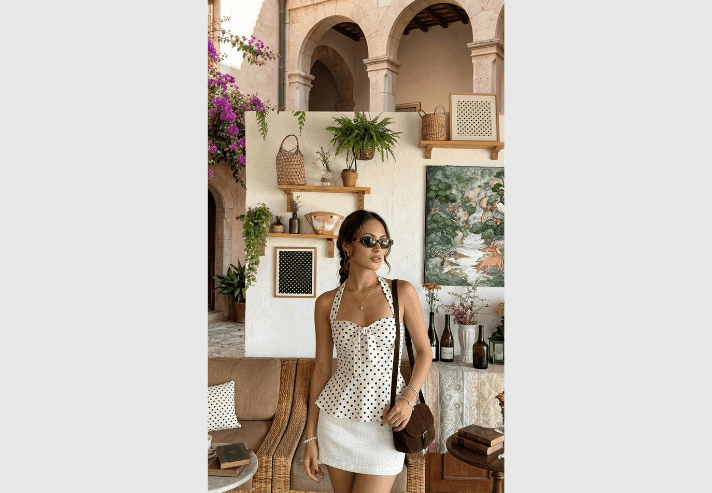
Outfit formula: small-scale printed top + plain bottom + simple bag + restrained jewellery.
The coffee-date visual shows a cream or white sleeveless top covered in small black polka dots. It is fitted through the upper section and flares below the waist in a peplum-like shape. The top is paired with a short white skirt, a brown shoulder or crossbody bag, dark oval sunglasses, a delicate necklace and bracelets. The footwear is outside the frame, so it should not be assumed.
The dots add playfulness, but their small scale and neutral palette keep the print controlled. The plain skirt gives the eye somewhere to rest, while the brown bag adds warmth without competing. The top’s fitted-to-flared shape adds movement without making the look feel overly formal.
Keep that relationship rather than the exact pieces. Pair any polka-dot blouse, camisole or knit with plain jeans, cream trousers, a denim skirt or a midi. Black trousers make it sharper; straight blue jeans make it more casual.
Dress for the actual venue. Choose a comfortable flat, sneaker or sandal for walking. Replace the mini with a midi or trousers for more coverage, and add a cropped cardigan or light jacket when it is cooler.
Styling mistake to avoid: adding another equally busy print, a heavily embellished bag and multiple novelty accessories can leave the outfit without a clear focal point. If the dots are leading, let most supporting pieces stay solid.
Principle to reuse: choose one print to carry the personality of the outfit, then support it with quieter pieces in related neutrals.
Woman wearing a white button-down shirt, black waistcoat and ivory wide-leg trousers with pointed heels and a tan handbag.
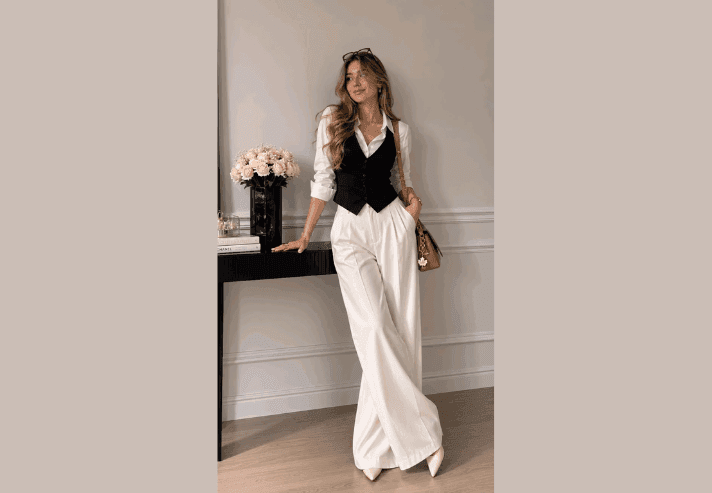
Outfit formula: white button-down + dark tailored waistcoat + wide-leg trousers + polished shoes + structured bag.
The office visual shows a white button-down blouse under a fitted black waistcoat, paired with high-waisted ivory or white wide-leg trousers. Pointed light-coloured heels and a small structured tan bag raise the formality. A watch or bracelet adds a restrained finishing detail, while sunglasses rest on the head.
The dark waistcoat creates a structured centre between two lighter, more fluid pieces. It defines the shirt-and-trouser combination without requiring a full suit; the pointed shoes raise the formality. Whether it works for the office still depends on the reader’s role and dress code.
A knit vest or blazer can replace the waistcoat. Black, charcoal, navy or beige trousers are practical alternatives to ivory. Swap the heels for loafers, ballet flats or low block heels; minimal sneakers suit only some workplaces. A 7-piece wardrobe formula offers more ways to repeat versatile shirts, trousers and tailoring.
For heat, use a lighter blouse or short-sleeve shirt where permitted. For cold, add a blazer or coat and a fine-gauge knit base. Full-length trousers, a non-sheer shirt and comfortable flats can increase coverage and ease.
Styling mistake to avoid: treating the waistcoat as an automatic shortcut to office dressing. If the remaining pieces are very distressed, sheer, beach-like or highly casual, the outfit may still miss the required level of formality.
Principle to reuse: one structured piece can organise softer or wider separates, but the shoes, fabric appearance and workplace context still determine how formal the final outfit feels.
Woman in a silver sequined camisole and light-wash wide-leg jeans holding a small sparkling bag in a car at night.
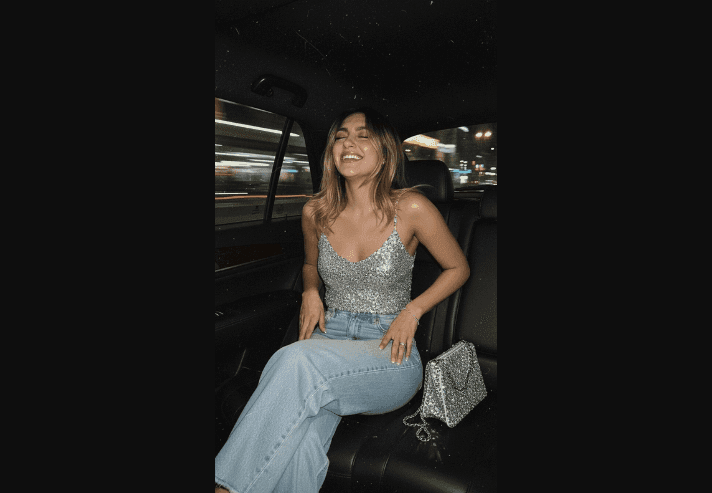
Outfit formula: one reflective top + relaxed jeans + one small evening accessory.
The Friday-night visual shows a silver sparkly or sequined spaghetti-strap camisole with light-wash, relaxed wide-leg jeans. A small silver or rhinestone-style bag repeats the reflective quality of the top. Rings and a bracelet add smaller points of shine. The footwear is not visible in the photo.
The useful idea is high-low dressing: a special-occasion texture beside ordinary denim. The jeans reduce the camisole’s formality, while the sparkle gives the denim an evening direction. The strong top means the outfit does not need a complicated silhouette.
A metallic knit, rhinestone-trimmed blouse or subtly glittered top can replace the camisole. You can also reverse the formula: wear a plain black or white top with relaxed jeans and move the sparkle to a bag, shoe or pair of earrings. For a dressier venue, replace the jeans with black trousers or a simple dark skirt.
For cooler weather or more coverage, add a leather jacket, blazer or longer tailored layer. A long-sleeve metallic knit creates a similar light-catching effect without bare shoulders.
Styling mistake to avoid: making every element equally reflective. A sequined top, crystal bag, metallic trousers and heavily embellished shoes can compete for attention. Unless a maximal look is the goal, choose one lead texture and let smaller details echo it.
Principle to reuse: mixing one dressy texture with a familiar casual piece is an easy way to make evening clothes feel more wearable.
Woman wearing an oversized graphic sweatshirt, frayed denim shorts, white sneakers, crew socks, a navy cap and a tan crossbody bag.
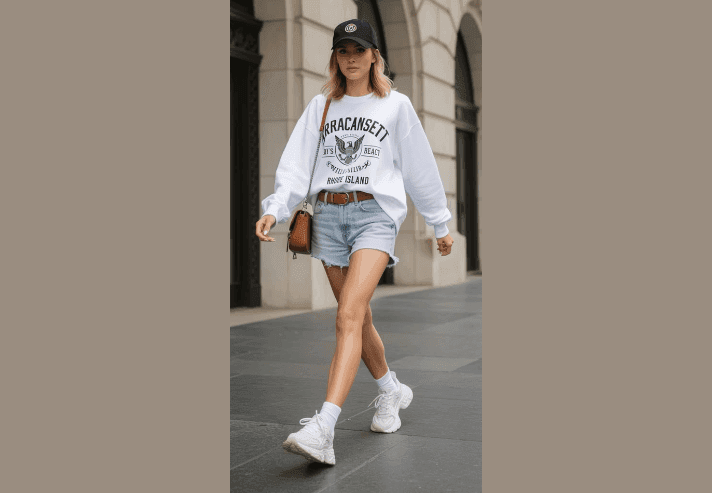
Outfit formula: oversized sweatshirt + denim shorts + socks and sneakers + cap + compact crossbody.
The weekend visual shows an oversized white or light-grey graphic sweatshirt with light-wash, frayed denim shorts and a brown belt. White crew socks, chunky white sneakers and a navy baseball cap create a sporty thread through the outfit. A small tan or brown crossbody bag adds function without introducing much visual weight.
The accessories agree with the clothes. Sweatshirt, cap, socks and sneakers share a relaxed sporty register, so the look reads as one idea. The shorts offset the top’s volume, while the belt and compact bag add definition.
A plain sweatshirt works as well as a graphic one. Bermuda shorts add coverage; bike shorts make the formula more athletic. Slightly tailored shorts create a neater version without changing the relaxed top and sneakers.
In heat, use an oversized long-sleeve tee or carry the sweatshirt as a layer. In colder conditions, replace the shorts with leggings or relaxed joggers. Make sure the sweatshirt and crossbody strap allow comfortable movement.
Styling mistake to avoid: adding several unrelated dressy accessories simply to make the look feel “finished.” A formal handbag, delicate party shoe and sporty cap may pull the outfit in too many directions. Definition is useful; a change of identity is not required.
Principle to reuse: casual outfits feel more cohesive when the shoes and accessories repeat the same level of formality, with one or two compact details providing shape.
The five looks become more useful when you turn them into a repeatable process. Instead of asking, “What exact outfit should I copy?”, work through these steps.
1. Begin with the plan, not the garment
Identify what the outfit needs to do. A café date, work presentation and crowded evening venue call for different levels of polish, movement and comfort.
Set a rough formality level, relaxed, smart casual, business casual or evening, to remove combinations that do not suit the situation.
2. Choose one anchor piece
Start with the item you want or need to wear. It does not have to be the loudest piece; it only gives the outfit a starting point.
Ask what visual job it is doing: quiet base, print, structure, reflective texture or relaxed volume. The next piece should support or balance that job.
3. Set the volume
Look at the outline created by the clothes. The casual and Friday-night examples use a smaller top with wider jeans. The weekend outfit uses an oversized top with shorter, less voluminous bottoms. The office look combines a fitted central layer with fluid trousers.
There is no fixed body-based rule. Decide where you want fullness and definition. A tuck, open layer, belt or shorter hem can change the balance without changing the clothes.
4. Pick the focal point
An outfit is easier to read when one element leads. In these five examples, the focal point changes: wide denim silhouette, polka-dot print, black waistcoat, silver sparkle and oversized graphic sweatshirt.
Keep most supporting pieces calmer, not necessarily neutral, but free from equally strong print, shine, volume or detail.
5. Use shoes to adjust the formality
Shoes can move the same base outfit toward a different occasion. Sneakers keep the white tee and denim casual. Pointed heels sharpen the waistcoat look. Loafers could retain office polish with more comfort. A flat, boot or heel would each give the Friday-night jeans a different finish.
Choose for the actual day: walking distance, weather, commute and standing time matter as much as the photograph.
6. Run a reality check
Before calling the outfit finished, check:
- Weather: Do you need a layer, rain-safe shoe or lighter fabric?
- Movement: Can you sit, walk, commute and reach comfortably?
- Coverage: Would a longer hem, higher neckline or extra layer make you more at ease?
- Dress code: Does the look suit the real workplace or venue?
- Condition: Are the pieces clean, wearable and ready now?
This is also where learning to build a digital closet can help: seeing your clothes together makes it easier to find substitutes instead of relying on memory.
7. Save the combination that worked
Photograph a useful outfit, record the formula or save the full combination. Then repeat the relationship with another colour, print or layer. The goal is a personal library of proven starting points, not a rigid uniform.
Once you understand the formula, the practical challenge is seeing which pieces in your own wardrobe can fill each role. BeSpoke AI Stylist is built around clothes the user already owns. Its current website describes a Closet for owned items, Canvas for mixing, matching and previewing outfits, Your Collection for saving favourite looks, and a create-an-outfit workflow for layering, styling and saving. It also describes looks informed by weather and schedule.
That makes the tool most useful after, not instead of, the styling thinking in this guide. You could place a fitted white tee beside different jeans in Canvas, test whether a dotted top works better with trousers or a skirt, and save the successful version so it is ready for the next similar plan. The digital-closet guide explains the wardrobe-inventory side, while the guide on how to plan looks visually with Canvas focuses on assembling complete outfits.
Repeat the relationship, not the exact outfit
You do not need the same white tee, polka-dot top, waistcoat, sequined camisole or sweatshirt shown here. Start with the occasion, notice what each visible piece contributes and recreate that relationship with what you own.
One well-balanced formula can produce many different outfits. Your wardrobe may already contain the next look; the useful skill is learning how to see it. Explore BeSpoke AI Stylist when you want a visual place to test and save those combinations.
How do I make new outfits with clothes I already have?
Start with one anchor piece and identify the role it plays in the outfit. Choose supporting pieces that balance its fit, colour, texture or level of formality, then adjust the shoes and accessories for the occasion.
How can I make a basic outfit look more put together?
Create one clear contrast, such as a fitted top with relaxed jeans, and add one structured or focal element. Make sure the shoes and accessories match the outfit’s overall level of formality.
How can I wear the same clothes for different occasions?
Keep the base outfit and change the finishing pieces. Sneakers, loafers, heels, outer layers, bags and jewellery can move the same clothes from casual to polished or evening without rebuilding the entire look.
What should I do when I feel like I have nothing to wear?
Return to a saved outfit formula instead of beginning from scratch. Choose the occasion, pull one reliable anchor piece, test two or three supporting options, and photograph combinations that work so you can reuse them later.
- WRAP: Measuring the Active Life of Clothing, Research into how long clothing remains in regular use and the opportunity to bring more existing wardrobe items back into rotation.
- UN Environment Programme: Unsustainable Fashion and Textiles in Focus for International Day of Zero Waste, Official context on textile waste and the importance of reuse, repair and circular approaches.
- Ellen MacArthur Foundation: A New Textiles Economy, A foundational report explaining how clothes and textile materials can be kept in circulation.
- European Commission: EU Strategy for Sustainable and Circular Textiles, Policy context on durable, repairable, recyclable and longer-lasting textile products.
Related BeSpoke reading
- BeSpoke AI Stylist homepage, current product terminology and feature overview.
- Digital Closet App: Organize Your Wardrobe with AI, using a photographed wardrobe to find, combine and save owned pieces.
- 5-Minute Outfit Formulas That Look Put Together Instantly, related quick-formula content.
- The 7-Piece Wardrobe Formula: 25 Outfits From 7 Items, adjacent modular-wardrobe content.
- Outfit Moodboard App: Plan Looks Visually Before You Wear Them, current Canvas moodboarding guide.
Written by BeSpoke AI Stylist Editorial Team.
Published: 20/08/2026
Last updated: 20/08/2026
Ready to upgrade your style game? Download BeSpoke AI Stylist and let your AI stylist take it from here.

Author
Neeraj Bansal