
Skirt and Shoe Pairing Rules Every Wardrobe Needs
Published · Updated
Standing in front of a closet full of skirts and an equally full shoe rack, most women ask the same question. Which shoes actually go with this skirt? The answer is not random. It comes down to proportion, silhouette, and balance, three principles that fashion stylists rely on every single day.
Getting this right is not about owning more shoes or following seasonal trends blindly. It is about understanding how the length, volume, and personality of a skirt changes what happens below the ankle. Once you learn these six rules, dressing becomes faster, more confident, and far less stressful.
Why Shoe Pairing Makes or Breaks a Skirt Look
A skirt sets the tone of an outfit, but shoes finish the story. The wrong pair can make a well fitted skirt look unfinished, while the right pair can turn a basic skirt into a complete look within seconds.
This happens because shoes affect three things at once. They change the visual proportion of your legs, they either compete with or support the skirt's silhouette, and they signal how formal or casual the outfit reads. A silk midi skirt with sneakers sends a different message than the same skirt with block heels, even though nothing else in the outfit has changed.
Most styling confusion comes from ignoring one of these three factors. The six rules below fix that by giving you a clear, repeatable system instead of guesswork.
These rules are not arbitrary. They come from how the eye reads an outfit from top to bottom. A skirt with more visual weight, whether from length, volume, or print, needs a shoe that either supports that weight or steps back from it. A skirt with less visual weight can afford to let the shoe carry more personality. Once this cause and effect becomes familiar, choosing footwear stops being a daily debate and starts becoming automatic, the same way pairing a belt with trousers eventually becomes second nature.
Skirt and Shoe Pairings at a Glance
Mini skirt: Try knee-high boots for a strong vertical line, or loafers, ballet flats, sneakers and sandals for a lighter look.
Maxi or long skirt: Streamlined sandals, mules, pointed flats and low-profile sneakers keep the visible part of the shoe intentional.
Full or A-line skirt: Defined flats, slingbacks, simple sandals and sleek loafers balance the skirt’s volume.
Pencil or slim skirt: Pointed flats, mules, pumps, low-profile sneakers and sleek boots can all work. Heels are optional.
Bold or printed skirt: A solid shoe in a neutral or one colour from the print keeps the outfit connected.
Simple skirt: A coloured, textured or embellished shoe can become the focal point.
Rule 1: Mini Skirt, Tall Boots
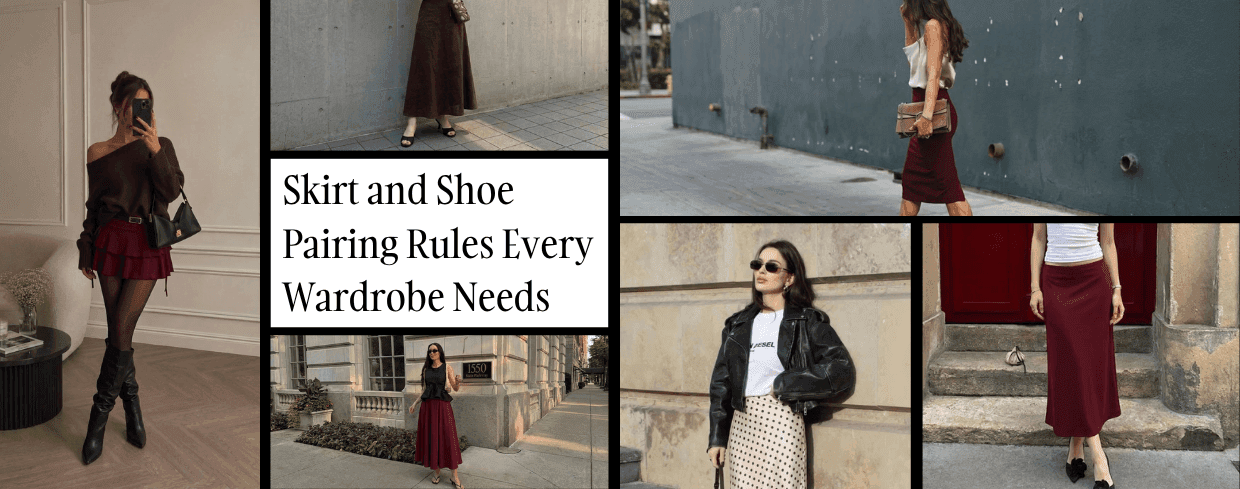
Woman wearing a burgundy ruffled mini skirt with black knee-high boots.
A mini skirt exposes the most leg of any skirt length, which means proportion needs the most attention. Tall boots, whether knee-high or over-the-knee, fill that visual gap and keep the outfit from looking unbalanced.
The logic here is simple. A very short hem paired with flat sandals or ankle-length shoes can make the leg line look chopped up into segments. Tall boots remove those breaks and create one long, continuous line from hem to heel. This is why mini skirts and knee-high boots have remained a reliable combination across seasons, regardless of trend cycles.
For daytime, opt for a low block heel boot in leather or suede. For evening, a sleeker knee-high boot in a fitted silhouette works better with structured mini skirts. Denim mini skirts pair particularly well with tan or brown boots, while satin or leather minis look sharper with black boots.
Rule 2: Long Skirt, Simple Shoes

Woman wearing a brown maxi skirt with black open-toe mules.
A long skirt, especially a maxi or ankle-length style, already carries visual weight through its length and fabric drape. Adding a busy or heavily embellished shoe competes with that volume instead of complementing it.
Simple shoes, such as pointed flats, minimal sandals, or slim mules, let the skirt's length and movement stay the focal point. This is especially true for flowing fabrics like chiffon, georgette, or crepe, where the skirt itself already creates drama through motion.
The exception is footwear peeking out from underneath. Since long skirts hide most of the shoe, an intricate design goes unnoticed anyway, so there is little reason to choose anything elaborate. A clean, low-key shoe in a neutral tone or a shade that matches the hem creates a seamless line that elongates the frame further.
Rule 3: Full Skirt, Light Footwear
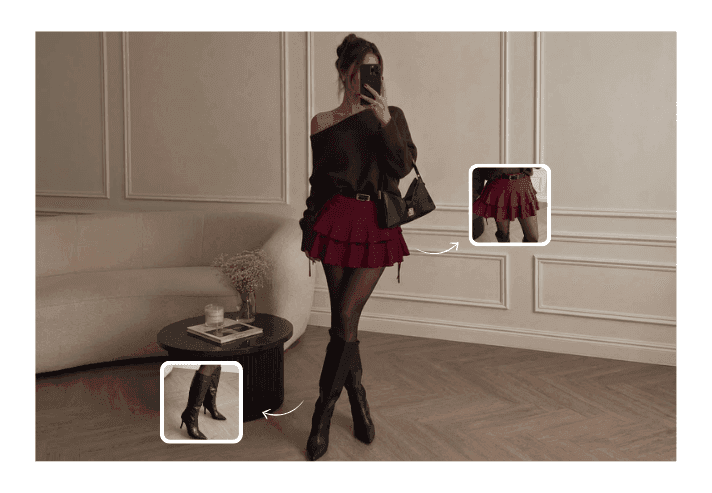
Woman wearing a burgundy full midi skirt with minimal strappy sandals.
Full skirts, including circle skirts, tiered skirts, and voluminous A-line styles, already occupy a lot of visual space. Pairing them with heavy footwear like chunky boots or thick platform soles can make the lower body look disproportionately bulky.
Light footwear, such as ballet flats, thin-strap sandals, or slim kitten heels, balances that volume instead of adding to it. The goal is to let the skirt remain the statement piece of the outfit while the shoes stay in a supporting role.
This rule matters most with skirts that have structure, like tulle or taffeta, where the fabric already stands away from the body. A delicate shoe grounds the look without pulling focus away from the skirt's shape.
Rule 4: Slim Skirt, Higher Heels
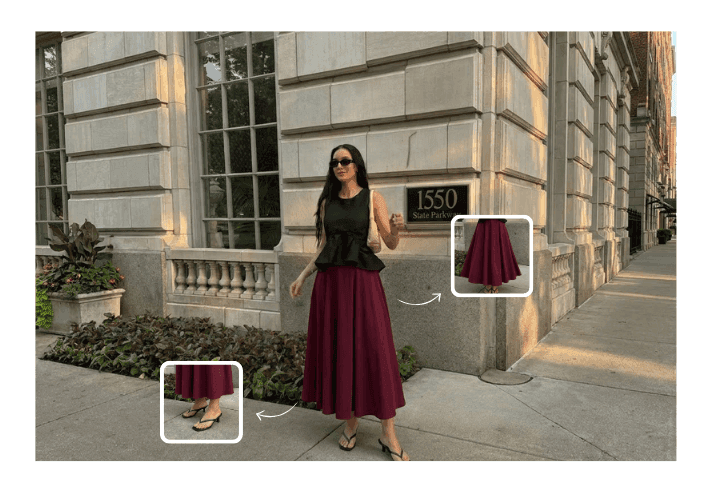
Woman styling a burgundy pencil skirt with black ankle-strap heels.
A slim skirt, whether pencil-cut or fitted through the hip and thigh, has a narrow silhouette that benefits from added height. Higher heels elongate the leg line and give the overall look a more polished, put-together finish.
Flat shoes with slim skirts can sometimes shorten the leg visually, especially with knee-length or below-knee pencil skirts, since the fitted shape does not leave room for the same kind of movement that looser skirts allow. A heel, even a moderate two to three inch block heel, restores that length.
This is why pencil skirts are almost always styled with heels in professional and formal settings. For those who prefer comfort over height, a slightly heeled mule or a pointed flat with a slim silhouette can offer a similar elongating effect without full stiletto height, making the rule flexible enough for both office days and long commutes.
Rule 5: Bold Skirt, Simple Shoes
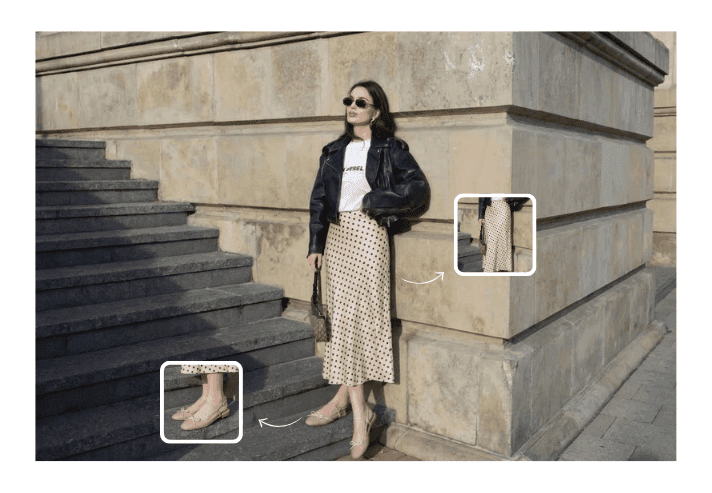
Woman wearing a cream polka-dot midi skirt with neutral pointed pumps.
A bold skirt, whether it features a loud print, a vibrant color, or an unusual silhouette, is already the centerpiece of the outfit. Adding equally bold shoes creates visual competition, where the eye does not know where to land first.
Simple shoes, in a neutral tone like black, nude, tan, or white, let the skirt do the talking. This does not mean boring. A clean pointed heel or a minimal sandal in a solid color still looks intentional and elevated, it simply avoids pulling attention away from the print or color of the skirt.
This rule applies strongly to Indian textile prints like Ikat, block prints, and Bandhani skirts, where the pattern itself carries so much detail that a plain shoe actually highlights the craftsmanship better than a competing print would.
Rule 6: Simple Skirt, Statement Shoes
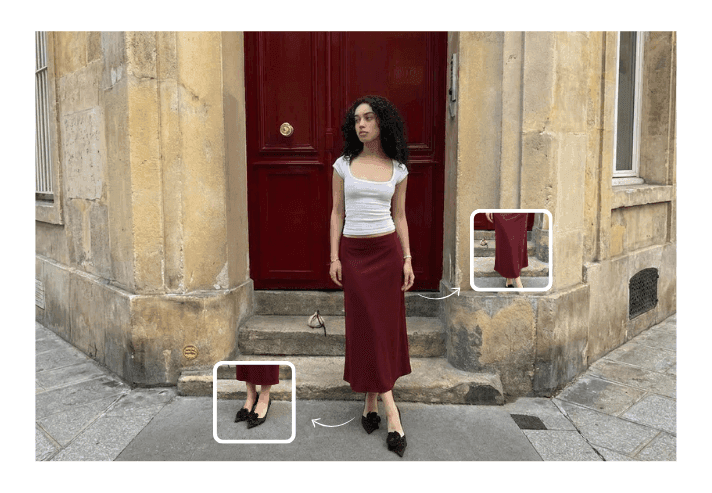
Woman pairing a simple burgundy midi skirt with black pointed statement mules.
A simple skirt, in a solid color and clean silhouette, gives you the freedom to shift attention downward. This is where statement shoes, whether embellished heels, bold color blocks, or unique textures, get the chance to shine.
Since the skirt is not competing for attention, the outfit stays balanced even with a striking shoe choice. This rule is particularly useful for building versatile capsule wardrobes, since one plain skirt can be restyled multiple ways just by rotating through different statement shoes.
A black A-line skirt, for example, looks completely different with metallic heels compared to bright red pumps or embroidered juttis, even though the skirt itself never changes, proving how much power a single accessory choice really holds over the final look.
Start by sorting your skirts into the six categories above based on length, volume, fit, and pattern. Most skirts fall clearly into one group, though some may straddle two, such as a slim skirt with a bold print, which combines rules four and five.
When a skirt fits more than one category, prioritize the strongest visual feature first. A heavily printed pencil skirt should lean toward simple shoes over height, since the print is the dominant element that needs balancing. A plain mini skirt in a stiff fabric can lean toward boots even if it is also technically a full silhouette, since length is the more pressing proportion concern.
Building this instinct takes a little practice, but once it clicks, getting dressed becomes noticeably faster.
Seasonality also plays a role in how these rules apply. In warmer months, light footwear and simple sandals suit most skirt lengths, since heavier boots or closed shoes can feel out of place regardless of proportion. In cooler months, the mini skirt and tall boots pairing becomes even more practical, since it also offers coverage and warmth alongside the styling benefit. Keeping a small mental note of which rule applies to which season helps avoid over-thinking outfit choices when the weather changes suddenly, which happens often across most Indian cities.
Fabric weight is another factor worth considering alongside the six core rules. A heavier fabric, such as denim or wool, already adds visual bulk to a skirt, so lighter, sleeker shoes usually balance it out better than another heavy texture. A lightweight fabric, such as chiffon or cotton voile, can handle slightly more structured footwear without looking overloaded, since the skirt itself carries so little visual weight on its own.
One frequent mistake is choosing shoes based on comfort alone without considering proportion, which can leave an otherwise good outfit looking unfinished. Comfort and proportion are not opposites though, since low block heels, structured flats, and slim mules offer both.
Another common error is over-matching everything to the same color family, which can flatten an outfit instead of adding dimension. A little contrast, especially in shoe color against skirt color, often reads more intentional than an all-tonal look.
Finally, many people default to their most-worn shoe regardless of the skirt, simply out of habit. Rotating shoe choices based on the six rules above naturally extends how many outfit combinations a wardrobe can produce, without buying anything new.
A less obvious mistake is ignoring occasion alongside proportion. A technically correct pairing, like a bold skirt with simple shoes, can still feel wrong if the shoe style itself does not match the setting. A minimal sandal works for a daytime event, but the same skirt at an evening function may call for a simple heel instead, following the same proportion logic while adjusting for formality. Thinking about occasion as a fourth layer, alongside length, volume, and pattern, rounds out the decision-making process.
Remembering six rules while getting dressed in the morning is not always realistic, especially on busy days. This is exactly the kind of decision BeSpoke AI Stylist is built to simplify.
Using the Digital Closet and Virtual Try-On features, you can upload your existing skirts and shoes, and let the AI Stylist suggest pairings based on these exact proportion principles, without the guesswork. The Outfit Planner then helps schedule these looks across the week, so getting dressed becomes a matter of seconds rather than minutes.
What shoes go best with a midi skirt? Midi skirts generally follow the long skirt rule, pairing well with simple, low-profile shoes like pointed flats or slim sandals, though a midi with a slit can handle slightly more heel height.
Can sneakers work with skirts? Yes, sneakers pair well with simple or slim skirts for a casual look, though they can clash with heavily embellished or full skirts where the proportion balance shifts.
Do heels always look more formal with skirts? Not always. Heel height affects formality less than the shoe's material and design. A clean block heel in leather can look office-appropriate, while a strappy stiletto in the same height reads more evening-focused.
How do I choose shoes for a printed skirt? Stick with simple, solid-colored shoes that pick up one shade from the print, which keeps the outfit cohesive without competing patterns.
Sources
https://www.whowhatwear.com/fashion/skirts/best-shoes-to-wear-with-skirts
https://www.instyle.com/shoes-to-wear-with-skirts-11969563
https://www.elle.com/fashion/shopping/a73278412/best-shoes-to-wear-with-skirts/
Ready to upgrade your style game? Download BeSpoke AI Stylist and let your AI stylist take it from here.

Author
Neeraj Bansal