
5 Office Outfit Ideas Styled by BeSpoke AI Stylist
Published · Updated
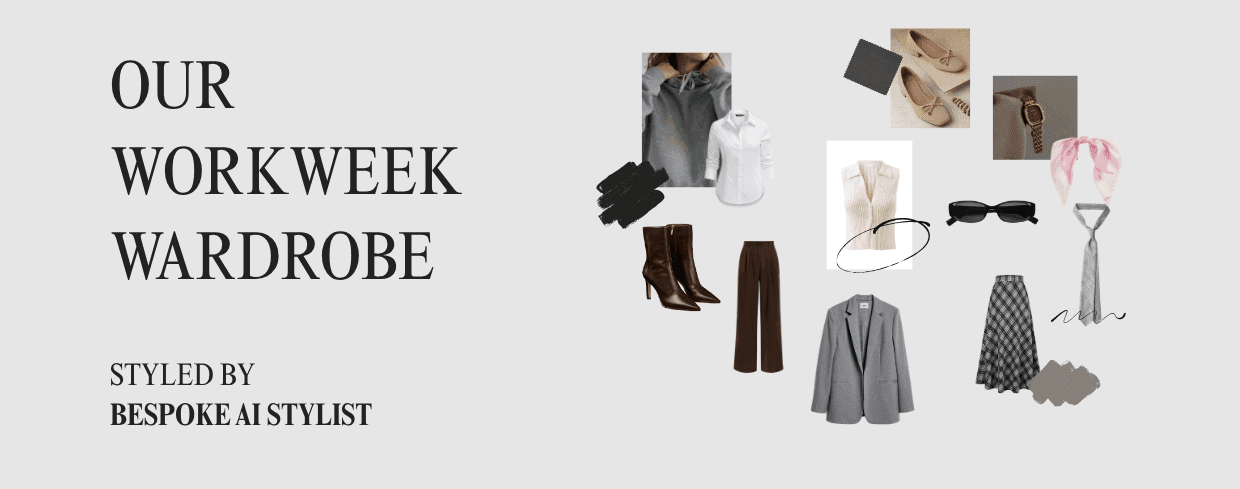
These looks were styled and reviewed by the editorial team, with dress code guidance checked against the sources listed at the end of the article.
A shirt you like can still leave you wondering what to wear with it at eight in the morning. Choosing your work outfits ahead of time gives you a chance to try them on before you need to leave. The five BeSpoke AI Stylist moodboards below offer a starting point for a Monday-to-Friday plan.
Use these office outfit ideas to style clothes you already own. You do not need the exact items in the images. These are separate looks with some repeated pieces, so treat them as inspiration rather than a complete capsule shopping list. Your workplace's dress code should guide any changes.
Monday builds around a patterned skirt under grey layers. Tuesday brings pink into a denim outfit. Wednesday uses a yellow knit vest over a white shirt, while Thursday keeps to cream tones. Friday finishes with a black shirt for after-work plans. Repeat pieces where practical and allow time for laundry. Adapt each look to your workplace before saving it to your weekly plan.
Plan Around Your Actual Workweek
Check your schedule before choosing an outfit for each day. Ask your employer to clarify the dress code if necessary. Try each look on with the shoes you intend to wear, and check that long hems do not drag. Adapt the heavier layers for hot weather.
Only some items repeat in these boards. The white shirt and brown belt return, as do the cream heels and black sunglasses. Reusing Monday's blazer later in the week would reduce the number of items, but that is an adaptation. Allow time to clean anything you plan to wear again, following its care label.
The Pieces
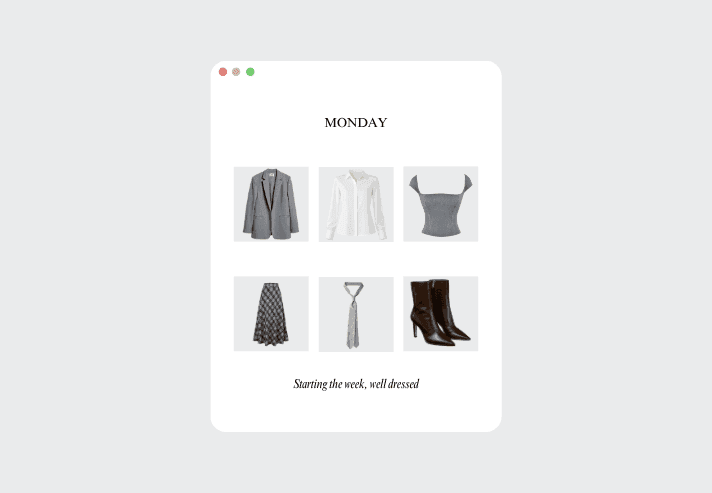
The Monday board centres on a black-and-white patterned long skirt. A fitted grey corset-style top sits over a white button-front shirt. A grey blazer provides another layer, with a patterned tie at the collar. Brown heeled ankle boots finish the look.
Styling Notes
The grey layers pick up tones in the skirt without needing to match its pattern. The fitted top defines the waist over the shirt. Leave out the tie when you prefer less detail around the collar.
For a conservative office, leave out the corset-style top and wear the shirt under the blazer. When choosing shoes for a long skirt, check its hem with your preferred heel height. Low-heeled boots or closed-toe flats can replace the heels shown.
The Pieces
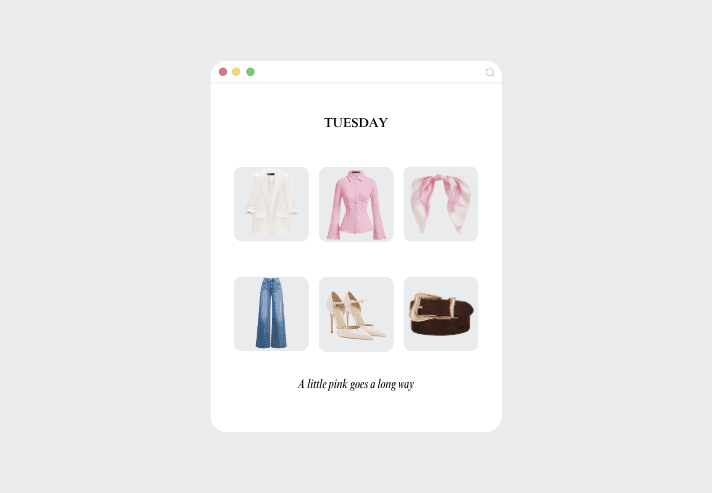
Tuesday uses a fitted pink blouse with a matching neck scarf. A white blazer goes over it, while wide-leg blue jeans give the outfit a more casual base. A brown belt sits at the waist. The cream heels have pointed toes and ankle straps.
Styling Notes
Repeating pink in the scarf makes the colour feel deliberate without requiring a matching suit. White provides a break between the blouse and the denim. Start with a colour you enjoy when building an outfit colour palette; the pink here is an example, not a requirement.
Wear the jeans only where your workplace permits denim. Otherwise, replace them with tailored trousers you already own. The blouse has detail around its buttons, so you can leave off the scarf if it feels crowded at the neck. Flats can replace the pictured heels without changing the rest of the outfit.
The Pieces
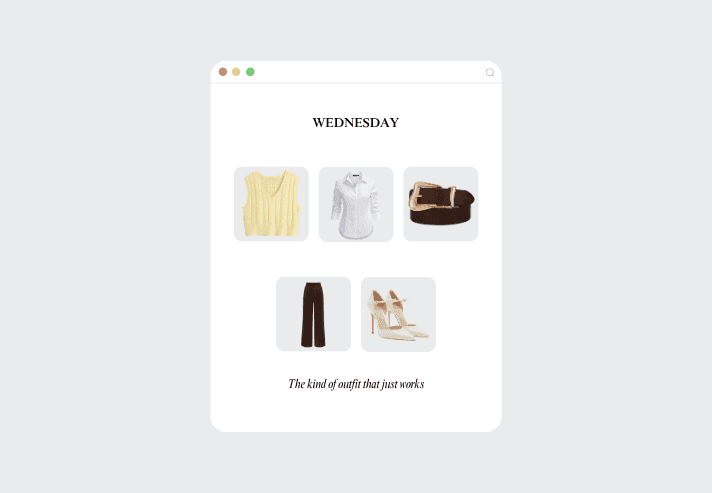
A pale yellow cable-knit vest goes over the white button-front shirt. Brown wide-leg trousers continue the lower half of the outfit, with the brown belt at the waist. The cream ankle-strap heels from Tuesday appear again.
Styling Notes
The vest introduces colour without covering the shirt's collar or sleeves. Its cable texture is also visible against the smooth-looking shirt. This approach to layering an outfit gives a familiar shirt a different appearance without replacing it.
Check that the shirt does not bunch under the vest, especially across the shoulders. Leave off the knit layer when it is too warm. Before planning to reuse the white shirt, check whether it needs washing after Monday and whether it will be ready in time.
The Pieces
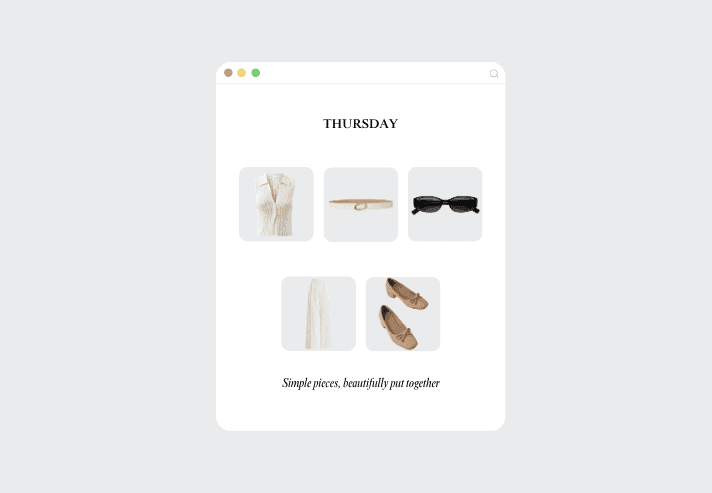
Thursday starts with a cream sleeveless vest worn above white wide-leg trousers. A narrow pale belt sits at the waist. Beige bow-detail flats keep the footwear close to the colour of the clothes, and black rectangular sunglasses appear on the board.
Styling Notes
The shades are close without being identical. The vest's visible texture helps separate it from the trousers. You can use this idea with another colour family from your closet; there is no need to buy an all-cream outfit to try tonal dressing.
Check the trousers in daylight for transparency. Add a shirt beneath the vest if you prefer more coverage or your dress code requires it. Treat the sunglasses as an outdoor accessory. Try walking in the flats before choosing them for a full day; a flat sole alone does not tell you how comfortable they will be.
The Pieces
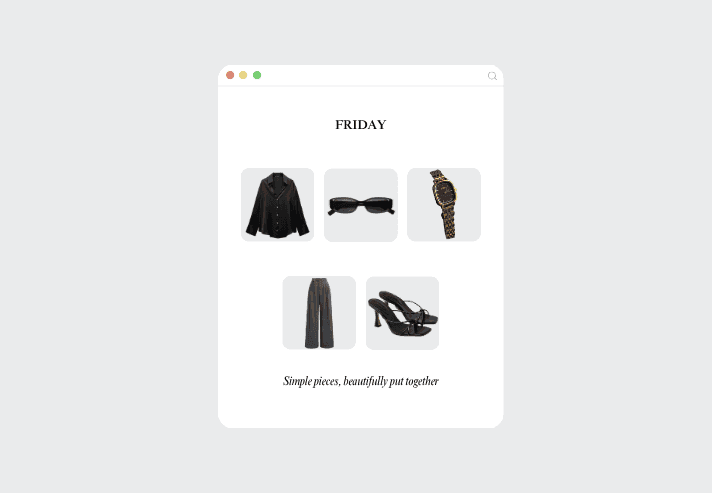
Friday uses a black button-front shirt with grey wide-leg trousers. The black heeled sandals have an open toe. A gold-tone watch adds a visible accessory at the wrist, while the black sunglasses return from Thursday's board.
Styling Notes
The black shirt makes the outfit darker than the earlier looks. A shirt with a satin finish is an option for carrying this outfit into an evening plan. A matte black shirt can do the same job when you prefer less sheen.
Choose closed-toe shoes when your workplace does not allow sandals. You can carry the heeled sandals for later rather than wearing them on the commute. Friday is not automatically a dress-down day, so check what your office allows before treating the evening version as workwear.
Start by adding the clothes you intend to use to your Closet. BeSpoke AI Stylist describes Closet as a way to catalogue your items and build outfits from them. Use the weekday boards as references while choosing from your own clothing. A moodboard does not establish that you own the exact pieces shown.
Canvas gives you a place to arrange outfit ideas visually. Try a different layer or replace a shoe before settling on a look. This can help you compare options, but you should still try the clothes on to check how they feel together.
Use Planner to assign outfits to specific days once you have decided what to wear. BeSpoke AI Stylist's published guidance describes saving outfits against dates and events. A weekly plan still needs your input about the occasion and the clothing available to you.
Try On offers a virtual outfit preview. Treat it as a visual reference rather than confirmation of exact fit. An image cannot tell you whether a waistband feels tight while sitting. Check the real garment before relying on it for a long workday.
At the end of the week, revisit the looks you wore. Keep the ones you enjoyed and change anything that felt impractical. You can repeat a successful outfit without needing to make it look different every time.
How do I plan office outfits for a full week?
Start with the days you will be in the office and any events with a different dress code. Choose clothes you already wear comfortably, then try each outfit on. Save the finished looks by day and allow time to clean anything you plan to wear again.
Can I wear jeans to a business-casual office?
That depends on your employer's definition of business casual. Check its guidance before using Tuesday's look. Where denim is not allowed, wear tailored trousers instead. Adding a blazer does not override a no-jeans rule.
Which colours should I use for work outfits?
Begin with colours already present in the clothes you wear to work. The boards use several neutrals and add pink or pale yellow in selected looks. You can choose a different accent colour, or stay with neutrals throughout the week.
Do I need to buy new clothes to recreate these looks?
Not necessarily. Use a similar item from your closet before looking for an exact match. A plain knit vest can stand in for the cable-knit version. You may still need a missing item for your dress code, so check the outfits first rather than assuming either that shopping is necessary or that you already own everything.
How many pieces do I need for five work outfits?
Reuse a blazer across several days and wear fewer pairs of shoes to work from a smaller selection. There is no fixed item count. These boards show separate looks with some repeats rather than a minimal capsule. Allow enough clean tops for the week.
Can an AI outfit planner confirm an outfit is right for work?
It can help you organise ideas and plan when to wear them. You still need to check your employer's expectations. A virtual preview also cannot establish how comfortable the real clothes will feel through the day.
Put Your Workweek Plan Together
Choose a look from the boards and try a version with your own clothes. Once it works for your day, save it and move on to the next one. Leave room to adjust the plan when the weather changes or something needs washing.
Build your next work outfit in Canvas on BeSpoke AI Stylist, then add it to the day you plan to wear it.
Sources and Further Reading
These references provide background for the practical guidance. The outfit boards are BeSpoke AI Stylist's styling examples.
Gardner-Webb University: Business Attire Guide
Google Merchant Center Help: How Google's Try-on Tool Works
BeSpoke AI Stylist on the Apple App Store
Written by BeSpoke AI Stylist Editorial Team
Published: 08/09/2026
Last updated: 08/09/2026
Ready to upgrade your style game? Download BeSpoke AI Stylist and let your AI stylist take it from here.

Author
Neeraj Bansal