6 Colour Formulas Every Guy Needs
Published · Updated
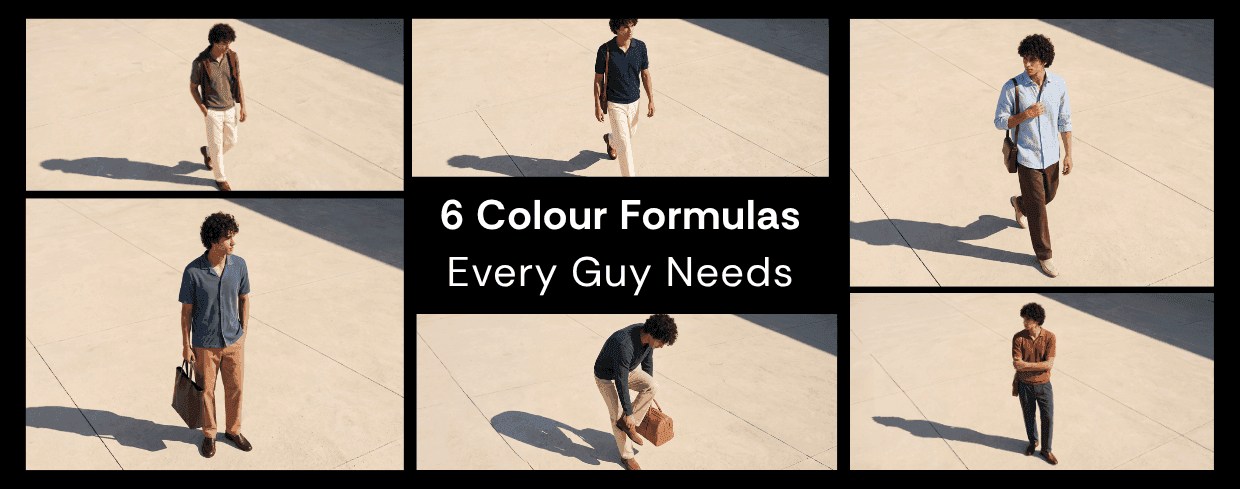
A navy polo looks quite different above cream trousers than it does above dark jeans. Before looking for a new shirt, try changing what sits underneath the one you already like.
These six colour combinations for men work through that idea with specific outfits. Use them to style clothes you already own, rather than searching for an exact match to every shade. The main pair gives you a place to begin. Your shoes can remain a separate choice.
Colour Formulas at a Glance
- Deep navy with warm cream: A dark polo stands out against light trousers.
- Powder blue with dark chocolate: A loose blue shirt brings contrast to brown trousers.
- Burnt rust with charcoal: A rust-coloured top adds warmth above a dark trouser base.
- Forest green with sand: A green shirt works with sandy trousers and tan accessories.
- Slate blue with camel: A muted blue short-sleeve shirt offers another way to wear brown trousers.
- Olive green with burgundy: A burgundy layer sits over an olive polo, with cream trousers below.
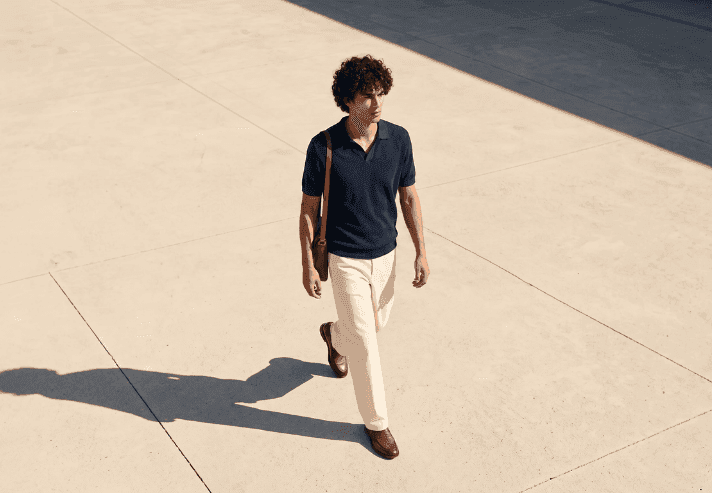
Deep navy above warm cream creates a clear change from the top to the trousers.
The navy polo is the darkest large area in this outfit. Warm cream trousers make its outline easy to see, and brown loafers finish the look without repeating the navy. A brown bag strap is visible at the shoulder.
This is worth trying when you already own a dark polo but tend to wear it with equally dark bottoms. Changing the trousers does more here than adding another accessory would.
- Begin with the trousers you have. Off-white can give you a similar light area. It need not match the swatch exactly.
- Look at the shirt hem. The polo is worn untucked in the example. Try your own shirt that way before comparing it with a tuck.
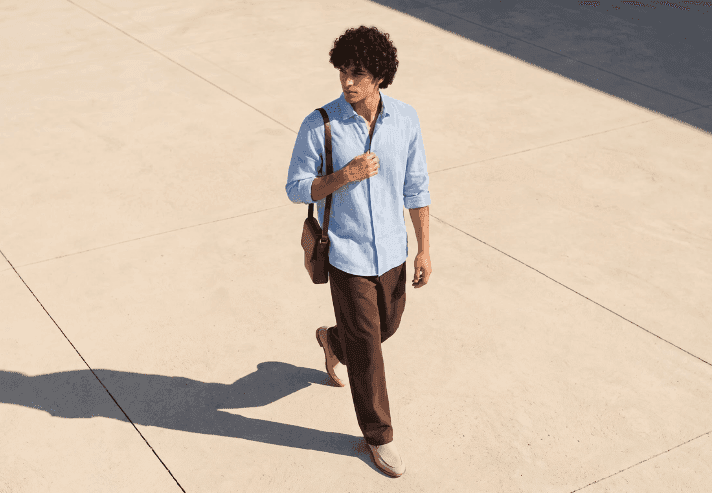
A pale shirt changes the balance above dark brown trousers.
Here the lighter colour moves to the top. The powder blue shirt has an open collar and a loose shape, while the dark chocolate trousers provide a much deeper shade below it. Light shoes remain visible beneath the hems.
Compare this with the navy outfit rather than treating both as interchangeable blue looks. In one, the shirt is darkest. In the other, the trousers are. That difference can help you decide where you prefer the stronger colour to sit.
- Keep the brown trousers for another look. A pale blue shirt may be enough to change a pair you usually wear with white.
- Try the actual shades together. A colour palette built from something you like can be a reference, but the clothes in front of you are the final comparison.
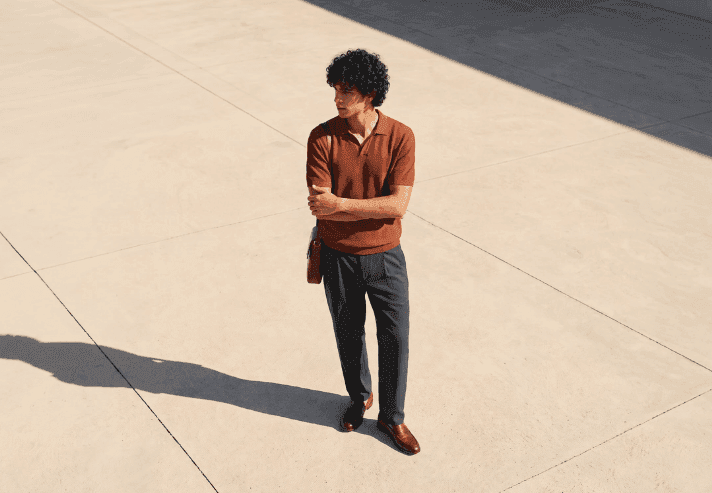
Burnt rust gives a dark trouser outfit a different colour at the neckline.
The rust top is the noticeable colour in this outfit. Charcoal trousers leave that colour easy to read without the stronger light-dark contrast of cream. Dark brown shoes sit close to the depth of the trousers.
A plain collared top lets you try the colour without also introducing a large print. You could use a rust shirt instead of the short-sleeve top shown. That is a styling variation, not a requirement to find the same garment.
- Compare charcoal with black. Black is an option already in many closets, but it will give the rust a different surrounding shade.
- Avoid changing everything at once. Wear the new top colour with trousers whose fit you already know.
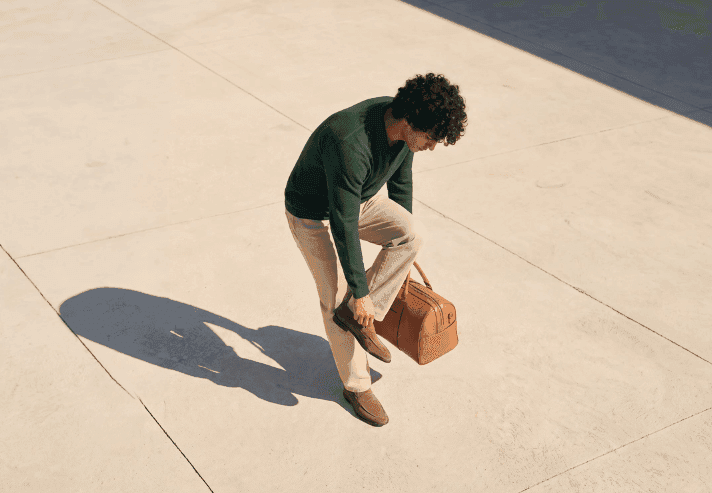
Forest green sits above sand-coloured trousers, with tan accessories nearby.
The forest green shirt is worn with sand-coloured trousers. Tan shoes and a tan bag stay close to the trousers' colour family, leaving the green as the main change in colour across the outfit.
The photo also makes a practical point: assess the clothes while moving. A shirt can look right when you are standing still and feel restrictive when you reach for a bag. The colour decision does not settle the fit decision.
- Use a familiar light bottom. Beige trousers can be an alternative when you do not own the exact sand shade.
- Treat the bag as optional. The shirt and trousers establish the formula. You do not need a matching tan bag to try it.
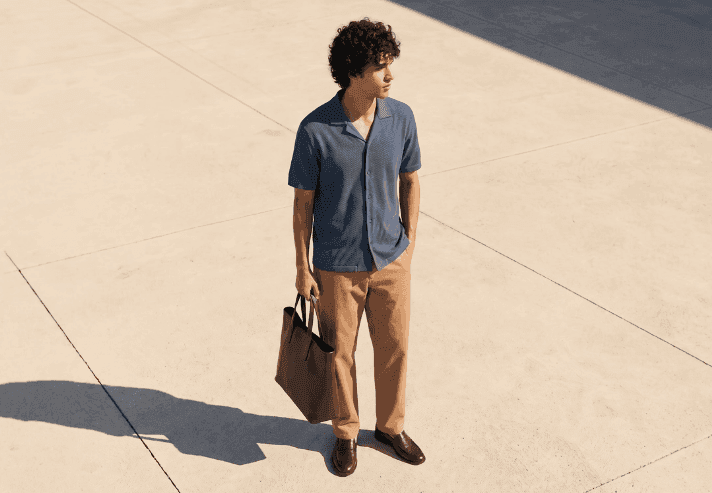
Slate blue offers a quieter alternative to a pale blue shirt above brown trousers.
Slate blue is more muted than the powder blue used earlier. In this outfit it sits above camel trousers, with dark shoes and a dark bag providing smaller areas of contrast.
The short-sleeve shirt has an open collar and a buttoned front. It is worn outside the waistband. Compare that length with a shirt you already own before deciding how much of the waist you want to show.
- Choose the blue before the accessories. Put the shirt beside your brown trousers first. The bag can wait.
- Notice the fabric surface. The same colour can look different on a smooth shirt and a textured polo. Our guide to mixing textures in an outfit offers more examples of that comparison.

A burgundy jumper introduces colour at the shoulders above an olive polo.
This formula places both named colours on the upper body. The olive polo remains visible beneath a burgundy jumper draped over the shoulders. Cream trousers leave room for that darker combination, and brown loafers finish the outfit.
It is a useful example of adding a colour through a layer instead of replacing a shirt. The jumper does not have to be worn this way throughout the day. Put it on when you need it, or leave it out when the weather makes an extra layer unnecessary.
- Check the neckline together. The burgundy sits close to the collar, so compare those areas in the mirror.
- Start with an existing layer. A burgundy overshirt would be a different interpretation. Try it open over the olive top and see which shape you prefer.
A colour name is a helpful reference, not a precise description of every garment sold under it. Put the pieces together before buying a missing item. You may already own a close enough shade to test the idea.
- Choose the nearest pair in your closet. There is no need to work through all six.
- Photograph the full outfit. Include the shoes so you can see where the trouser hems finish.
- Change the part you are unsure about. A shirt swap gives you a clearer comparison than replacing the whole look.
- Keep a record of a combination you like. A digital closet gives you somewhere to return to those pieces.
Adobe's colour wheel is another way to explore neighbouring shades before trying them in clothing. It is a palette tool, not a test of which clothes you should wear.
Use Fit Check for a Second Look
After choosing a formula, open Fit Check in BeSpoke AI Stylist and submit an outfit photo. Read the feedback beside the picture and decide whether the suggested change suits you. The feature also adds recognised clothing items to Closet, as described in the app's Google Play listing.
A score cannot tell you how the clothes feel during your day. Keep the colour comparison separate from comfort, and wear the version you prefer.
Do my clothes need to match the swatches exactly?
No. Try similar shades with the clothes you already own. The navy-and-cream example is useful because of the visible contrast, not because a shirt matches a digital colour code.
Can I use these colours with different garments?
Yes. A shirt can replace a polo, for example. The colour idea remains available, although a different cut will change the outfit's shape.
Must shoes match one of the two main colours?
No. Brown shoes appear with the navy-and-cream look. The two named colours guide the main clothing choice; they are not a limit on the whole outfit.
Will Fit Check tell me what to wear?
No, not directly. It provides feedback on an outfit photo. Use it to consider a change rather than treating the result as a dress code or a judgement of your taste.
Choose the Pair Closest to Your Closet
Put on the combination you can try without buying anything. Take a full-length photo and look at the change between the top and trousers. That is enough to begin using a colour formula in your own way.
Ready to upgrade your style game? Download BeSpoke AI Stylist and let your AI stylist take it from here.

Author
Neeraj Bansal