
How to Mix Textures in an Outfit: 5 Easy Fabric Pairings
Published · Updated
This guide was researched against textile construction and fashion history references, including the sources listed at the end of the article, and reviewed by the editorial team before publishing.
Colour and silhouette are usually the first things people notice in an outfit, but fabric texture can change the result just as strongly. A crisp shirt beside ribbed corduroy, or a matte jacket over a sheer layer, creates contrast without adding another print. The outfit feels more dimensional because the materials reflect light, hold shape and move in different ways.
Texture mixing does not require a new wardrobe or a complicated formula. A practical place to begin is to style clothes you already own by noticing which pieces look or feel smooth, nubby, open, glossy, fuzzy, structured or fluid. This guide covers five approachable pairings, then explains how to adapt them to your colour palette, comfort, climate and actual routine.
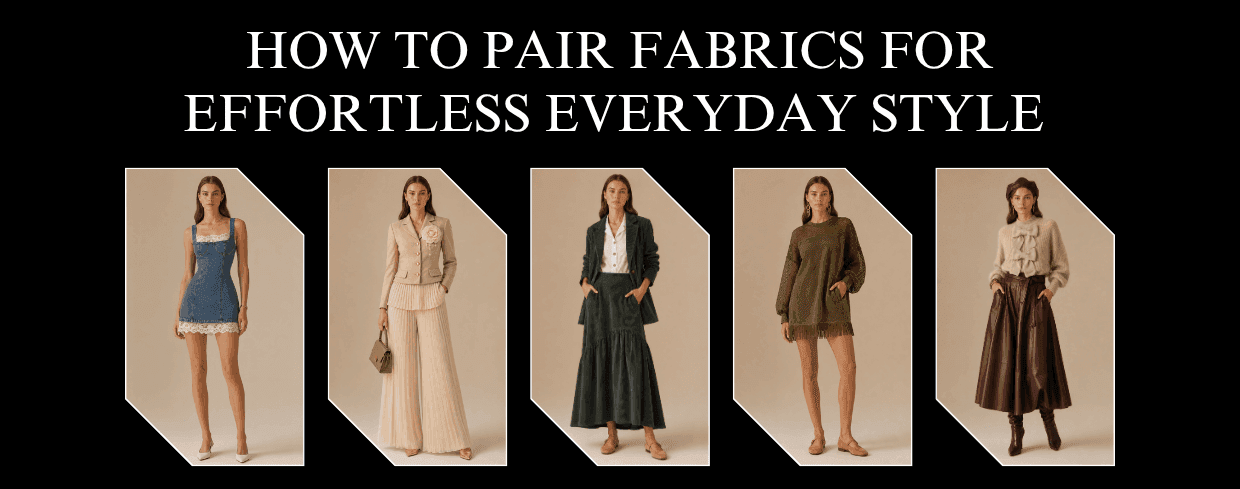
Start with two clearly different textures and let one lead while the other provides contrast. Keep either the colour palette or the silhouette relatively simple, repeat one shared colour or accessory to connect the pieces, and check that both fabrics suit the same weather, occasion and care routine. Five easy starting points are denim with lace, tweed with chiffon, corduroy with cotton poplin, suede with mesh, and leather or faux leather with knitwear.
Why Texture Mixing Works
Texture works alongside colour, silhouette and proportion. A textile's fibre, yarn, weave or knit, finish, weight and lining all influence how it catches light, how firmly it holds a shape and how it moves on the body. That is why two garments in the same colour can still look noticeably different when one is crisp and matte and the other is soft or reflective.
Placing different surfaces next to each other creates a visible boundary. A nubby jacket can make a smooth blouse look sleeker; a fluid skirt can make a structured top feel more defined. The contrast does not automatically make an outfit "better," but it gives the eye more information and can make a simple combination feel intentional.
This is especially useful in tonal or monochrome dressing. When most of the outfit stays within one colour family, a ribbed knit, smooth trouser and polished shoe can create variety without relying on a busy print.
Texture Is Not the Same as Pattern
Texture describes a fabric's surface and behaviour; pattern describes a repeated visual design. A solid cable-knit sweater can be highly textured without being patterned, while a floral chiffon blouse may be patterned but relatively smooth. The distinction matters because texture mixing and pattern mixing create different kinds of contrast. For help identifying checks, dots, stripes and other classic fashion patterns, treat those as a separate styling layer.
Product photographs can flatten texture, so look for close-up images, material details and descriptions of weave, knit or finish when shopping online. A fabric name alone does not tell you its exact weight, softness or breathability.
Each pairing below creates contrast in a different way. Use the examples as formulas rather than rules: substitute a similar texture from your wardrobe, adjust coverage and proportions, and prioritise comfort over recreating the picture exactly.
Denim and Lace: Casual with Contrast
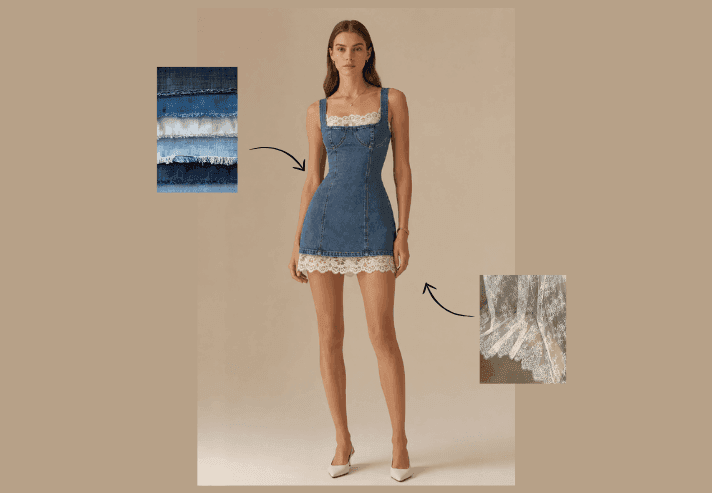
Denim mini dress with lace trim beside close-up swatches of denim and lace.
Denim is usually a firm twill with a matte, everyday feel, although its weight and fibre blend can vary. Lace uses open spaces and decorative threads to create a lighter-looking surface. Together, the contrast is easy to read: one fabric feels grounded and durable, while the other looks delicate and detailed.
Try a denim jacket over a lined lace camisole, straight-leg jeans with a lace blouse, or a denim shirt with a lace-trimmed skirt. Let one texture occupy most of the outfit and keep the second as a panel, trim or single layer. Very distressed denim beside elaborate lace can become visually busy, and jewellery or rough hardware may catch on delicate lace, so check the outfit in motion before wearing it out.
Tweed and Chiffon: Structure and Movement
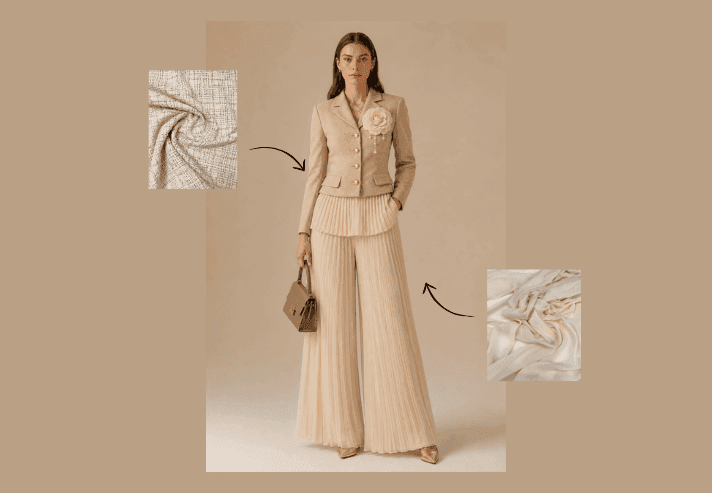
Beige outfit concept with a structured jacket, flowing pleated trousers and tweed and chiffon fabric swatches.
Tweed is a family of textured woven fabrics, often made from wool or blends, with a surface that can look nubby or flecked. Chiffon is a lightweight plain-weave fabric that is usually sheer and fluid. The combination places visible structure beside movement, which can work for offices, dinners and semi-formal occasions.
A tweed blazer over a chiffon blouse or dress is the simplest formula. A shorter structured jacket can also balance a fluid midi skirt without hiding its movement. Check the scale and weight: a very heavy or rough tweed may pull against fine chiffon, while both garments may require different cleaning methods. A lining or smooth base layer can reduce friction and make the pairing more comfortable.
Corduroy and Cotton Poplin: Relaxed but Polished
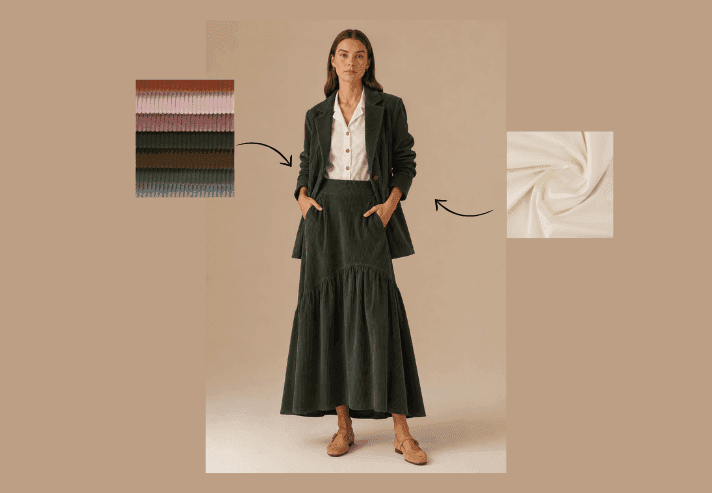
Dark corduroy outfit layered over a white shirt beside corduroy and cotton poplin fabric swatches.
Corduroy has raised vertical ridges, called wales, that give it depth even in a solid colour. Cotton poplin is a tightly woven plain-weave fabric with a smoother, crisper surface. Both can hold some structure, but their surfaces are different enough to stop a simple shirt-and-trouser combination from looking flat.
Pair a corduroy jacket, trouser or skirt with a clean poplin shirt. Fine-wale corduroy creates a subtler contrast; wider wales make the texture more prominent. This pairing is useful in transitional weather, but the actual comfort level depends on garment weight and lining rather than the fabric name alone.
Suede and Mesh: Matte and Sheer
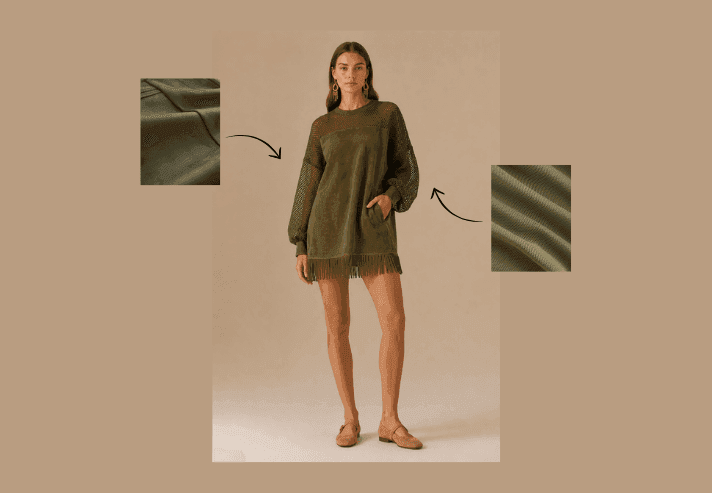
Olive outfit concept with matte and sheer fabric swatches illustrating suede and mesh contrast.
Suede, faux suede and suede-effect textiles have a soft, matte surface that absorbs rather than reflects much light. Mesh has an open structure and can read as sporty, sheer or architectural depending on its scale and fibre. The contrast feels modern because a dense-looking material sits beside one that reveals space.
Use the idea in small doses: a suede bag or shoe with a mesh-panel top, a suede jacket over a lined mesh layer, or a mesh sleeve with a suede skirt. Suede usually adds warmth, so it often works better as an accessory in hot weather. Mesh does not automatically guarantee breathability, and transparency varies widely, so check fibre content, lining, coverage and comfort in natural light.
Leather and Knit: Smooth and Soft
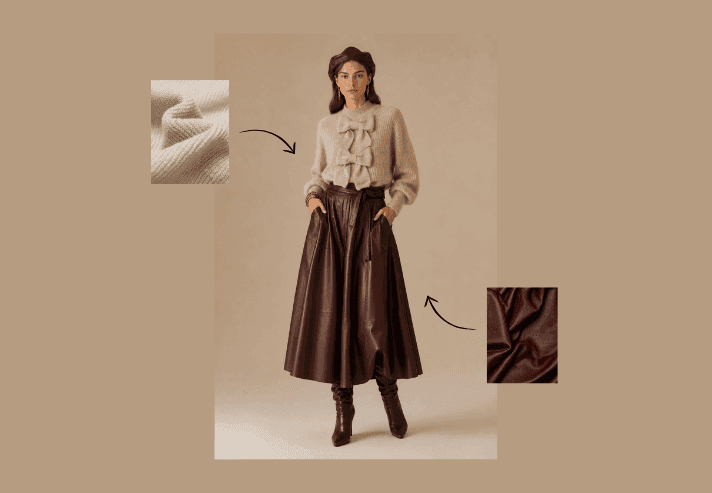
Beige knit sweater styled with a brown leather-look skirt beside knit and leather texture swatches.
Leather or faux leather tends to create a smooth, defined surface, while knitwear gets its texture from interlocking loops. A fine knit gives a quieter contrast; a chunky cable or rib makes the difference more obvious. The pairing balances firmness with softness and is particularly useful in cooler weather.
Try a leather jacket over a fine-gauge sweater, a leather-look skirt with a soft knit top, or a small leather accessory with a knitted dress. Balance volume as well as texture: a bulky sweater often sits more comfortably with a straighter bottom, while a fitted knit can work with a fuller skirt. Follow the care instructions for each item rather than treating the two materials as one laundry load.
You probably already have enough variety to test this technique. The useful shift is to sort garments mentally by surface and behaviour, not only by category or colour.
Start with One Statement Texture
Choose one item with a noticeable surface, such as a lace top, tweed blazer, corduroy trouser or chunky knit. Build the rest of the outfit from quieter fabrics, then add one contrasting texture. This keeps the focal point clear and makes it easier to identify what is working.
Balance Fabric Weight and Drape
Texture is not only what a fabric looks like up close. It also includes how it hangs. A structured layer can give definition to a fluid dress, while a soft knit can relax a firm leather-look skirt. Make sure the heavier garment does not crush, pull or distort the lighter one, and check how the combination feels when you sit, walk and raise your arms.
Keep the Colour Palette Controlled at First
When the surfaces already provide contrast, limiting the outfit to neutrals, tonal shades or two repeated colours can make the result easier to read. A useful method is to build a wearable colour palette around one garment, then vary the textures within that palette. Once the balance feels comfortable, add a stronger colour or pattern as a separate decision.
Use Accessories for a Low-Commitment Test
Shoes, bags, belts, scarves and jewellery can introduce texture without changing the whole outfit. A suede belt with a smooth cotton dress, a woven bag with a poplin shirt, or a polished leather shoe beside ribbed knitwear gives you a quick way to test contrast. Repeat the accessory colour elsewhere if the outfit needs a stronger visual connection.
Check Weather, Comfort and Care
Two fabrics may look good together and still be impractical for the day. Consider heat, humidity, friction, transparency, itch, static and the amount of movement you need. The fibre, weave and finish of a fabric matter as much as its styling label. Also read both care labels: lace, chiffon, suede, leather-look materials and embellished knits may need different cleaning or storage methods.
The first mistake is giving every texture equal visual weight. Sequins, heavy distressing, open lace, chunky knit and patent shine can all work individually, but combining several strong surfaces at once makes it difficult to see the intended focal point. Two textures are a useful beginner limit, not a universal rule; add a third only when the first two already feel connected.
The second mistake is ignoring silhouette and formality. A casual fabric and a formal one can work together, but the cut, colour or accessory styling needs to bridge the difference. A shared neutral, repeated metal finish or consistent shoe style can make contrast feel deliberate rather than accidental.
The third mistake is assuming a fabric name predicts comfort. Denim can be rigid or stretch, mesh can be airy or dense, and knitwear can be cotton-light or wool-heavy. Weight, weave, fibre blend, lining and fit determine how a garment behaves. Try the complete outfit for a few minutes before relying on it for a long event.
Finally, do not overlook care compatibility. Rough hardware can snag lace or chiffon, dark suede may transfer colour through friction, and some structured pieces should not be folded against delicate surfaces. The care label and a small wear test are more reliable than a styling photograph.
How Texture Mixing Changes with the Seasons
Texture mixing works year-round, but the useful combinations change with climate and garment construction. Material names alone are not enough: a lightweight denim shirt and a lined denim jacket can feel completely different in the same temperature.
In warm weather, choose breathable, lightweight versions of the textures you like: chambray or light denim, cotton lace, fine knits, open mesh and unlined poplin. Use suede, leather or heavy corduroy as smaller accessories when heat and humidity make full garments uncomfortable. Coverage and airflow should come before the visual formula.
In cooler weather, corduroy, tweed, leather or faux leather and knitwear can provide more substance. Chiffon and lace may still work as a visual layer, but they do not add much insulation on their own. Treat layering as styling and function together: start with the layer that must keep you comfortable, then add contrast without restricting movement.
Seasonal thinking can also reduce unnecessary shopping. The same lace top can sit under denim in spring and under knitwear in winter; the same poplin shirt can work with light trousers in summer and corduroy in autumn. Change which texture leads instead of replacing the whole outfit.
Make Texture Part of Everyday Styling
Once you begin noticing surfaces, familiar clothes produce more combinations. A useful wardrobe audit is to identify which pieces are smooth, crisp, ribbed, fuzzy, open, glossy or matte, then look for gaps in pairing rather than immediately buying another garment. You can also organise your wardrobe with Collections so the combinations you test are easier to find again.
Inside BeSpoke AI Stylist, add the garments you already own to Closet, use Canvas to compare and arrange outfit combinations, and use Try On when a visual preview would help. Digital previews are planning aids rather than guarantees of exact drape, texture or fit, so the final check still needs to happen with the real garments.
This is also where understanding how an AI personal stylist works becomes useful: the technology can help surface combinations from your wardrobe, while your own judgement decides whether the fabrics feel comfortable, appropriate and recognisably yours.
What Is Texture Mixing in Fashion?
Texture mixing is the practice of combining garments or accessories with noticeably different surfaces, weights, finishes or drape. Examples include smooth leather-look material with ribbed knitwear, firm denim with open lace, or nubby tweed with fluid chiffon.
How Many Textures Should You Mix in One Outfit?
Two distinct textures is the easiest starting point, since it keeps the relationship simple to control. A third can work when it is quieter or repeats a material already present, but there is no fixed maximum. The outfit just needs one clear focal point.
Does Texture Mixing Work for Casual Outfits?
Yes. Denim with lace, corduroy with poplin, knitwear with a smooth bag, or a woven shoe with a cotton outfit can all add depth to everyday clothing without making it formal.
Can Texture Mixing Replace Colour Coordination?
No. Texture and colour solve different styling problems. Texture adds surface contrast and depth; colour connects or separates the pieces visually. Keeping the colour palette simple is often helpful while learning, but a successful outfit can use both texture and colour contrast.
How Do You Mix Textures in Hot Weather?
Choose texture through lightweight construction rather than heavy layers. Look for cotton lace, fine knits, open mesh, seersucker, light denim or crisp poplin, and keep dense materials such as suede or heavy leather-look fabric to shoes, belts or bags. Fibre, lining and garment fit still determine comfort.
What Is the Easiest Texture Pairing to Try First?
Use a familiar base, such as denim or a plain cotton shirt, and add one clearly different surface. Denim with a lace-trimmed top, poplin with corduroy, or knitwear with a smooth leather-look accessory are straightforward because the contrast is visible without needing a complicated colour scheme.
Ready to Try Texture Mixing?
Choose one pairing from this guide and recreate the relationship with garments you already have rather than searching for exact copies. Photograph the result, notice whether the fabrics balance in colour, weight and movement, and save the combination when it works. The goal is not to use as many textures as possible; it is to make familiar clothes feel more considered, comfortable and useful.
Sources and Further Reading
Museum at FIT - Fabric in Fashion. How textile fibre, construction and structure influence silhouette, drape and the final appearance of clothing.
Cooper Hewitt, Smithsonian Design Museum - Texture. Examples of designers creating depth by combining hard, soft, glossy, nubby and supple materials.
The Metropolitan Museum of Art - Textile Production in Europe: Lace, 1600-1800. Background on lace as an openwork textile and the techniques that create its decorative surface.
PubMed - Textures as Probes of Visual Processing. A scientific review of visual texture and the way texture information supports human perception.
GINETEX - Care Symbols. An overview of internationally used care symbols for washing, bleaching, drying, ironing and professional cleaning.
Written by BeSpoke AI Stylist Editorial Team
Published: 07/09/2026
Last updated: 07/09/2026
Ready to upgrade your style game? Download BeSpoke AI Stylist and let your AI stylist take it from here.

Author
Neeraj Bansal