90s-Inspired Outfits for Women With Clothes You Own
Published · Updated
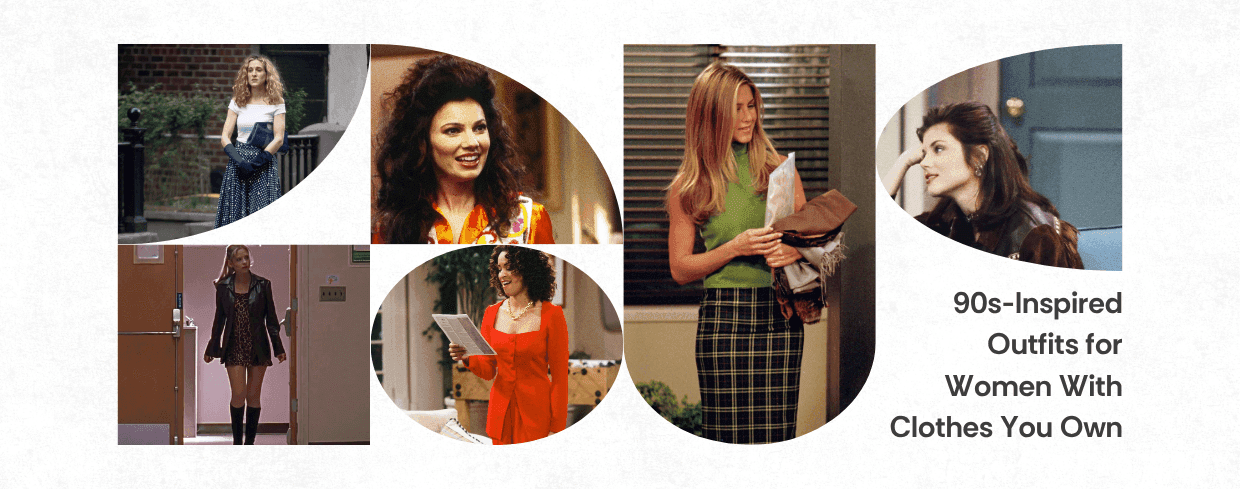
A checked skirt looks appealing in a TV still, but your week involves a commute and an office where you would rather wear trousers. You save the picture anyway. When you next get dressed, it stays on your phone.
The useful step is deciding which part of the look you want to keep. You can borrow Rachel Green’s approach to separates without buying the exact skirt. You can enjoy Fran Fine’s colour without wearing an entire matching costume. Start with clothes you already own and give the reference a job in your actual wardrobe.
These six 90s-inspired outfit ideas are new interpretations for everyday wear, not exact screen-costume recreations. Choose the example closest to something you have. There is no need to assemble all six.
At a Glance
- Have a checked skirt? Use the Rachel Green idea to give it an outfit beyond a themed party.
- Have a bright or patterned top? Try the Fran Fine approach with familiar black separates.
- Have a matching jacket and bottom? Borrow from Hilary Banks when you want to wear the set again.
- Have an open shirt and jeans? Start with the Kelly Kapowski-inspired daytime option.
- Have a dress you save for evenings? Use a Buffy Summers-inspired jacket pairing to reconsider it.
- Have a full skirt? Try the Carrie Bradshaw idea with a plain top and shoes you already wear.
Start With the Detail You Like, Not the Exact Costume
Write a short description of the outfit without naming the character. “A green top above a checked skirt” gives you something to look for in your cupboard. “Dress like Rachel” leaves almost everything undecided.
Screen clothing is not a fair fitting standard. In The New Yorker’s interview with costume designer Brenda Cooper, she describes altering shop-bought clothes for The Nanny.
That is a reason to adapt the reference, not judge your body against it. Decide what you need to wear comfortably before choosing which details to borrow. The shoes you already trust can stay, even when the screen version uses something different.
1. Rachel Green: Give a Checked Skirt a Regular Outfit
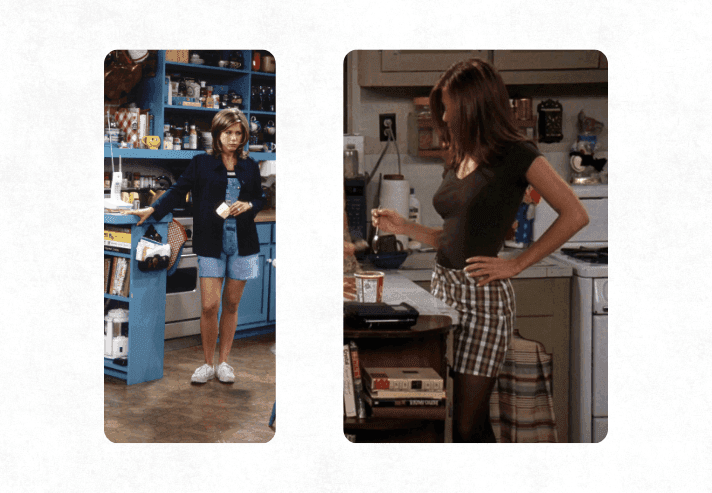
A dark blazer over short dungarees, alongside a plain top and checked skirt.
In Style’s Rachel Green retrospective includes checked skirts and denim worn with blazers. Those are useful starting points because you can work with either side of the outfit.
An outfit to try: Wear a dark checked skirt with a plain green top. Add black loafers and the bag you normally carry. A longer skirt can keep the pattern visible without asking you to wear a mini.
Leave the top untucked first, then try a tuck only if you prefer where it finishes. There is no need to add knee socks to make the reference recognisable. The check and plain top already give you something to work with.
Do not own a checked skirt? Try checked trousers with a black short-sleeve knit. Another option is a dark blazer over your usual top and blue jeans. Use the piece you have rather than treating the missing skirt as a shopping assignment.
- For an office day: Choose a hem length permitted at work, or use the trouser option. Put the jacket on before deciding whether the outfit suits the setting.
- For a warmer day: Keep the plain top and checked bottom without an extra layer. Leave the jacket out when you do not need it.
Our guide to styling familiar patterns offers other ways to use a patterned piece without replacing the rest of the clothes.
2. Fran Fine: Give a Bright Piece Somewhere to Go
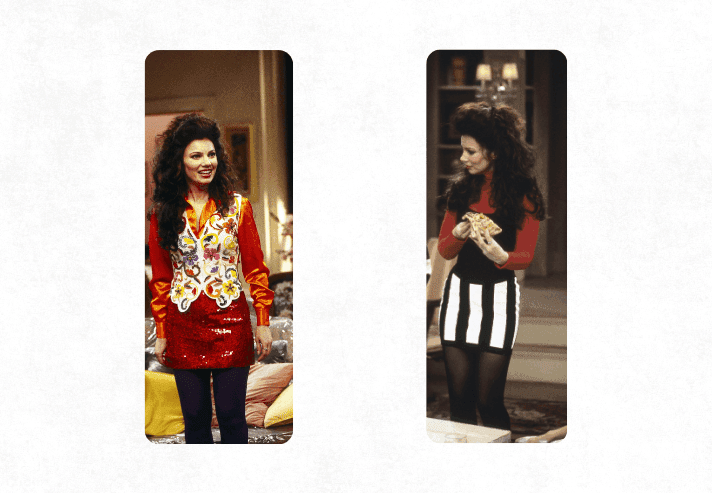
A colourful waistcoat and a red top offer different starting points for layering.
A vividly patterned waistcoat is easy to admire and harder to get dressed around. For this Fran-inspired outfit, let the piece you have been avoiding remain visible. Begin with a base you already wear.
An outfit to try: Put a patterned waistcoat over a black top, then add black straight-leg trousers. Wear your usual black shoes. The waistcoat becomes the main change to an otherwise familiar outfit.
No waistcoat is required. A floral cardigan or a bright shirt can fill the same place. Wear the cardigan open when you want less of its pattern showing; close it when you prefer more. Keep any base layer that you need for comfortable coverage.
You can borrow the colour idea without wearing a print at all. Try a red long-sleeve top with black trousers and a red bag you already own. Leave the other accessories alone until you have seen the complete outfit.
When several colours appear in the patterned piece, choose one colour to repeat. An orange shirt beneath a waistcoat with orange in its design is one option, not a requirement to match everything.
The point is to make the bright piece wearable on an ordinary day. You do not need the matching hat or an identical skirt to use the idea.
3. Hilary Banks: Wear the Matching Set You Keep Separating
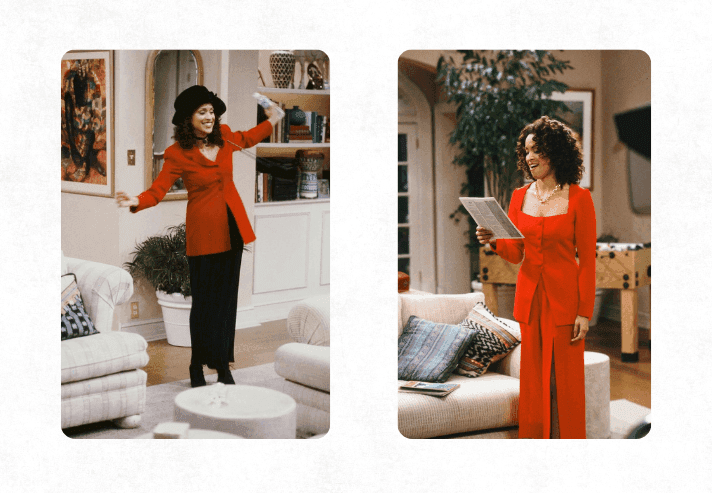
Red tailoring worn as a matching set or with dark trousers.
Vogue’s look back at Hilary Banks discusses coordinated sets, including tartan tailoring. Here, the useful idea is letting matching pieces form most of the outfit.
An outfit to try: Wear a red blazer with matching red trousers over a plain cream top. Add black loafers and a bag large enough for your day. Jewellery is optional; start with a pair you regularly wear rather than buying accessories for the reference.
A navy or brown set works for this exercise too. The important choice is wearing the pieces together. You do not have to own the red version.
When you have a coloured jacket but no matching trousers, use a bottom you already like with it. A red blazer over black trousers still gives you a way to try the idea. Do not buy trousers simply to force a near-match you are unsure about.
For readers who usually wear co-ords, begin with an existing set and change the shoes. This keeps the exercise relevant to your wardrobe rather than asking you to build a new one around tailoring.
Before calling it a work outfit, check your dress code and move in the full layers. These office outfit ideas offer other starting points when a full suit is not what you need.
4. Kelly Kapowski: Keep the Casual Outfit Practical
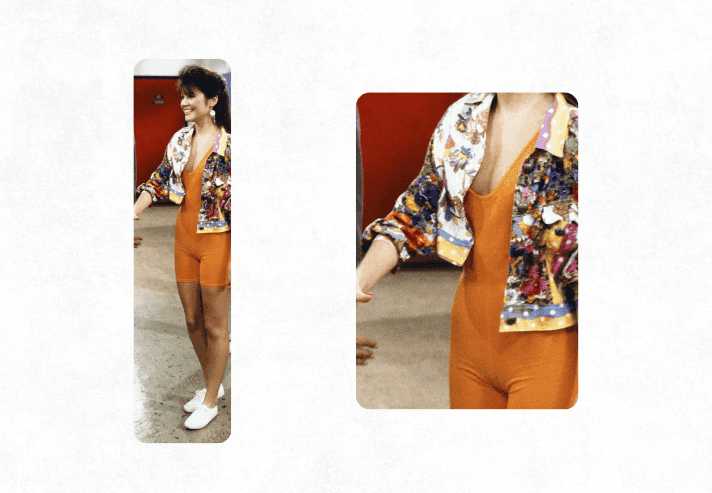
An open printed shirt over an orange outfit, with the shirt detail enlarged.
For a Kelly-inspired daytime look, start with the open-shirt idea rather than trying to recreate a school outfit. A colourful shirt gives familiar denim something different to sit beside.
An outfit to try: Wear an orange top with straight-leg blue jeans. Add a printed shirt worn open, then put on white trainers and your usual crossbody bag. The jeans are an everyday adaptation, not an exact costume match.
A full-length T-shirt works when you would rather not wear a cropped top. Longer denim shorts offer another option when the weather suits them. There is no reason to copy the amount of skin visible in a reference picture.
Choose a shirt that you already find comfortable over a top. Reach forward and notice whether its sleeves pull. When the extra layer feels unnecessary, button the shirt over a suitable base or use it as the main top according to its coverage.
- Carrying more than a small bag holds? Use your normal backpack. The outfit needs to carry your belongings, not reproduce a prop.
- Spending the day walking? Keep the trainers you know fit, rather than choosing shoes only because they resemble a still.
The same approach to wearing an open layer can give another printed shirt a place in your regular rotation.
5. Buffy Summers: Reconsider the Dress You Save for Evenings
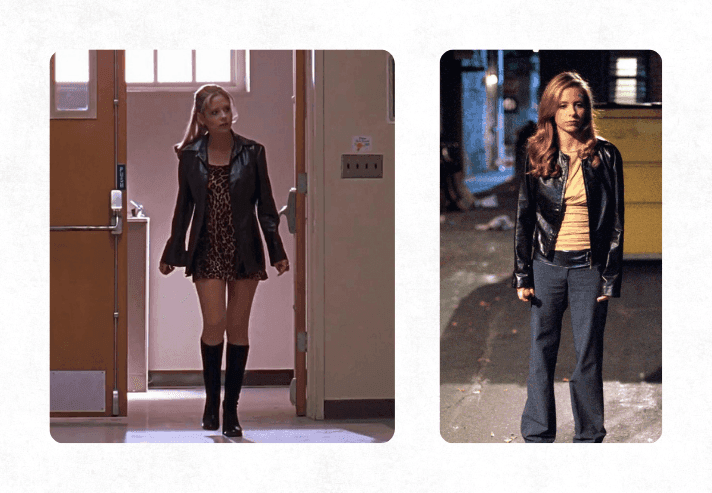
Short dark jackets worn with a printed dress or plain separates.
Vogue’s Buffy wardrobe retrospective covers dark jackets alongside slip dresses. For an everyday adaptation, try the contrast with a dress you already own.
An outfit to try: Put a dark cropped jacket over a printed midi dress. Add low ankle boots and a crossbody bag. A jacket you can move in is more useful than an exact match you need to keep adjusting.
Do not own a leather jacket? Try dark denim or a short black jacket. The material changes, but you can still explore the shorter outer layer over the longer dress. Check how the jacket sits at the back when you raise your arms.
The footwear can change too. Trainers may fit a walking-heavy day better than the boots in the suggested outfit. Choose according to the actual pair, not an assumption that every flat shoe will be comfortable.
For more coverage, try a dress with sleeves. Adding a T-shirt beneath a strappy dress is another option when the armholes have room for it. Avoid forcing two close-fitting layers together just to retain a reference.
Our guide to mixing different fabric finishes offers further comparisons. This is about making an existing dress useful, not buying a jacket that only works with it once.
6. Carrie Bradshaw: Put the Full Skirt With an Ordinary Top
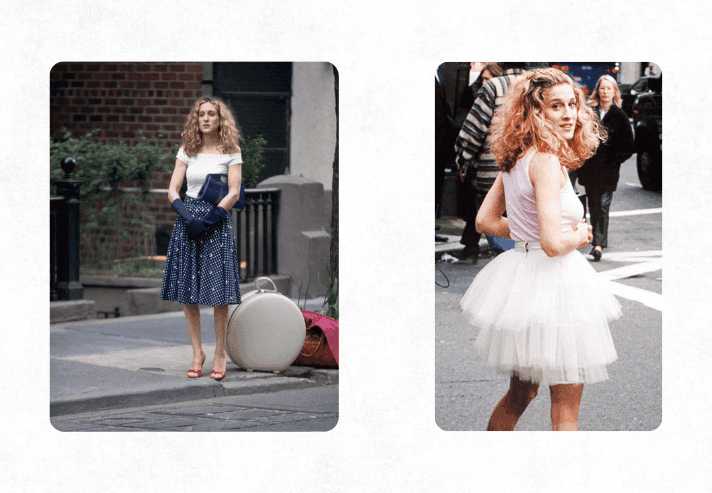
Simple tops alongside full skirts.
You may like the contrast of a simple top with a full skirt without wanting a tutu. That is enough to begin a Carrie-inspired outfit.
An outfit to try: Wear a plain white T-shirt with a full midi skirt. Use red flats if you already own them, or start with a familiar neutral pair. Carry the bag that fits your plans.
A pleated skirt can stand in for tulle. A printed cotton skirt offers another version. In both cases, the choice you are keeping is the ordinary top beside a skirt with more movement or volume.
Try the T-shirt loose before tucking it. You might prefer a little fabric over the waistband rather than a very fitted outline. You can change that without losing the outfit idea.
For dinner, compare the T-shirt with a plain sleeveless top. Keep the skirt and shoes unchanged so you can see what the top contributes. Our guide to styling flats with dresses and skirts is useful when the footwear is the undecided part.
A new bag and elaborate hair are not admission requirements. Let the skirt have an outfit in the life you already lead.
Turn One Reference Into Tomorrow’s Outfit
- Choose the section that begins with something available in your wardrobe. Then make a short outfit note:
- The part I want to borrow: Name a visible choice, such as an open patterned shirt over a plain top.
- The piece I already have: Start with that shirt rather than searching for the exact screen version.
- The change my day needs: Record a practical swap, such as trousers instead of shorts.
- The final check: Put on the shoes and carry the actual bag. Sit down before deciding the outfit is ready.
Take a photograph of the version you like. Record a useful adjustment, such as the shirt worn open or the jacket left out. The next time you see a similar reference, you have a tested starting point.
Plan Visually, Then Try the Real Clothes
BeSpoke AI Stylist’s guide to planning outfits with your own virtual avatar explains how a digital closet can support a visual outfit preview.
Give the preview a specific question. You might compare a green top with a black one above a checked skirt. Use your own garment images and a personal reference photo for the preview.
A preview cannot establish physical fit. Check the actual waistband when you sit down, and review any generated detail against the real garment. The useful result is an outfit decision you can test, not a score for how closely you resemble a character.
Frequently Asked Questions
How can I make a 90s-inspired outfit with normal clothes?
Start with a familiar item and one styling detail from a reference. A plain top with a checked bottom is one option. An open printed shirt with jeans is another. Keep your usual shoes until you have a reason to change them.
How do I avoid looking dressed for a 90s theme party?
Keep the detail you enjoy and leave out additions that only serve to identify the character. You can use a checked skirt without matching knee socks. Choose the amount of nostalgia you want rather than trying to pass a recognition test.
Can I adapt these outfits without wearing a mini skirt or crop top?
Yes. Use a longer checked skirt or checked trousers. Replace a cropped top with a full-length version. The outfit can retain its colour relationship while the coverage changes to suit you.
Can I wear these ideas to work?
Use the tailoring or plain-top options as starting points, then check the workplace requirements. A character’s job on television does not establish what is suitable for your office. Denim and trainers are not accepted in every setting.
Are these exact outfits from the 1990s?
No. These are present-day adaptations inspired by programmes associated with 90s television. The references are not a dated costume catalogue. Some screen wardrobes also span the early 2000s, as InStyle’s Friends retrospective makes clear.
Keep the Outfit You Would Wear Again
Pick one reference that interests you and try the nearest version available in your wardrobe. Keep the photograph after you have worn it, not just after it looks good in the mirror. That gives your next saved image somewhere to go beyond a moodboard.
Sources and Further Reading
Ready to upgrade your style game? Download BeSpoke AI Stylist and let your AI stylist take it from here.

Author
Neeraj Bansal