
How Hand Embroidery Differs From Machine Embroidery
Published · Updated
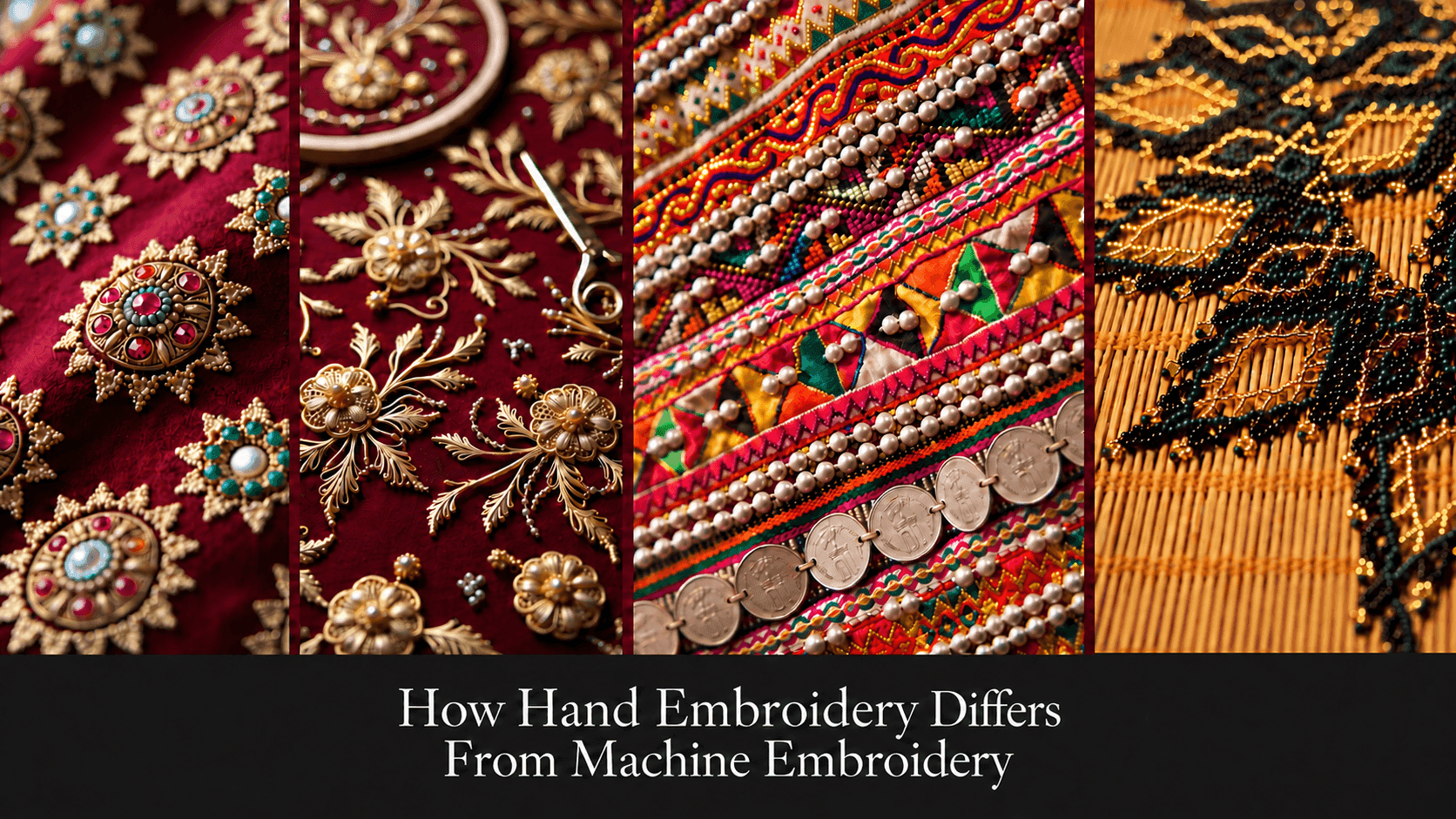
Imagine comparing two cream kurtas with similar floral borders. One is described as hand-embroidered. The other costs less and says only “embroidered”. You like both, but the photographs do not explain the difference you are being asked to pay for.
The useful question is not whether the expensive one looks less perfect. It is how the decoration was made and whether that matters to the garment you want to wear. Our guide to Indian embroidery styles introduces different craft traditions. This article focuses on the production method and the questions to ask before choosing an embroidered piece.
Hand embroidery means a person forms the decorative stitches with a hand-held needle or hook. In machine embroidery, a machine forms the stitches. The design may be guided by a person or follow a digital stitch file. Neither label, on its own, proves the quality of the finished garment.
At a Glance
- Hand embroidery describes a process. It can involve a needle or a small hook; the word does not mean the work must look uneven.
- Machine embroidery is not always computerised. A maker can guide fabric by hand while a machine makes the stitches.
- Some garments use both methods. Ask which part is hand-worked rather than treating “hand-finished” as a description of every motif.
- Look beyond the reverse. Backing and thread patterns can help you ask questions, but they are not universal proof of how the whole piece was made.
- Choose the garment as well as the embroidery. Check its fit and finishing before deciding what the label is worth to you.
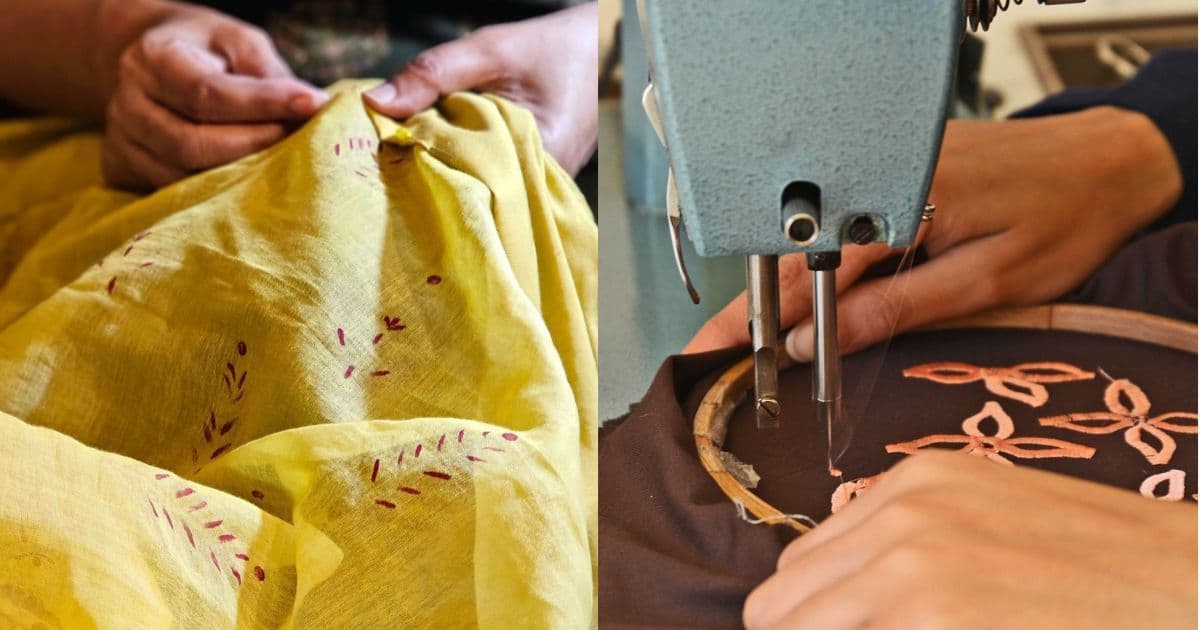
Hand stitching: the maker places each stitch
With hand embroidery, the embroiderer controls the placement of the working needle or hook. The work can follow a marked design rather than being improvised. Repetition does not disqualify it from being handwork.
A hook is not evidence of machinery. The Royal School of Needlework describes tambour embroidery as a hand technique using a fine hook on stretched fabric. Its guide also discusses the related Indian ari method. A seller describing aari work should still be able to explain how the particular piece was made.
For a shopper, the important distinction is that the decorative stitches are formed through the maker's hand work. It does not mean the garment's construction seams must also be sewn by hand. A hand-embroidered panel can be made into a blouse using a sewing machine.
Computerised embroidery: a machine follows stitch instructions
Computerised embroidery uses a design prepared in a machine-readable format. Brother's documentation explains how embroidery designs are transferred to a machine and then selected for stitching. A digital design is not simply a printed picture placed on fabric.
The work still needs preparation. Wilcom's fabric-setting guidance describes adjustments to stitch density and underlay, among other settings, for different fabrics. A design that behaves well on one cloth may need changes for another.
This is why “made by machine” should not be read as “made without skill”. The person preparing the embroidery and the person running the equipment both have decisions to make.
Hand-guided machine embroidery: the maker directs the fabric
There is an important option between hand stitching and a programmed stitch-out.
In free-motion machine embroidery, the maker moves the fabric while the machine forms stitches. Bernette's free-motion embroidery instructions describe this process. It is machine embroidery with direct human guidance, not hand embroidery in the needle-and-hook sense.
A video showing someone's hands beside a machine therefore needs context. Ask what the hands are doing. They may be guiding the design rather than merely loading a hoop.
Mixed work: different parts of one garment can have different origins
A blouse could have a machine-embroidered floral outline with beads attached afterwards by hand. That would not make the entire outline hand-embroidered. It would make the blouse a combination of processes.
Treat this as a possible construction to clarify with the seller, not an accusation. Mixed work is useful information when it is described accurately.
Ask about the area you are paying particular attention to. A hand-attached tassel at the back does not answer a question about the threadwork across the sleeves.
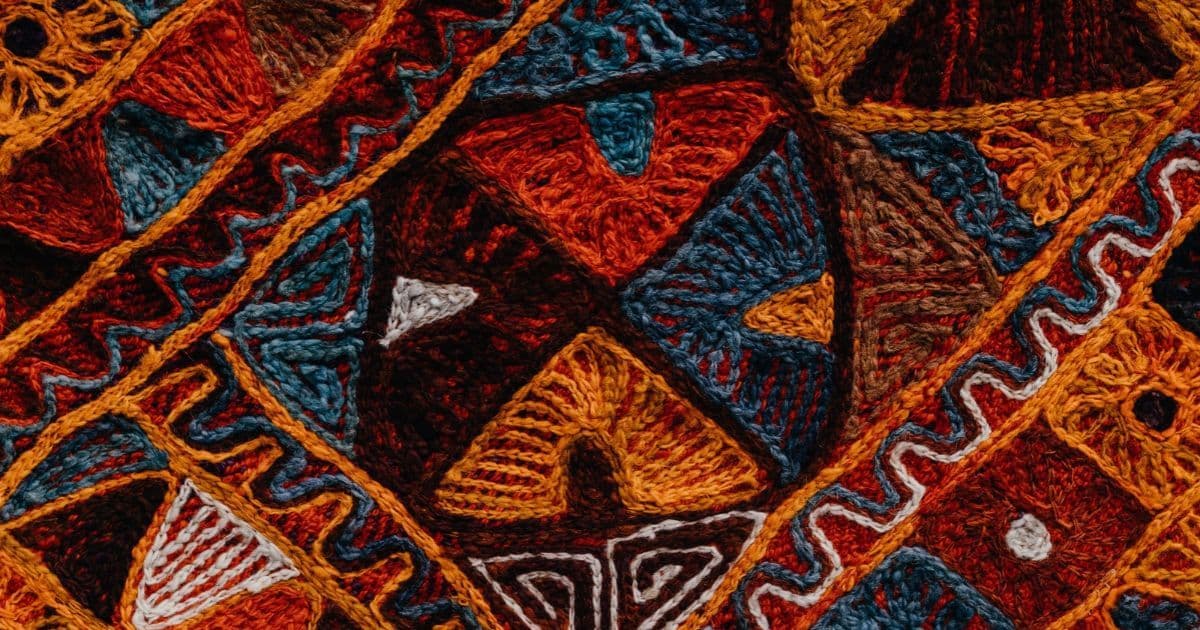
Small variations can occur in handwork. They can also occur in machine work through fabric movement or handling. Meanwhile, skilled hand stitching can be very regular.
The Royal School of Needlework's satin-stitch reference shows carefully placed parallel stitches and notes that the reverse can look almost identical to the front. A neat back does not automatically mean a machine made it.
This matters when you are examining a piece in a shop. You should not need to find a mistake to appreciate hand embroidery. Nor should visible defects be excused simply because a garment is described as handmade.
Separate two questions: How was this made? And is this particular piece finished well? An answer to one does not settle the other.
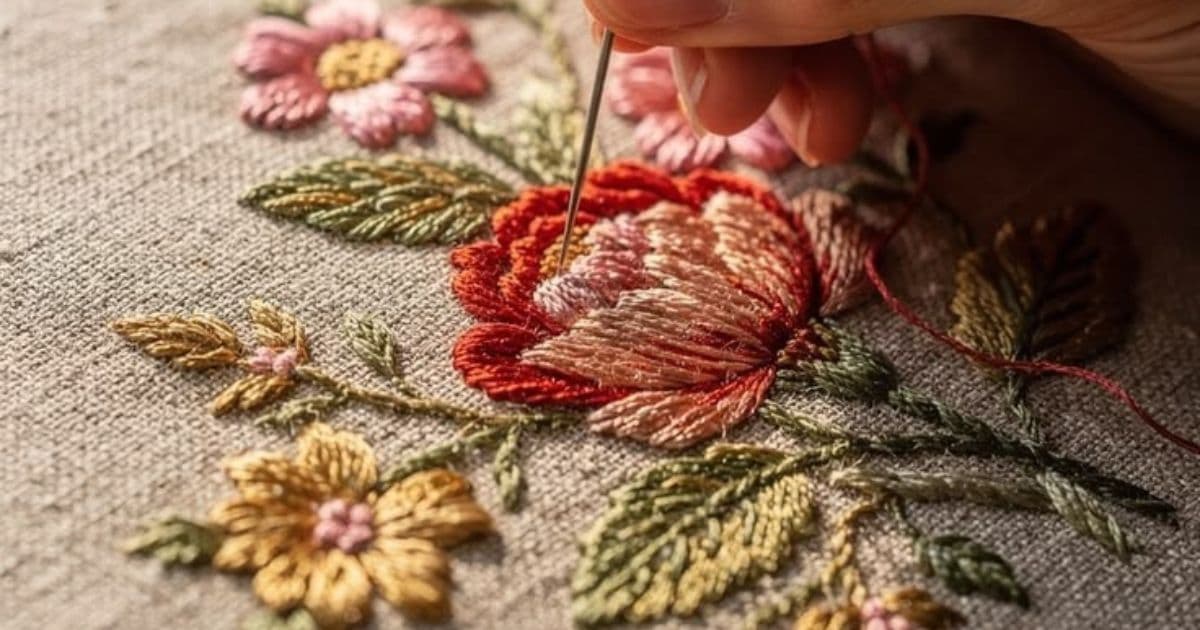
Look at the same motif from the front and back
Ask to see the reverse of the area you are examining, where it is accessible. Do not open a lining or undo stitching yourself.
Look at how the threads travel and where they end. A different-coloured thread on the back can be useful context: many embroidery machines use a bobbin thread as well as an upper thread. Brother's thread guidance documents that arrangement for its machines.
However, do not turn “a different thread at the back” into a diagnosis for every technique. The reverse is one part of the evidence. A photograph may show only a small section of a garment that uses several processes.
Notice backing without treating it as a verdict
Backing or stabiliser supports fabric during some embroidery processes. Its presence is not a universal machine-only sign. Bernette's free-motion guide, for instance, discusses using a frame or nonwoven support while a person guides the cloth.
As a wearer, you also have a practical question: what remains inside the finished garment, and what touches your skin?
Ask whether a visible layer is intended to stay. Do not trim or peel it away to perform a test. You could disturb the work you are trying to assess.
Check distortion and loose details
Lay the garment naturally rather than pulling it taut. Look for fabric drawn into unwanted ripples around a motif. Brother's puckering guidance identifies several possible production causes, including tension and support problems.
Puckering tells you to ask about the finish; it does not identify the maker's tool by itself. Equally, a deliberately gathered design should not be mistaken for an accidental ripple.
Inspect loose ends without pulling them. Ask the seller to check any unsecured bead or damaged area before you pay.
Ask for evidence tied to the actual item
For online shopping, request a clear close-up of the piece being sold. A workshop video can help explain the method, but an unrelated making video does not establish how this particular garment was produced.
A useful answer might identify which panels were hand-worked and which were machine-made. A vague assurance that “all our pieces are handcrafted” leaves the original question unanswered.
When you need more certainty than the seller's evidence provides, an experienced embroiderer or textile specialist may be able to assess the actual piece. Do not expect a phone photograph or an AI image tool to authenticate it.
The same motif can be pleasant to look at and inconvenient in a particular position.
With a festive blouse, move your arms as you normally would. Check the embroidery near the underarm and the edge of the sleeve. With a kurta, sit down and notice how the decorated neckline rests against you.
- Check contact points. Try the garment with the bag strap or wrap you expect to use, without deliberately rubbing the embroidery.
- Look inside. Ask what the lining is made from and check whether it covers the areas you need covered.
- Consider the weight. Wear the dupatta in its intended position before deciding that a heavy border will be manageable throughout the event.
- Read the care instructions. Look for advice that accounts for both the base cloth and the added decoration.
Our guide to choosing garment fabrics provides a separate starting point for the cloth itself. The embroidery method does not determine the fibre underneath it.
A Message You Can Send Before Buying
Hello, I am considering this piece and would like to understand the embroidery before ordering.
- Which parts are stitched by hand, and which are made with a machine or added afterwards?
- Could you share close-ups of the front and accessible reverse of the embroidery on the actual piece?
- What fabric and lining are used, and is any backing intended to remain inside?
- What are the care instructions, and what repair or return options apply if a detail arrives loose?
A clear answer is more useful than a dramatic claim about perfection. Keep the response with your order details so you know what was represented.
Give the Embroidered Piece an Outfit Beyond the Festival
Before choosing a blouse solely for one event, compare it with clothes you already enjoy wearing.
Try a cream embroidered blouse with a plain saree first. On another day, consider the same blouse with high-waisted trousers when its cut and coverage work for you. These are outfit suggestions, not photographs of tested garments.
An embroidered jacket can sit over a plain top with familiar jeans. Leave the jacket open and see whether you like where the decoration appears. Our guide to restyling clothes you already own offers more ways to begin with a piece instead of a shopping list.
Choose jewellery while the garment is on. The neckline and jewellery guide offers combinations to compare. Keep your own preferences involved, and check whether a pendant actually catches on the work rather than assuming more decoration is needed.
Care Depends on More Than the Word “Hand”
Do not assume that every hand-embroidered piece needs hand washing, or that every machine-embroidered one can go into a washing machine. Follow garment-specific instructions and ask when those instructions are incomplete.
An inherited or fragile textile deserves a different approach from a new washable kurta. The Canadian Conservation Institute's historic-textile washing guidance explains why condition and materials must be considered before treatment. Its conservation advice is not a blanket cleaning rule for modern clothing. Seek a textile conservator for a valuable or deteriorating heirloom rather than testing a household remedy.
Frequently Asked Questions
Can hand embroidery look as even as machine embroidery?
Yes. Regularity alone does not identify the process. Skilled handwork can follow a repeated pattern with carefully controlled stitches. Ask about how the piece was made rather than looking for a flaw as proof.
Does hand-guided machine work count as hand embroidery?
It involves direct hand guidance, but the machine forms the stitches. “Hand-guided machine embroidery” describes that distinction more clearly than calling it entirely hand-stitched.
Is machine embroidery less durable?
Not automatically. A method label does not establish the performance of a finished garment. Assess its construction and materials, then follow the care instructions for that piece.
Is a hand-finished garment entirely hand-embroidered?
Not necessarily. Ask which finishing steps were done by hand. Added beads or trims do not, by themselves, tell you how the underlying threadwork was formed.
Can a virtual try-on verify embroidery quality?
No. A visual preview cannot verify stitch formation, materials or a seller's production claim. Use original product information and, where possible, examine the garment itself.
Choose the Piece You Understand
A useful purchase is one whose making you understand well enough to judge against your priorities. You do not have to buy handwork to enjoy embroidery, and you do not have to discount handwork because a machine can produce a similar motif.
Once you have checked the garment, plan outfits with your own virtual avatar to explore what you might wear with it. BeSpoke AI Stylist can support the visual planning step. Keep questions about stitch quality with the real garment and the people who made it.
Sources and Further Reading
Ready to upgrade your style game? Download BeSpoke AI Stylist and let your AI stylist take it from here.

Author
Neeraj Bansal